The Hidden Risks of an Inconsistent AED Program Across Multiple Locations
Many organizations recognize the importance of having an Automated External Defibrillator (AED) available in the event of a sudden cardiac arrest. As a result, they purchase an AED and install it at one of their locations.
While this is certainly better than having no AED at all, companies with multiple facilities, offices, warehouses, retail stores, construction sites, schools, or other workplaces should carefully consider the risks of protecting only one location while leaving others without access to an AED.
In many cases, an AED program that covers only a portion of an organization's locations can create operational challenges, inconsistencies in emergency preparedness, and potential liability concerns.
At AED.ca, we regularly help organizations evaluate their multi-location AED strategies and develop practical programs that provide consistent protection across their operations.
Sudden Cardiac Arrest Can Happen at Any Location
Sudden cardiac arrest does not discriminate based on geography.
It can occur:
-
At a head office
-
At a branch location
-
In a warehouse
-
On a construction site
-
In a retail store
-
At a manufacturing facility
-
In a school or community centre
-
At a customer-facing service location
The reality is that most organizations cannot predict where a cardiac emergency will occur.
If one location is equipped with an AED while another location is not, employees, visitors, customers, contractors, and members of the public may receive significantly different levels of emergency preparedness depending on where the incident happens.
For organizations considering an AED program, it is important to evaluate all locations rather than focusing on a single site. Learn more about workplace AED solutions by visiting our AED collection:
https://aed.ca/collections/aeds
Inconsistent Safety Standards Across Locations
Organizations invest significant time and resources standardizing workplace safety measures such as:
-
Fire extinguishers
-
First aid kits
-
Emergency lighting
-
Safety policies
-
Employee training
-
Emergency response procedures
AED programs should be approached with the same mindset.
When one location has an AED and another does not, organizations may unintentionally create inconsistent emergency response capabilities across their facilities.
Employees working at different locations often expect the same level of preparedness and safety resources throughout the organization.
The Risk of a Non-Standardized AED Program
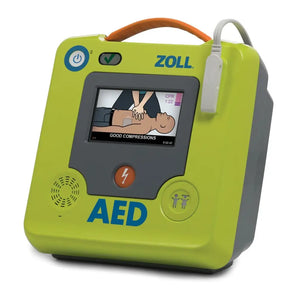
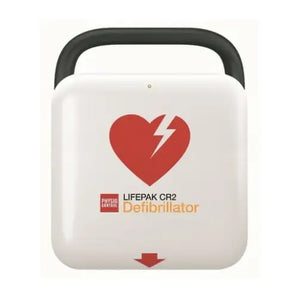
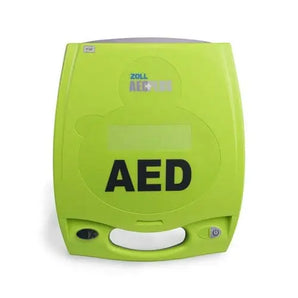
Many companies acquire AEDs gradually over time.
One location purchases an AED.
Another location does not.
A third location purchases a different AED model several years later.
Eventually, the organization ends up with a fragmented AED program consisting of:
-
Different AED brands
-
Different maintenance schedules
-
Different battery types
-
Different electrode pads
-
Different inspection procedures
-
Different training experiences
This can create unnecessary complexity and administrative burden.
Organizations that standardize their AED programs often find it easier to manage training, inspections, maintenance, documentation, and replacement planning across all locations.
For additional insights, read our article:
The Importance of Standardizing AEDs Across Your Locations
https://aed.ca/blogs/news/the-importance-of-standardizing-aeds-across-your-locations
Employee Training Becomes More Difficult
When every location has a different level of AED preparedness, employee training can become confusing.
Questions often arise such as:
-
Which locations have AEDs?
-
Which AED model is installed at each site?
-
Are employees trained on the same device?
-
Are inspection procedures consistent?
-
Are emergency response protocols standardized?
A standardized AED program allows employees to become familiar with the same equipment and emergency response process regardless of which company location they visit or work from.
This consistency can help improve confidence during an emergency when every second counts.
Maintenance and Compliance Can Become Difficult to Manage
Organizations with multiple locations already have significant responsibilities when managing health and safety programs.
Adding a partially deployed AED program can create additional challenges such as:
-
Tracking which locations have AEDs
-
Monitoring battery expiries
-
Monitoring pad expiries
-
Conducting inspections
-
Maintaining documentation
-
Managing compliance records
As AED programs grow, the administrative burden can quickly increase.
This is one reason many organizations choose to implement a standardized maintenance strategy across all locations.
Learn more about AED maintenance and compliance support:
https://aed.ca/pages/aed-maintenance-plans
Corporate Risk Management Considerations
Every organization has a responsibility to evaluate workplace hazards and emergency preparedness needs.
When companies have multiple locations with similar staffing levels, visitor traffic, and workplace risks, decision-makers should carefully consider whether it makes sense for one location to have an AED while others do not.
Important questions to consider include:
-
Why was one location selected while others were excluded?
-
Were risks assessed across all facilities?
-
Are all employees receiving equal access to life-saving equipment?
-
Is the AED program aligned with the organization's overall safety strategy?
-
Would the organization be comfortable explaining its AED deployment decisions after a serious incident?
A formal assessment of all locations can help organizations make informed decisions about AED placement and emergency preparedness.
Registry and Documentation Considerations
As AED programs expand, organizations should also consider maintaining accurate records and ensuring AED information is properly documented.
Organizations operating in Ontario may also wish to learn more about the Ontario AED Registry and how AED registration can help improve public access and emergency response.
Read more:
https://aed.ca/blogs/news/ontario-aed-registry-what-businesses-need-to-know
A Standardized AED Program Supports Growth
As organizations expand, a standardized AED strategy becomes even more valuable.
New locations can follow existing policies and procedures, including:
-
AED selection
-
Placement standards
-
Inspection schedules
-
Employee training
-
Documentation requirements
-
Maintenance programs
This creates a scalable safety program that can grow alongside the organization.
Rather than treating each location differently, organizations can establish a consistent standard that supports long-term growth and operational efficiency.
How AED.ca Helps Multi-Location Organizations
AED.ca works with organizations across Canada to develop practical, scalable AED programs for businesses with multiple locations.
Our services include:
-
AED sales and deployment
-
AED program assessments
-
AED standardization planning
-
AED inspections
-
Compliance reporting
-
Digital AED management
-
Expiry tracking
-
Registry support
-
Full-Service AED Maintenance Plans
For organizations operating construction sites, schools, offices, warehouses, retail locations, and industrial facilities, we can help develop a consistent AED strategy that improves preparedness while reducing administrative burden.
Conclusion
Installing an AED at one location is an important first step, but organizations with multiple locations should carefully evaluate whether a partial deployment strategy provides the level of protection they want for their employees, visitors, customers, and contractors.
A standardized AED program can improve emergency readiness, simplify maintenance, strengthen compliance efforts, reduce administrative burden, and provide a more consistent level of safety across the entire organization.
When it comes to sudden cardiac arrest, every location matters.
About AED.ca
AED.ca is Canada's AED Company, helping organizations across Canada improve cardiac emergency preparedness through AED sales, inspections, maintenance programs, compliance support, and workplace AED consulting.
Unlike many suppliers, AED.ca focuses on providing practical recommendations based on each organization's needs. We do not believe in overselling products or recommending equipment that is not required. Our goal is to help Canadian organizations implement effective, sustainable AED programs that improve safety and simplify long-term management.
Visit AED.ca to learn more:
https://aed.ca
About Martin Andrews
Martin Andrews is the President of AED.ca and has worked with organizations across Canada to improve workplace cardiac emergency preparedness. He regularly advises businesses, schools, construction companies, municipalities, healthcare organizations, and non-profit groups on AED deployment strategies, compliance considerations, maintenance planning, and multi-location AED program management.
His mission is simple: help make life-saving AEDs more accessible while providing honest guidance, practical recommendations, and long-term support to Canadian organizations. You can connect with Martin on Linkedin @ linkedin.com/in/martin-andrews-27aa6116b