A Guide to Better AED Program Management
When organizations invest in Automated External Defibrillators (AEDs), the focus is often on purchasing the right device. While selecting the right AED is important, one of the most overlooked aspects of a successful AED program is standardization.
Whether you operate multiple offices, schools, construction sites, healthcare facilities, churches, sports complexes, warehouses, manufacturing plants, or retail locations, standardizing the AEDs across your organization can improve emergency response, simplify AED maintenance, strengthen AED compliance, reduce long-term costs, and create a more effective workplace AED program.
At AED.ca, we regularly help organizations across Canada evaluate their existing AED inventory and develop practical AED standardization strategies. In many cases, organizations have accumulated multiple AED brands and models over the years, creating unnecessary complexity, training challenges, and maintenance risks.
What is AED Standardization?
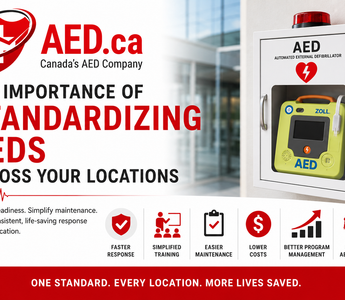
AED standardization is the process of selecting a single AED platform—or a limited number of compatible AED models—and deploying them consistently throughout your organization.
Rather than having one location with a ZOLL AED Plus, another with a ZOLL AED 3, and another with a different brand altogether, organizations establish a consistent multi-location AED program that is easier to manage, maintain, and support.
A standardized AED program creates consistency in emergency response procedures, maintenance schedules, replacement parts, staff training, and compliance documentation.
Why AED Standardization Matters
1. Faster Emergency Response
During a sudden cardiac arrest, every minute without defibrillation significantly reduces the chance of survival.
When staff members encounter the same AED model at every location, they become familiar with:
-
Voice prompts
-
CPR coaching features
-
Electrode pad placement
-
Battery replacement procedures
-
Device operation
This familiarity reduces hesitation during an emergency and improves confidence among responders.
An employee trained at one location can immediately operate an AED at any other company location without having to learn a different device.
For organizations focused on workplace cardiac emergency preparedness, AED standardization can be a valuable part of their overall safety strategy.
2. Simpler Training Programs
Organizations operating multiple AED brands often discover that training becomes more complicated than necessary.
A standardized workplace AED program allows organizations to:
-
Use a consistent training approach
-
Purchase one type of training AED
-
Reduce confusion among employees
-
Improve retention of AED skills
-
Streamline onboarding of new staff
This is particularly valuable for:
-
School boards
-
Construction companies
-
Manufacturing facilities
-
Property management companies
-
Healthcare organizations
-
National corporations
-
Municipalities
The simpler the training program, the more likely employees will be prepared to respond confidently during a cardiac emergency.
3. Easier AED Maintenance
One of the biggest benefits of AED standardization is simplified AED maintenance.
Organizations managing multiple AED models often have to track:
-
Different battery expiration dates
-
Different pad expiration dates
-
Different replacement part numbers
-
Different inspection procedures
-
Different maintenance schedules
A standardized fleet dramatically simplifies AED program management and reduces administrative burden.
Instead of maintaining multiple inventories and procedures, organizations can focus on a single maintenance process across all locations.
Learn more about AED.ca's Full-Service AED Maintenance Program:
https://aed.ca/pages/aed-maintenance-plans
4. Improved AED Compliance
Maintaining AED compliance across multiple locations can be challenging.
A standardized multi-location AED program makes it easier to manage:
-
Monthly AED inspections
-
Annual AED inspections
-
Inspection documentation
-
Maintenance records
-
Expiry tracking
-
Regulatory requirements
-
Internal safety audits
Organizations that standardize their AED fleet often find it much easier to demonstrate compliance and maintain accurate records.
AED.ca's maintenance and inspection programs utilize TapReport technology to provide digital records, inspection reports, compliance documentation, and audit-ready reporting.
Learn more about AED inspections:
https://aed.ca/pages/aed-maintenance-plans
5. Lower Long-Term Costs
The purchase price of an AED is only one component of ownership costs.
Organizations must also consider:
-
Batteries
-
Electrode pads
-
Inspection programs
-
Staff training
-
Accessories
-
Compliance administration
By standardizing equipment, organizations can often reduce inventory requirements and simplify replacement planning.
Many organizations discover that AED standardization reduces overall program costs while improving operational efficiency.
6. Better Visibility Across Multiple Locations
Managing AEDs across numerous locations can quickly become difficult without a structured system.
A standardized AED program makes it easier to monitor:
-
Device locations
-
Maintenance history
-
Inspection records
-
Battery status
-
Pad expiration dates
-
Compliance requirements
This improved visibility allows organizations to maintain a higher level of AED readiness while reducing the risk of overlooked maintenance issues.
7. Easier Growth and Expansion
As organizations grow, a standardized AED strategy makes it much easier to add new locations.
New sites can immediately adopt:
-
Existing AED policies
-
Established training procedures
-
Standard maintenance protocols
-
Consistent replacement schedules
This creates a scalable corporate AED program that supports long-term growth without creating additional complexity.
Which AED Should You Standardize On?
The best AED for multiple locations depends on your organization's specific needs.
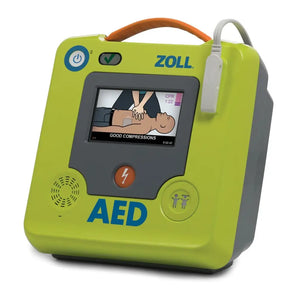
ZOLL AED 3
The ZOLL AED 3 is ideal for organizations seeking:
-
Real-time CPR feedback
-
Advanced rescue guidance
-
Full-colour display
-
Enhanced user support
https://aed.ca/collections/zoll/products/zoll-aed-3
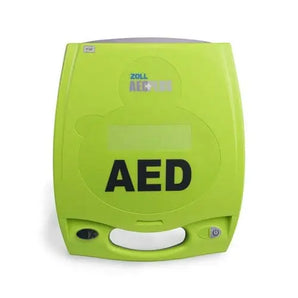
ZOLL AED Plus
The ZOLL AED Plus is often selected by organizations that prioritize:
-
Durability
-
Simplicity
-
Long-term reliability
-
Industrial and rugged environments
https://aed.ca/products/zoll-aed-plus
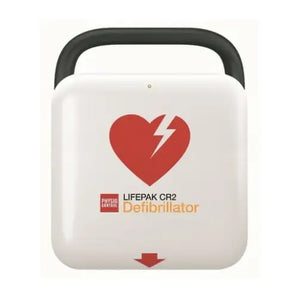
LIFEPAK CR2
The LIFEPAK CR2 is a popular choice for:
-
Schools
-
Community facilities
-
Public-access environments
-
Locations serving children and families
https://aed.ca/collections/aeds
The most important factor is selecting a quality AED platform and implementing it consistently across all locations.
Why Organizations Across Canada Trust AED.ca
One of the reasons organizations across Canada choose AED.ca is because we focus on what is best for the customer—not simply on making a sale.
There have been many situations where our team has recommended that organizations continue using their existing AEDs because the devices remained reliable, compliant, and cost-effective.
In other situations, we have recommended phased replacement strategies that allow organizations to standardize over time without replacing every device immediately.
As Canada's AED Company, we believe long-term relationships are built on honest advice, transparent recommendations, and a genuine commitment to helping organizations protect their people.
Whether you need guidance on AED standardization, AED maintenance, AED compliance, AED inspections, or selecting the best AED for your organization, our team is here to help.
We do not believe in overselling equipment or recommending unnecessary upgrades. Our goal is simple: help Canadian organizations build effective AED programs that save lives.
Frequently Asked Questions
Is it necessary to replace all AEDs at once to standardize?
No. Many organizations implement a phased replacement strategy, replacing older devices as they reach end-of-life while gradually moving toward a standardized AED fleet.
Can AED standardization reduce maintenance costs?
Yes. AED standardization often reduces inventory requirements, simplifies inspections, improves AED program management, and lowers long-term operating costs.
Does AED standardization improve compliance?
Absolutely. A standardized AED fleet makes it easier to conduct inspections, manage records, track expiries, and maintain AED compliance across multiple locations.
Can AED.ca help evaluate our current AED program?
Yes. AED.ca we assists organizations in Canada with AED program reviews, standardization planning, maintenance programs, inspection services, and compliance support.
Build a Better AED Program with AED.ca
If your organization operates multiple locations, now is the perfect time to evaluate whether your AED program is standardized, easy to maintain, and prepared for an emergency.
A successful AED program is about much more than purchasing equipment. It is about ensuring that every AED is rescue-ready, every location is supported, and every employee has confidence during a cardiac emergency.
AED standardization is one of the most effective ways to improve emergency readiness, strengthen AED compliance, simplify AED maintenance, and reduce long-term program costs.
Contact AED.ca today to discuss your AED program and discover how a standardized approach can improve safety across your organization.
About AED.ca
AED.ca is Canada's AED Company, providing Automated External Defibrillators (AEDs), batteries, pads, accessories, AED inspections, AED compliance support, and full-service AED maintenance programs to organizations across Canada.
From small businesses and schools to national corporations and government agencies, AED.ca helps organizations develop effective workplace AED programs that improve cardiac emergency preparedness and save lives.
About Martin Andrews
Martin Andrews is President of AED.ca and has worked with organizations throughout Canada to improve cardiac emergency preparedness through AED deployment, AED maintenance, AED inspections, compliance support, and AED program management.
Known for his practical, customer-first approach, Martin believes organizations should receive honest recommendations based on safety, compliance, and long-term value—not sales pressure. His goal is to help Canadian organizations build sustainable AED programs that are ready when they are needed most.
Connect with Martin Andrews on LinkedIn:
https://www.linkedin.com/in/martin-andrews-27aa6116b/
For expert guidance on AED standardization, AED maintenance, AED compliance, and multi-location AED program management, contact AED.ca today.