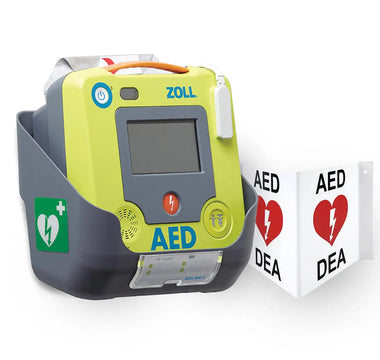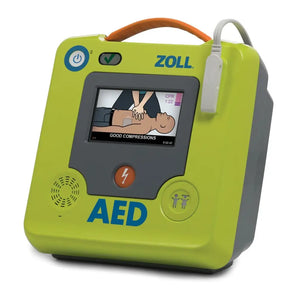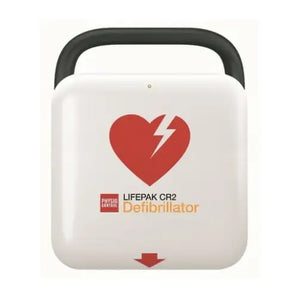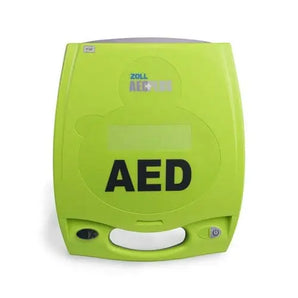
Just Purchasing an AED is Not Enough
Purchasing an AED (Automated External Defibrillator) for your workplace is an important investment in employee and public safety.
But once the AED is installed, an important question often gets overlooked:
Who is responsible for checking and maintaining the AED?
For many Canadian businesses, the answer isn't as clear as it should be.
An AED may hang on the wall for years without ever being used. During that time, AED pads can expire, batteries can require replacement, accessories can go missing, and the device can develop a fault.
That's why every workplace with an AED should have someone—or a professional AED maintenance provider—responsible for ensuring the device remains Rescue Ready.
At AED.ca, we help businesses and organizations across Canada manage their AEDs through professional inspections, maintenance, expiry tracking and documentation.
Who Is Responsible for AED Maintenance at Work?
Responsibility ultimately rests with the organization that owns or manages the AED.
Within a workplace, AED management may be assigned to someone such as a:
-
Health and safety manager
-
Joint Health and Safety Committee representative
-
Facilities manager
-
First aid coordinator
-
Human resources manager
-
Office manager
-
Operations manager
-
Health and safety representative
-
Designated AED program coordinator
The specific job title isn't what's important.
What's important is that someone is clearly responsible for the AED.
If everyone assumes someone else is checking it, important AED inspections and maintenance can easily be missed.
Buying an AED Is Only the Beginning
Modern AEDs are designed to be reliable and perform automatic self-tests. However, that doesn't mean an AED should simply be installed in a cabinet and forgotten.
A complete workplace AED program should include ongoing:
-
AED inspections
-
AED maintenance
-
AED readiness checks
-
Pad expiry monitoring
-
Battery monitoring
-
AED accessory checks
-
Maintenance documentation
-
Inspection records
-
Post-use servicing
-
Recall and safety-notice monitoring
-
AED replacement planning
You can learn more in our guide to AED maintenance requirements in Canada.
What Should Be Checked on an AED?
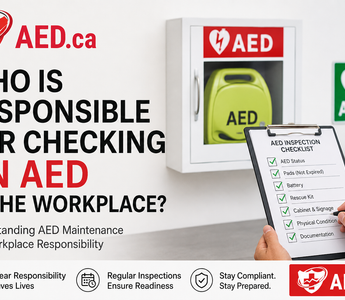
A routine AED inspection or AED readiness check should verify that the entire AED system is prepared for an emergency.
Depending on the AED model, manufacturer recommendations and your organization's requirements, this can include checking:
AED Status Indicator
Confirm that the AED's readiness indicator shows the appropriate Ready, OK or green status for that particular model.
A warning indicator, audible alert or failed self-test should be investigated immediately.
AED Pads
Check that the AED electrode pads:
-
Are present
-
Are properly connected when required by the model
-
Remain sealed
-
Have not been damaged
-
Are within their expiration date
AED pads are single-use components and must also be replaced after they are used.
AED Battery
The AED battery should be checked according to the manufacturer's recommendations.
Battery status, installation date, replacement schedule and device indicators should all be monitored so the AED has sufficient power when it is needed.
AED Rescue Kit
The AED rescue kit should be present and properly stocked.
Depending on your kit, this may include items such as gloves, scissors, a CPR barrier, razor and other emergency-response supplies.
AED Cabinet and Signage
Make sure the AED is:
-
Clearly visible
-
Easy to access
-
Not obstructed
-
Properly stored
-
Identified with appropriate AED signage
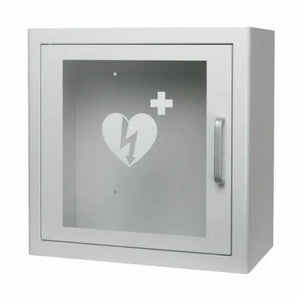
If the AED is stored in a cabinet, the cabinet and alarm should also be checked where applicable.
Physical Condition
Look for visible damage to the AED, carrying case, cables, connectors and other components.
Any device that has been dropped, damaged, exposed to inappropriate environmental conditions or shows a warning should be assessed.
AED Inspection Records
The inspection itself should also be documented.
Keeping accurate AED maintenance records and AED inspection logs can help organizations demonstrate that their lifesaving equipment is being actively managed.
How Often Should an AED Be Checked?
The appropriate inspection schedule depends on the AED model, manufacturer's instructions, applicable legislation, workplace policies and the environment in which the AED is located.
Many organizations incorporate regular visual AED inspections into their workplace safety programs, along with more comprehensive periodic inspections.
AEDs should also be checked following:
-
Use during an emergency
-
A warning or failed status indicator
-
Physical damage
-
Environmental exposure
-
Relocation
-
Manufacturer safety notices or recalls
Always follow the instructions and maintenance recommendations for your specific AED.
Read more about how to properly maintain AEDs in Canada.
The AED on the Wall Is Not an AED Program
This distinction is important.
Owning an AED and managing an AED are two different things.
Installing an Automated External Defibrillator is the first step.
An effective AED program considers the entire lifecycle of the device—from installation through inspections, replacement parts, documentation and eventually AED replacement.
That includes knowing:
-
Where every AED is located
-
Which AED model and serial number you have
-
When pads need replacement
-
When batteries require replacement
-
Whether the AED is showing a Rescue Ready status
-
When it was last inspected
-
Who performed the inspection
-
Whether maintenance was documented
-
Whether the device has been affected by a manufacturer notice or recall
-
Whether the AED is approaching the end of its recommended service life
This becomes particularly important for organizations managing multiple AEDs across multiple locations.
The Problem With Assigning AED Maintenance to an Employee
Many organizations initially designate an employee to look after their AED.
That can work—but there are challenges.
Employees change positions.
People leave companies.
Responsibilities get reassigned.
Vacation happens.
Inspection reminders get missed.
Pad expiry dates get forgotten.
A spreadsheet isn't updated.
Eventually, nobody is quite sure when the AED was last inspected.
And because an AED may go years without being used, these problems aren't always obvious.
The AED can still be sitting exactly where it has always been.
That doesn't necessarily mean it is Rescue Ready.
This is one reason businesses increasingly look at professional AED maintenance services and AED program management rather than relying exclusively on internal reminders.
Should Businesses Outsource AED Maintenance?
For many organizations, yes.
Businesses routinely outsource the inspection and servicing of important safety equipment.
AEDs deserve the same level of attention.
A professional AED maintenance program can help remove responsibility for tracking dozens of dates, components and inspection records from individual employees.
This is particularly valuable for:
-
Corporations
-
Offices
-
Manufacturing facilities
-
Warehouses
-
Construction companies
-
Schools
-
Hotels
-
Restaurants
-
Fitness centres
-
Recreation facilities
-
Property management companies
-
Municipalities
-
Churches
-
Non-profit organizations
-
Multi-location businesses
For organizations with AEDs spread across several locations, centralized AED program management can make an even greater difference.
AED.ca Full-Service AED Maintenance Plan
AED.ca developed its Full-Service AED Maintenance Plan to make AED ownership easier for Canadian organizations.
Instead of relying solely on an employee to remember every inspection, expiry date and maintenance requirement, AED.ca helps professionally manage the process.
Our Full-Service AED Maintenance Plan includes:
Annual On-Site AED Inspection
A professional inspection and readiness check of the AED, including verification of device condition, pads and battery status.
AED Pad Replacement
Replacement pads are provided when expired or used under the terms of the plan, helping keep your AED Rescue Ready without unexpected replacement costs.
AED Battery Replacement
Replacement batteries are provided as needed under the plan to help maintain uninterrupted AED readiness.
AED Prep Kit
Essential rescue accessories are provided to help ensure the AED station is properly equipped.
Loaner AED Coverage
If an AED requires servicing or is temporarily unavailable, a loaner AED can be provided so your organization can maintain coverage.
AED Inspection Certificate
Organizations receive documentation of the professional inspection, helping create an audit-ready maintenance record.
Digital AED Maintenance Records
AED.ca maintains digital records of inspections and maintenance activity, helping organizations document their AED program.
AED Pad and Battery Expiry Tracking
We track replacement requirements so your organization doesn't have to rely solely on calendars, spreadsheets or employee memory.
AED Regulations and Compliance Support
Our specialists can help organizations understand applicable AED regulations, manufacturer recommendations, registry considerations and industry best practices.
AED Registry Support
Where applicable, AED.ca can assist with AED registry requirements and registration.
Priority AED Support
Customers have access to knowledgeable AED specialists when questions or issues arise.
Who Should Manage AEDs Across Multiple Locations?
Managing one AED is relatively straightforward.
Managing 10, 50, 100 or hundreds of AEDs across Canada is different.
Organizations with multiple locations need to know:
-
Which AED is at each facility
-
Device model
-
Serial number
-
Pad expiry information
-
Battery information
-
Inspection history
-
Maintenance history
-
Replacement requirements
-
Device age
-
Recall or safety-notice status
A centralized corporate AED program helps ensure individual locations don't operate independently with different inspection and maintenance standards.
For larger organizations, professional AED program management can create a consistent standard across the company.
What Happens When the Person Responsible for the AED Leaves?
This is one of the biggest weaknesses of employee-managed AED programs.
If your AED program depends entirely on one person's calendar, spreadsheet or memory, the system can break down when that employee leaves.
A professionally managed AED maintenance program creates continuity.
The responsibility doesn't disappear because an employee changes jobs.
That's particularly important because AEDs are long-term assets that may remain at a workplace for many years.
Don't Forget About the Age of Your AED
Maintenance isn't only about pads and batteries.
Organizations should also monitor the age and support status of the AED itself.
As AEDs get older:
-
Manufacturer warranties expire
-
Technology changes
-
Replacement components may become more expensive
-
Models can be discontinued
-
Manufacturer support may eventually change
If you don't know how old your AED is, read our guide: How Old Is Your AED?.
Organizations considering replacement can also explore AEDs for sale in Canada.
Frequently Asked Questions About Workplace AED Maintenance
Who is responsible for checking an AED at work?
The organization that owns or operates the AED should ensure responsibility for its readiness is clearly assigned. Internally, this may be a health and safety manager, facilities manager, first aid coordinator, HR representative or another designated employee. Organizations can also use a professional AED maintenance provider such as AED.ca to manage inspections and maintenance.
Do AEDs need regular inspections?
Yes. AEDs should be checked according to manufacturer instructions, applicable regulations and organizational policies. Regular inspections help identify expired pads, battery issues, physical damage, missing accessories and warning indicators.
Do AEDs require maintenance if they have never been used?
Yes. An unused AED still requires ongoing oversight. Electrode pads have expiration dates, batteries have service lives, and the device itself needs to remain in a Rescue Ready condition.
Do AED pads expire?
Yes. AED electrode pads have manufacturer expiration dates and should be replaced before they expire. Pads also generally need replacement after use.
Do AED batteries need to be replaced?
Yes. AED batteries eventually require replacement. Battery life and replacement requirements vary by manufacturer and AED model, so organizations should follow the instructions for their specific device.
Should AED inspections be documented?
Maintaining AED inspection and maintenance records is an important part of a well-managed AED program. Documentation helps organizations track device readiness, maintenance history and replacement activity.
Can AED maintenance be outsourced?
Yes. Businesses and organizations can outsource AED inspections, expiry tracking, replacement management, documentation and other aspects of AED program management.
Take AED Maintenance Off Your Team's To-Do List
Your AED is there for an emergency you hope never happens.
But if that emergency does happen, you need confidence that the device is ready.
Don't leave AED readiness dependent on someone's calendar reminder or a spreadsheet that may eventually be forgotten.
Let AED.ca help manage it for you.
Our Full-Service AED Maintenance Plan is designed for Canadian businesses and organizations that want their AEDs professionally inspected, documented, maintained and Rescue Ready.
Whether you have one AED at one workplace or hundreds of AEDs across Canada, we can help you build a more reliable AED maintenance program.
Learn more about AED.ca Full-Service AED Maintenance Plans or visit AED.ca to speak with an AED specialist.
About AED.ca
AED.ca is a Canadian-owned AED company specializing in Automated External Defibrillators, AED maintenance, inspections, replacement pads and batteries, and corporate AED program management.
We help Canadian businesses, schools, municipalities, healthcare facilities, property managers and organizations purchase, maintain and manage lifesaving AED equipment.
Martin Andrews, President of AED.ca, has helped organizations across Canada select and manage AED equipment and develop practical AED programs focused on long-term readiness—not simply purchasing a device and putting it on the wall.
Our goal is simple:
Help ensure every AED we support is Rescue Ready when it matters most.