Guide to Automated External Defibrillators (AEDs) in Canada
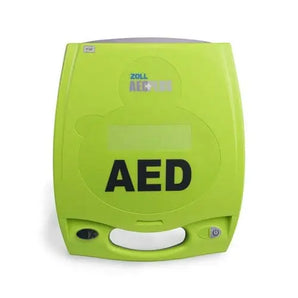
What is an AED? An AED, or Automated External Defibrillator, is a portable medical device designed to help someone experiencing sudden cardiac arrest (SCA).
AEDs analyze a person's heart rhythm and determine whether defibrillation—an electrical shock—is appropriate.
You'll find AED machines in workplaces, schools, community centres, recreation facilities, airports, gyms, offices and other public-access locations across Canada.
For Canadian businesses and organizations, having an AED is an important part of cardiac emergency preparedness. Equally important is making sure the AED is accessible, properly inspected, maintained and ready for use.
In this guide, we'll answer the most common questions Canadians have about AEDs, including:
-
What does AED stand for?
-
What is an AED used for?
-
How does an AED work?
-
How do you use an AED?
-
Can anyone use an AED?
-
What is sudden cardiac arrest?
-
Where should an AED be located?
-
Do AEDs require maintenance?
-
How often should AEDs be inspected?
-
Do AED pads and batteries expire?
-
What is the best AED in Canada?
-
Where can you buy an AED in Canada?
-
How much does an AED cost in Canada?
What Does AED Stand For?
AED stands for Automated External Defibrillator.
An automated external defibrillator is an electronic medical device designed to analyze the heart rhythm of someone experiencing sudden cardiac arrest and determine whether an electrical shock is appropriate.
You may hear the device referred to by several different names, including:
-
AED
-
AED machine
-
AED device
-
AED defibrillator
-
Automated defibrillator
-
Automated External Defibrillator
-
Portable defibrillator
-
Public-access defibrillator
These terms generally refer to the portable AED devices commonly installed in workplaces and public locations.
What Is an AED Used For?
An AED is used to help someone experiencing sudden cardiac arrest.
Sudden cardiac arrest occurs when the heart unexpectedly stops pumping blood effectively.
A person experiencing cardiac arrest may suddenly collapse, become unresponsive and stop breathing normally.
This is a medical emergency.
Call 911, begin CPR and get an AED as quickly as possible.
Once attached to the person, the AED analyzes the heart rhythm and determines whether a shock is appropriate.
The person operating the AED does not have to determine whether the patient needs a shock—the AED performs that analysis.
What Is Sudden Cardiac Arrest?
Sudden cardiac arrest, commonly abbreviated SCA, is a medical emergency in which the heart suddenly stops functioning normally.
Sudden cardiac arrest is different from a heart attack, although a heart attack can sometimes contribute to cardiac arrest.
During cardiac arrest, immediate action is critical.
A typical emergency response includes:
Call 911 → Start CPR → Retrieve and use an AED → Continue following the AED's instructions until emergency medical services arrive.
Having a public-access AED nearby can make defibrillation available before paramedics arrive.
How Does an AED Work?
A common question is: How does an AED work?
Modern Automated External Defibrillators are sophisticated medical devices, but they're intentionally designed to guide rescuers through their operation.
Step 1: Turn On the AED
Turn on the AED and immediately listen to its voice instructions.
Most modern AEDs provide clear audio prompts, visual instructions or both.
Step 2: Expose the Chest
The AED electrode pads must be placed directly on the person's bare chest.
Step 3: Attach the AED Pads
Remove the adhesive electrode pads from their packaging and position them according to the diagrams printed on the pads.
Step 4: Allow the AED to Analyze the Heart Rhythm
Once the pads are connected, the AED analyzes the person's heart rhythm.
Make sure nobody is touching the person while the AED performs its analysis.
Step 5: Follow the AED Instructions
If the AED detects a rhythm appropriate for defibrillation, it will provide instructions.
Depending on the model, the AED may either:
-
Tell the rescuer to press the shock button, or
-
Automatically deliver the shock after warning everyone to stand clear.
Step 6: Continue CPR
Continue following the AED's CPR and rescue prompts.
The AED will continue guiding the rescuer through additional CPR and rhythm-analysis cycles as required.
How to Use an AED — Watch Our Video
One of the best ways to become more comfortable with an AED is to see one being used.
AED.ca recently created a short video demonstrating the basic steps involved in using an Automated External Defibrillator.
You can also read our complete guide:
How to Use an AED: Step-by-Step Guide for Canada
Knowing where your AED is located and understanding the basic rescue process before an emergency can help your organization become better prepared.
Can Anyone Use an AED?
Another common question is:
Can you use an AED without being a doctor, nurse or paramedic?
Public-access AEDs are specifically designed to guide rescuers through their operation.
Modern AEDs use:
-
Voice instructions
-
Visual diagrams
-
Step-by-step rescue prompts
-
Automatic heart-rhythm analysis
-
CPR guidance on certain models
The AED determines whether the heart rhythm is appropriate for defibrillation.
Although CPR and AED training is strongly recommended, today's AEDs are designed to provide clear instructions during a cardiac emergency.
Can an AED Shock Someone Who Doesn't Need It?
An AED analyzes the person's heart rhythm before determining whether defibrillation is appropriate.
This is an important feature of modern Automated External Defibrillators.
The rescuer does not decide whether to administer defibrillation—the AED analyzes the heart rhythm and provides the appropriate instructions.
What Is a Public-Access AED?
A public-access AED, sometimes referred to as a PAD or Public Access Defibrillator, is an AED placed in a location where it can be quickly accessed during an emergency.
Common AED locations include:
-
Workplaces
-
Office buildings
-
Manufacturing plants
-
Warehouses
-
Construction sites
-
Schools
-
Universities
-
Community centres
-
Recreation facilities
-
Arenas
-
Gyms and fitness centres
-
Hotels
-
Restaurants
-
Shopping centres
-
Churches
-
Government buildings
-
Condominiums
-
Apartment buildings
-
Dental and medical offices
-
Remote worksites
The goal is straightforward: make defibrillation available as quickly as possible when sudden cardiac arrest occurs.
Why Should a Workplace Have an AED?
An AED for the workplace provides employees and visitors with access to emergency defibrillation while waiting for emergency medical services.
For businesses considering an AED, the decision shouldn't be based only on whether an AED is legally required.
Organizations should also consider:
-
Number of employees
-
Number of visitors
-
Age and demographics of the population
-
Distance from emergency medical services
-
Size of the facility
-
Multiple floors or buildings
-
Remote work locations
-
Physical activity performed on-site
-
Overall emergency preparedness
An AED can form an important part of a broader workplace emergency response program.
Where Should an AED Be Located?
An AED should be:
Visible. Accessible. Clearly identified. Quickly retrievable.
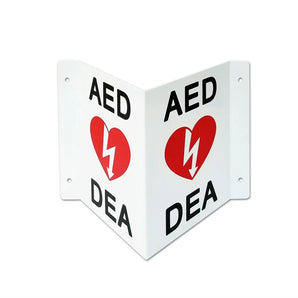
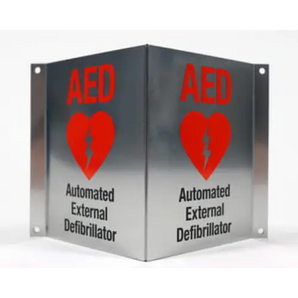
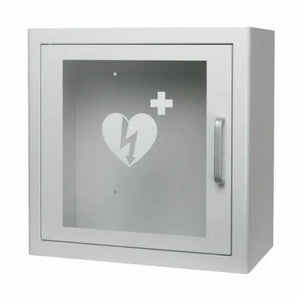
AEDs are commonly installed in an AED wall cabinet with appropriate AED signage.
Organizations should avoid locations that are locked, hidden or difficult to access during normal operating hours.
Everyone in the workplace should be able to answer:
“Where is the nearest AED?”
Employees should also know how to retrieve the AED quickly during an emergency.
What Equipment Comes With an AED?
A typical AED setup may include:
-
Automated External Defibrillator
-
Adult AED electrode pads
-
AED battery
-
Carrying case
-
AED rescue kit
-
AED wall cabinet
-
AED wall sign or 3D signage
-
Pediatric AED pads or pediatric capability when required
Additional accessories depend on the AED model and installation environment.
You can shop AEDs and AED equipment in Canada through AED.ca.
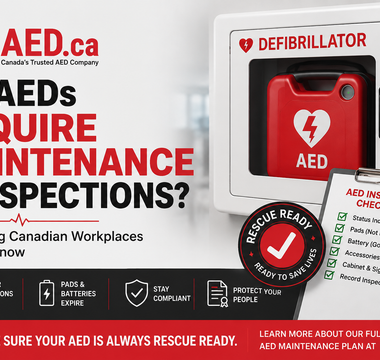
Do AEDs Require Maintenance?
Yes. AEDs require ongoing inspection and maintenance.
One of the biggest misconceptions about AED ownership is that an organization can simply install an AED on the wall and forget about it.
AEDs perform internal self-tests, but organizations should still have a system for monitoring the AED and its consumable components.
AED maintenance can include checking:
-
AED status or readiness indicator
-
AED electrode pad expiration dates
-
AED battery status
-
AED battery expiration or replacement date
-
Device self-test status
-
Physical condition of the AED
-
AED cabinet
-
Rescue kit contents
-
Pediatric pads when applicable
-
Manufacturer safety notices
-
Inspection records
-
Maintenance records
Learn more:
AED Maintenance: Why Regular AED Inspections Matter
Do AED Pads Expire?
Yes. AED electrode pads expire.
AED pads contain adhesive and conductive materials designed to create proper contact between the AED and the person's chest.
Pads must also be replaced after they have been used.
Every organization with an AED should know:
-
What type of AED pads it requires
-
Where the expiration date is located
-
When replacement pads are due
-
Who is responsible for tracking the expiration
AED.ca supplies replacement AED pads and batteries for major AED brands.
Do AED Batteries Expire?
AED batteries also have manufacturer-specified replacement requirements.
Battery performance and replacement intervals vary depending on the AED model.
An effective AED maintenance program tracks both pads and batteries so replacement components can be ordered before they're needed.
How Often Should an AED Be Inspected?
AED inspection frequency should follow the AED manufacturer's instructions and any requirements applicable to the organization's jurisdiction.
Regular AED checks generally focus on confirming that:
-
The AED indicates it is rescue-ready
-
Pads haven't expired
-
Batteries remain within their service period
-
Accessories are present
-
The unit is undamaged
-
The AED is accessible
-
Inspection documentation is current
Organizations managing multiple AED locations can find this increasingly difficult to track internally.
That's one reason AED.ca developed its Full-Service AED Maintenance Plan.
AED.ca Full-Service AED Maintenance Plan
AED ownership shouldn't mean constantly worrying about AED inspections, replacement pads, replacement batteries and expiration dates.
The AED.ca Full-Service AED Maintenance Plan provides Canadian businesses and organizations with a professionally managed AED maintenance solution.
Our program includes services such as:
-
Annual on-site AED inspection and readiness check
-
Automatic replacement of AED pads before expiry
-
Automatic replacement of AED batteries when required
-
Digital AED inspection records
-
AED maintenance history
-
Pad and battery expiry tracking
-
Scan-enabled digital AED identification
-
Compliance documentation
-
AED registry support
-
Loaner AED when required
-
Priority AED support
Whether your organization manages one AED or hundreds of AEDs across Canada, centralized AED management can help ensure nothing gets overlooked.
Learn more about AED.ca's AED Maintenance Plans
What Is the Best AED in Canada?
There isn't one AED that's perfect for every organization.
When determining which AED is best, consider:
-
Ease of use
-
CPR feedback
-
Adult and pediatric capability
-
Bilingual English/French capability
-
Electrode pad life
-
Battery life
-
Manufacturer warranty
-
Connectivity
-
Remote AED monitoring
-
Durability
-
Replacement-part availability
-
Cost of AED pads
-
Cost of AED batteries
-
AED maintenance costs
-
Total cost of ownership
-
Manufacturer support
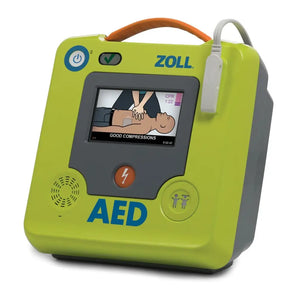
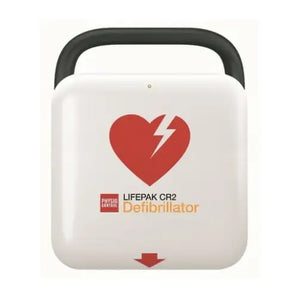
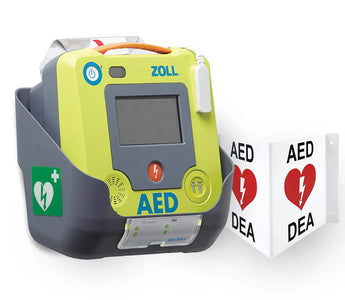
Two AEDs we regularly recommend for Canadian organizations are the ZOLL AED 3 and Physio-Control LIFEPAK CR2.
ZOLL AED 3
The ZOLL AED 3 is a popular choice for organizations looking for an advanced AED with CPR feedback technology.
Features include:
-
Real-time CPR feedback
-
Full-colour touchscreen
-
CPR Uni-padz
-
Adult and pediatric rescue capability
-
Long-life consumables
-
Wi-Fi connectivity on applicable configurations
The ZOLL AED 3 is well suited for workplaces, schools, recreation facilities, healthcare environments and other public-access AED programs.
Physio-Control LIFEPAK CR2
The Physio-Control LIFEPAK CR2 AED is another popular option for workplaces and multi-location organizations.
It offers a straightforward rescue process and connected AED-management capabilities on applicable configurations.
A bilingual English/French LIFEPAK CR2 is especially attractive to organizations looking for a bilingual AED in Canada.
Shop the LIFEPAK CR2 AED @ AED.ca
Not sure which model to choose?
Read our comparison:
ZOLL AED 3 vs. LIFEPAK CR2: Which AED Is Best for Your Organization?
How Much Does an AED Cost in Canada?
The cost of an AED in Canada depends on the manufacturer, model, features and included accessories.
When comparing AED prices, don't look only at the initial purchase price.
Consider the complete cost of AED ownership, including:
-
Replacement electrode pads
-
Replacement batteries
-
Pediatric capability
-
Carrying case
-
AED cabinet
-
AED signage
-
Inspection requirements
-
Maintenance costs
-
Warranty
-
Expected service life
-
Manufacturer support
An AED with a slightly higher purchase price may offer better long-term value if its consumables last longer or it provides features that simplify AED management.
Where Can I Buy an AED in Canada?
If you're searching for:
“Where can I buy an AED in Canada?”
AED.ca specializes in AED sales, Automated External Defibrillators, replacement AED pads and batteries, AED inspections, AED maintenance and AED program management throughout Canada.
You can:
or
Contact AED.ca for personalized recommendations, volume pricing or help choosing the best AED for your organization.
AED.ca works with:
-
Canadian businesses
-
Corporations
-
Schools and school boards
-
Municipalities
-
Government organizations
-
Construction companies
-
Hotels
-
Property managers
-
Healthcare organizations
-
Recreation facilities
-
Churches
-
Non-profit organizations
-
Multi-location employers
Frequently Asked Questions About AEDs
What does AED stand for?
AED stands for Automated External Defibrillator.
What is an AED?
An AED is a portable medical device that analyzes a person's heart rhythm during suspected sudden cardiac arrest and determines whether defibrillation is appropriate.
What does an AED do?
An AED analyzes the heart rhythm and, when appropriate, provides defibrillation while guiding the rescuer through the emergency response.
What is an AED machine used for?
An AED machine is used during suspected sudden cardiac arrest.
Is an AED a defibrillator?
Yes. An Automated External Defibrillator is a type of defibrillator specifically designed to automatically analyze heart rhythm and guide rescuers through its use.
Can anyone use an AED?
Public-access AEDs are designed with voice and visual instructions to guide users through the rescue process. CPR and AED training is strongly encouraged.
Can an AED shock someone by mistake?
An AED analyzes the person's heart rhythm and determines whether the rhythm is appropriate for defibrillation before allowing or delivering a shock.
Do you use an AED during a heart attack?
AEDs are used for sudden cardiac arrest. A heart attack and cardiac arrest are different medical emergencies, although a heart attack can sometimes lead to cardiac arrest.
Do AEDs expire?
The AED itself doesn't normally have a simple expiration date like its consumables, but AEDs age and eventually require replacement. Electrode pads and batteries have defined replacement or expiration periods.
Do AED pads expire?
Yes. AED electrode pads have expiration dates and must also be replaced after use.
Do AED batteries expire?
AED batteries have manufacturer-specified service or replacement periods that should be monitored as part of an AED maintenance program.
Do AEDs need maintenance?
Yes. AEDs should be routinely inspected and maintained according to manufacturer instructions and applicable requirements.
How often should an AED be checked?
Organizations should follow the inspection schedule recommended by their AED manufacturer and any requirements applicable in their jurisdiction.
Where should an AED be located?
An AED should be clearly visible, easily accessible and quickly retrievable during an emergency.
Should businesses have an AED?
Businesses should consider factors including workforce size, visitors, facility size, emergency-response times and overall workplace emergency preparedness when determining whether to install an AED.
What is the best AED for a workplace?
The best workplace AED depends on the organization's needs. Popular options include the ZOLL AED 3 and Physio-Control LIFEPAK CR2.
What is the best AED in Canada?
There is no single best AED for every situation. Ease of use, CPR feedback, bilingual capabilities, consumable life, warranty, connectivity, support and overall ownership costs should all be considered.
Where can I purchase an AED in Canada?
AED.ca sells AEDs, replacement pads, batteries and accessories across Canada and also provides AED inspection, maintenance and program-management services.
Buying an AED Is Only the First Step
Purchasing an Automated External Defibrillator is an important investment in emergency preparedness.
But AED readiness doesn't end when the AED is mounted on the wall.
Organizations should have a complete AED program that addresses:
AED placement + awareness + training + inspections + maintenance + pad replacement + battery replacement + documentation.
The objective is simple:
Make sure your AED is ready when someone needs it.
If your organization already owns an AED, learn about the AED.ca Full-Service AED Maintenance Plan.
If you're looking to purchase an AED, shop AEDs for sale in Canada or contact our team for a recommendation.
About AED.ca
AED.ca is Canada's AED Company, specializing in Automated External Defibrillators, AED sales, AED inspections, AED maintenance and AED program management.
We help Canadian businesses, schools, municipalities, government organizations, healthcare organizations, property managers, construction companies, recreation facilities, churches and other organizations select, purchase and maintain their AEDs.
From choosing the best AED for your workplace to managing replacement pads, batteries, inspections and documentation, AED.ca provides ongoing support throughout the life of your AED.
Martin Andrews, President of AED.ca, works with organizations across Canada to improve cardiac emergency preparedness through AED sales, inspections, maintenance and comprehensive AED programs.