A Helpful Guide
Yes. AEDs require regular maintenance, inspections, and readiness checks to help ensure they will work properly when needed.
An Automated External Defibrillator (AED) may sit unused for years, but that does not mean it can simply be installed on a wall and forgotten.
AED electrode pads expire. Batteries eventually need replacement. Accessories can go missing. An AED can develop a fault or display a service warning. And without a documented inspection program, a business may not know there is a problem until the AED is needed during a sudden cardiac arrest emergency.
For Canadian businesses and workplaces, proper AED maintenance and inspections should therefore be an important part of an overall workplace safety and emergency preparedness program.
Health Canada recommends that AEDs be checked regularly, that organizations follow the manufacturer's maintenance and testing schedule, and that someone be responsible for checking the device and battery. (Canada)
What Is AED Maintenance?
AED maintenance is the ongoing process of keeping an automated external defibrillator operational, properly supplied and ready for an emergency.
Depending on the AED model and manufacturer's instructions, AED maintenance can include:
-
Checking the AED's readiness or status indicator
-
Checking AED electrode pad expiration dates
-
Checking battery status and replacement dates
-
Replacing expired AED pads and batteries
-
Confirming pads are properly connected when applicable
-
Inspecting the AED for damage or signs of tampering
-
Making sure the rescue kit and accessories are complete
-
Confirming the AED is stored correctly
-
Checking the AED cabinet and signage
-
Maintaining inspection and service records
-
Addressing fault or service warnings
-
Performing checks following use of the AED
Modern AEDs typically perform automatic self-tests, but automatic self-testing does not eliminate the need for human oversight and regular AED inspections.
Health Canada specifically notes that most AEDs have built-in self-tests but still recommends that someone be responsible for regularly checking the device and battery and responding immediately to service prompts. (Canada)
What Is an AED Inspection?
An AED inspection, sometimes called an AED check, AED readiness check, defibrillator inspection, AED compliance check, AED operational check or AED functionality check, is a scheduled review of the AED and its surrounding equipment.
The purpose is simple:
Is this AED ready to be used right now if someone experiences sudden cardiac arrest?
A workplace AED inspection should generally verify that:
-
The AED is present and accessible.
-
The status indicator displays the appropriate ready status.
-
The AED has no obvious physical damage.
-
Electrode pads are present, sealed and within their usable dates.
-
The battery is installed and has adequate remaining service life.
-
Required accessories are present.
-
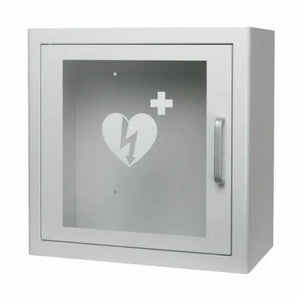
The AED cabinet and alarm are functioning, if applicable.
-
AED signage is visible.
-
There are no service or error warnings.
-
The inspection has been properly documented.
The exact procedure and frequency should always follow the instructions provided by the manufacturer of your particular AED.
How Often Should an AED Be Inspected?
This is one of the most common questions Canadian businesses ask about AED maintenance requirements.
There isn't one inspection schedule that applies identically to every AED and every organization. Requirements can depend on the AED manufacturer, model, applicable legislation, workplace policies and the organization's AED program.
However, regular documented readiness checks are a sensible component of AED ownership, and many organizations incorporate a monthly AED inspection into their safety program.
AED.ca recommends combining regular workplace readiness checks with a comprehensive professional inspection and maintenance program.
The AED should also be checked following use, when a fault or warning appears, or whenever there is reason to believe the device or its supplies may have been affected.
Most importantly, follow the maintenance and testing schedule in your AED manufacturer's instructions. Health Canada specifically recommends following the manual's maintenance schedule and checking the AED's status, pads, accessories and batteries. (Canada)
Do AED Pads Expire?
Yes. AED electrode pads have a limited shelf life and need to be replaced according to their expiry or replacement date.
The pads contain conductive material that allows them to make proper contact during a rescue. They are also generally single-use items.
One of the most important parts of an AED maintenance program is therefore tracking pad expiry dates and arranging replacements before they become unusable.
This is especially easy to overlook because an AED may never have been used.
A workplace can have an AED that appears perfectly fine from the outside while its electrode pads have quietly reached their replacement date.
Do AED Batteries Need to Be Replaced?
Yes.
AED batteries have a finite service life. Battery longevity and replacement requirements vary considerably by manufacturer and AED model.
Businesses should not assume that an AED battery is good indefinitely simply because the device has never been used.
Battery status and applicable replacement information should be included in routine AED inspections and maintenance checks.
What Happens If You Don't Maintain an AED?
An AED is emergency equipment.
When someone experiences sudden cardiac arrest, there is no time to discover that the AED has expired pads, an inadequate battery, a service fault or missing accessories.
Poor AED maintenance can result in problems such as:
-
Expired electrode pads
-
Batteries requiring replacement
-
Failed readiness indicators
-
Missing rescue supplies
-
Undetected damage
-
Missed manufacturer alerts
-
Incomplete inspection records
-
An AED that is not immediately rescue-ready
That is why buying the AED should be considered the beginning of an AED program — not the end of it.
Are AED Inspections Required in Canada?
There isn't a single Canada-wide rule requiring every business to own or inspect an AED in exactly the same way.
AED legislation and requirements vary by jurisdiction and type of facility. Organizations should check the requirements applicable to their province, industry and workplace and follow the instructions supplied by the AED manufacturer.
Regardless of the specific legal requirement, however, if your organization has invested in an AED, maintaining that equipment so it is ready for an emergency is simply good safety practice.
Who Is Responsible for AED Maintenance at Work?
Someone needs to be responsible.
That sounds simple, but it is one of the biggest weaknesses of workplace AED programs.
A company buys an AED. Someone initially takes responsibility for checking it. That employee changes positions or leaves the company. Months pass, and eventually nobody is certain:
Who is checking the AED?
This is why businesses should establish clear responsibility for:
-
AED inspections
-
Pad expiry tracking
-
Battery tracking
-
Replacement supplies
-
Maintenance records
-
Post-use servicing
-
AED compliance documentation
For organizations with multiple AEDs or multiple locations, this can quickly become a significant administrative responsibility.
There is an easier option.
The Easier Way: AED.ca Full Service AED Maintenance Plans
Rather than trying to remember expiry dates, manage replacement parts and maintain inspection documentation internally, Canadian businesses can outsource much of their AED maintenance program to AED.ca.
The AED.ca Full Service AED Maintenance Plan is designed to make AED ownership as simple as possible.
Our goal is straightforward:
Everything your AED needs, fully managed.
The plan currently includes:
Annual On-Site AED Inspection & Readiness Check
AED.ca performs a comprehensive on-site inspection and operational readiness check, including verification of pad and battery status.
AED Replacement Pads Included
Replacement pads are provided when required under the plan, helping eliminate the problem of discovering expired pads when they are needed most.
AED Battery Replacement Included
Replacement batteries are provided as needed under the plan to help maintain uninterrupted readiness.
AED Inspection Certificate
Your organization receives formal inspection documentation to support your internal safety, compliance and audit requirements.
Digital AED Maintenance Records
Secure digital maintenance records provide a documented history of your AED inspections and maintenance.
Pad and Battery Expiry Tracking
AED.ca tracks important replacement dates so your organization doesn't have to rely on spreadsheets, calendar reminders or individual employees remembering expiry dates.
AED Registry Support
We can assist with applicable AED registry requirements in Canada.
AED Regulations and Compliance Support
Our team provides guidance regarding Canadian AED regulations, provincial requirements and AED best practices.
Loaner AED
If an AED requires servicing or downtime, a temporary AED can be provided under the plan to help maintain coverage.
Priority AED Support
Your organization has access to AED specialists who understand AED equipment, maintenance, inspections and Canadian workplace programs.
You can learn more about the AED.ca Full Service AED Maintenance Plan.
Why Outsource AED Maintenance?
For many businesses, outsourcing AED maintenance is not about whether someone on staff could check an AED.
It's about making sure it actually gets done year after year.
Consider what can happen over the life of an AED:
Employees change. Managers change. Health and safety committee members change. Offices move. Responsibilities get reassigned. Email reminders get overlooked.
Meanwhile, the AED remains on the wall.
A professionally managed AED program creates continuity.
Instead of depending entirely on one employee remembering what needs to be done, your organization has a dedicated AED maintenance partner helping manage the equipment over the long term.
The Best AED Maintenance Solution for Canadian Businesses
For Canadian businesses looking for a simple, comprehensive approach, AED.ca recommends the AED.ca Full Service AED Maintenance Plan as the best way to manage the ongoing maintenance of your AED.
Rather than purchasing an AED and then managing pads, batteries, inspections, documentation, service requirements and replacement schedules separately, the Full Service Maintenance Plan brings these responsibilities together into one managed program. (AED.ca)
This is particularly valuable for:
-
Businesses and corporate offices
-
Manufacturing facilities
-
Warehouses and distribution centres
-
Construction companies
-
Hotels and hospitality businesses
-
Retail locations
-
Property management companies
-
Recreation and fitness facilities
-
Schools and educational facilities
-
Municipal facilities
-
Organizations with multiple locations
-
Companies managing large fleets of AEDs
Whether your organization has one AED or hundreds of AEDs across Canada, a centralized maintenance program can make managing them significantly easier.
Frequently Asked Questions About AED Maintenance
Do AEDs require maintenance?
Yes. AEDs require ongoing checks and maintenance. Pads and batteries have limited service lives, and the device should be checked according to the manufacturer's instructions.
Do AEDs need to be inspected?
Yes. Regular AED inspections help confirm that the AED is present, accessible, properly supplied and showing the correct readiness status.
How often should an AED be checked?
Follow the inspection and maintenance schedule specified by your AED manufacturer and any requirements applicable to your workplace. Many organizations incorporate documented monthly readiness checks into their AED programs.
Do AEDs expire?
The AED itself does not necessarily have one simple expiry date, but important components such as AED pads and batteries require replacement over the life of the device. AEDs can also eventually become obsolete, unsupported or reach the end of their recommended service life.
Can an AED sit unused for years?
Potentially, yes—but unused does not mean maintenance-free. Pads and batteries still require monitoring and replacement, and the AED still needs to remain in proper working condition.
Can employees perform AED inspections?
Basic readiness checks may often be assigned internally, provided employees follow the manufacturer's instructions and the organization's procedures. Professional AED maintenance provides additional oversight, documentation and expiry management.
What is included in professional AED maintenance?
Depending on the program, professional AED maintenance may include inspections, pad and battery management, maintenance documentation, compliance support, registry assistance, replacement supplies, loaner equipment and ongoing support.
Where can I get AED maintenance in Canada?
AED.ca provides AED maintenance, inspections and AED program support for businesses and organizations across Canada.
Don't Just Own an AED. Make Sure It's Ready.
Purchasing an AED is an important investment in workplace safety.
Maintaining it is what protects that investment.
If your workplace currently has an AED but you're unsure when it was last inspected, when the pads expire, how much battery life remains or who is responsible for maintaining it, now is a good time to review your AED program.
Better yet, let AED.ca help manage it for you.
Keep your AED Rescue Ready.
Learn more about the AED.ca Full Service AED Maintenance Plan and speak with our team about maintenance coverage for your workplace.
About AED.ca
AED.ca is Canada's trusted AED company, helping Canadian businesses and organizations purchase, maintain and manage automated external defibrillators.
From AED sales and replacement pads and batteries to inspections, maintenance programs and multi-location AED management, AED.ca provides Canadian organizations with the products, expertise and ongoing support needed to help keep their AEDs Rescue Ready.
Martin Andrews, President of AED.ca, works with businesses and organizations across Canada to simplify AED ownership, maintenance and workplace readiness.