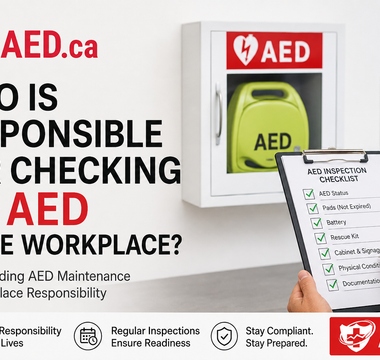
Purchasing an AED is Not Enough!
Purchasing an Automated External Defibrillator (AED) is one of the most important steps a business, workplace, school, church, recreation facility, condominium or community organization can take to prepare for sudden cardiac arrest.
But simply purchasing an AED and mounting it on the wall isn't enough.
Having an AED is only truly beneficial if you also have a plan to properly inspect, maintain and manage it.
An AED is emergency medical equipment. When someone suffers sudden cardiac arrest, there may be no opportunity to troubleshoot the device, order replacement pads or discover that the battery has expired.
The AED needs to be rescue-ready before the emergency happens.
That is why every organization that purchases an AED should also establish an AED maintenance plan from day one.
Buying an AED Is the Beginning — Not the End
Modern AEDs are designed to be easy to operate and perform regular internal self-tests. However, that doesn't mean they can simply be installed and forgotten.
Every AED contains components that require ongoing attention.
Over the life of the device:
-
AED electrode pads expire.
-
AED batteries eventually require replacement.
-
Pads must be replaced after use.
-
Batteries can become depleted.
-
Status indicators can show faults or warnings.
-
Rescue accessories can become missing or damaged.
-
AEDs can be moved or tampered with.
-
Inspection and maintenance records need to be kept current.
Without a defined person, process or professional AED maintenance program responsible for these items, even a high-quality AED can eventually become unprepared for an emergency.
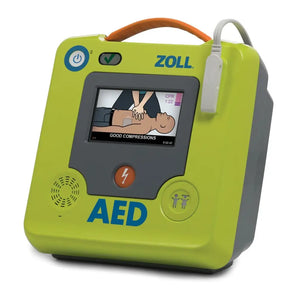
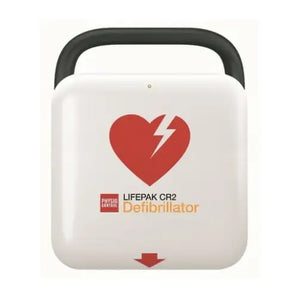
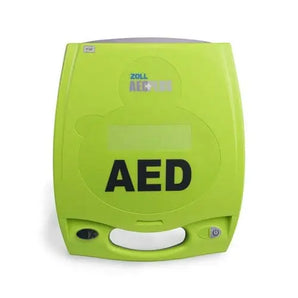
If you're considering purchasing a new AED, view our selection of AEDs for sale in Canada.
The Most Important Question Isn't "Do We Have an AED?"
A better question is:
"If someone went into cardiac arrest today, are we confident our AED is ready to be used?"
That means knowing:
-
Is the AED showing a ready status?
-
Are the electrode pads sealed and within their expiry date?
-
Is the battery within its recommended service life?
-
Are the pads properly connected where required?
-
Is the rescue kit complete?
-
Is the AED accessible?
-
Has the device been inspected?
-
Is there documentation showing that maintenance has been performed?
-
Does someone know when the next pads or battery need to be replaced?
If nobody in your organization can confidently answer those questions, there may be a gap in your AED program.
Read more about how to properly maintain an AED in Canada.
Why AED Pads and Batteries Matter
Two of the most important components of any AED are its electrode pads and battery.
AED Pads Expire
AED electrode pads contain conductive adhesive gel that helps the pads adhere to the patient's chest and allows the AED to analyze the heart rhythm and deliver therapy.
Pads have manufacturer-established expiration dates and should be replaced according to the manufacturer's instructions.
They also generally need to be replaced after they have been used.
AED Batteries Don't Last Forever
AED batteries are designed for long standby periods, but they also have limited service lives.
Battery life varies considerably by AED manufacturer and model. Usage, self-tests and environmental conditions can also affect battery performance.
This is why an effective AED program doesn't wait for someone to notice an expired component.
Pad and battery replacement dates should be actively tracked and replacements managed proactively.
AED.ca's Full-Service AED Maintenance Plan includes expiry tracking and management of replacement pads and batteries, helping remove this responsibility from your internal staff.
The Problem With Assigning AED Maintenance to "Someone"
Many organizations initially assign AED responsibility to an employee.
That can work — provided there is a documented system and accountability.
The challenge is what happens over several years.
Employees change positions. Managers leave. Responsibilities are transferred. Emails are missed. Inspection sheets disappear. A battery replacement date three or four years in the future is easily forgotten.
Meanwhile, the AED continues sitting on the wall.
This is why AED maintenance shouldn't depend entirely on one person's memory.
A life-saving device deserves a defined maintenance system.
What Should an AED Maintenance Plan Include?
A comprehensive AED maintenance and inspection program should address more than simply checking whether the AED is still hanging on the wall.
It should include:
-
Regular AED readiness inspections
-
Verification of the AED status indicator
-
AED pad expiry tracking
-
AED battery monitoring and replacement planning
-
Replacement of pads following use
-
Inspection of rescue accessories
-
Maintenance and inspection documentation
-
Device identification and record keeping
-
Support following an AED event
-
Manufacturer notices and device-related updates where applicable
-
Clear responsibility for keeping the AED rescue-ready
For organizations with multiple AEDs or locations, centralized documentation becomes even more important.
Why AED.ca Recommends a Professionally Managed AED Maintenance Plan
Businesses routinely use professional programs to inspect and maintain critical safety equipment.
AEDs deserve the same level of attention.
AED.ca created its Full-Service AED Maintenance Plan to make AED ownership easier for Canadian organizations and help ensure that devices remain properly maintained and documented.
Instead of asking your staff to remember expiration dates years into the future, AED.ca helps manage the program for you.
What's Included in the AED.ca Full-Service AED Maintenance Plan?
The Full-Service AED Maintenance Plan includes:
Annual On-Site AED Inspection
A professional inspection and readiness check of your AED, including verification of pad and battery status.
Pad Expiry Tracking & Replacement
AED.ca tracks electrode pad expiry dates and provides replacement pads before expiry or following use, according to the terms of the plan.
Battery Tracking & Replacement
Battery status and replacement requirements are managed to help prevent an AED from being left with an expired or depleted battery.
Digital Maintenance Records
Inspection and maintenance information is digitally documented, creating an organized history for your AED.
Inspection Documentation
Organizations receive documentation supporting their AED maintenance and due-diligence records.
Advanced Digital Tracking Technology
AED.ca uses scan-enabled technology to help identify individual AEDs, verify inspections and maintain accurate maintenance records.
AED Registry Support
We can assist organizations with applicable AED registration requirements and programs in Canada.
Loaner AED Coverage
If an AED requires servicing or is temporarily unavailable, loaner coverage helps maintain AED protection.
Priority AED Support
Maintenance customers receive access to knowledgeable AED specialists when questions or issues arise.
Learn more about everything included in the Full-Service AED Maintenance Plan
One AED or Hundreds — The Principle Is the Same
A maintenance program isn't only for large corporations.
Whether your organization has one AED at a small office or hundreds of AEDs across Canada, somebody needs to be responsible for ensuring every device remains rescue-ready.
A professional AED maintenance program becomes particularly valuable for:
-
Businesses and workplaces
-
Multi-location companies
-
Schools and educational facilities
-
Hotels and hospitality businesses
-
Construction companies
-
Municipalities
-
Property management companies
-
Condominium corporations
-
Fitness centres and recreation facilities
-
Churches and places of worship
-
Sports organizations
-
Community facilities
For organizations managing multiple devices, centralized AED inspection records, pad and battery tracking and maintenance documentation can dramatically simplify AED program management.
Don't Buy an AED Without Thinking About the Next 10 Years
When comparing AEDs, organizations naturally focus on the initial AED price.
But an AED may remain in service for many years.
The better question is:
"How are we going to manage this AED throughout its entire service life?"
Before purchasing an AED, consider who will inspect it, who will monitor its pads and batteries, who will maintain the records, and what will happen when the employee responsible for the program leaves.
A strong AED program answers those questions before the AED is installed.
An AED on the Wall Isn't the Goal — Rescue Readiness Is
Buying an AED demonstrates that your organization takes cardiac emergency preparedness seriously.
But ownership alone doesn't create preparedness.
The real objective is having a properly maintained, accessible and rescue-ready AED when someone needs it.
If you're going to invest in an AED, invest in a plan to look after it.
AED.ca's Full-Service AED Maintenance Plan provides a hands-off solution for Canadian organizations that want their AEDs professionally inspected, their pads and batteries tracked and replaced, and their maintenance records properly documented.
Already Have an AED?
You don't need to have purchased your AED from AED.ca to ask us about maintenance.
If your business or organization already has one or multiple AEDs, contact AED.ca to discuss adding them to a Full-Service AED Maintenance Plan.
About AED.ca
AED.ca is Canada's trusted AED company, specializing in Automated External Defibrillators, AED inspections, AED maintenance and professionally managed AED programs for businesses and organizations across Canada.
Our goal isn't simply to sell AEDs. We help organizations manage their AEDs throughout their service life so that their life-saving equipment is properly maintained and ready when it matters most.
Martin Andrews is President of AED.ca and works with Canadian businesses and organizations to improve AED readiness through AED sales, inspections, maintenance programs and long-term AED program management.
AED.ca
Barrie, Ontario, Canada
1-833-428-3233
info@aed.ca