
Legal Requirements, Where to Buy and Popular Brands
If you are considering purchasing an automated external defibrillator (AED) in Canada, you may be wondering whether your workplace is legally required to have one, how to confirm that a device can legally be sold in Canada, where to buy it and which AED brand is best.
The short answer is this: there is no single federal rule requiring every Canadian workplace to install an AED, but requirements can apply to particular provinces, public places, industries and workplaces. Any AED offered for sale in Canada must also have the appropriate active Health Canada medical-device licence.
Because the rules and the equipment can vary, an AED purchase should be treated as the start of an emergency-response program—not simply as a one-time product order.
Is an AED legally required in every Canadian workplace?
No. Canada does not have a general occupational health and safety law requiring an AED in every workplace. The Canadian Centre for Occupational Health and Safety explains that AED installation is not universally mandated by occupational health and safety legislation.
That does not mean AEDs are never legally required. Provincial legislation, sector-specific rules and requirements for designated public places may apply. For example:
-
Manitoba requires AEDs in designated high-traffic public places, including specified gyms, arenas, community centres, golf courses, schools and airports. Required devices must also be registered, accessible, identified with signage and maintained. The Government of Manitoba explains its public-access AED requirements.
-
Alberta Occupational Health and Safety supports workplace AED programs and encourages employers to consider factors such as their hazard assessment, population at risk, AED location and emergency-response plan. Alberta's guidance does not amount to a blanket requirement for every workplace.
-
Ontario has AED obligations in certain settings and sectors. For example, Ontario's Construction Projects regulation includes defibrillator requirements in prescribed circumstances. This illustrates why an organization must check rules specific to its province and type of operation instead of relying only on the general national answer.
Municipal rules, industry standards, contracts, insurance requirements and an organization's own policies may also affect what is expected. Before making a compliance decision, confirm the current requirements with the applicable provincial or territorial authority and obtain legal advice when necessary. You can also review our guide to AED guidelines and regulations across Canada.
Must an AED be approved by Health Canada?
This distinction matters when shopping online. An AED may be available from a foreign marketplace or reseller but still be an American model, lack Canadian authorization, use English-only prompts, have no Canadian warranty support or require replacement supplies that are difficult to obtain here.
Before purchasing, ask the supplier to confirm:
-
The exact model has an active Health Canada medical-device licence
-
The device is a Canadian-market model
-
The manufacturer warranty is valid in Canada
-
Compatible pads and batteries are readily available in Canada
-
The language configuration is appropriate for the people who may use it
-
The supplier can support the device and provide AED maintenance
Consumers do not need a special personal licence simply to own an AED. The licensing requirement applies to the medical device and regulated commercial activities—not to an ordinary organization purchasing a compliant unit for emergency use.
Where can you buy an AED in Canada?
You can purchase an AED directly from AED.ca, a Canadian AED specialist serving organizations across the country. AED.ca helps customers confirm the correct Canadian model, choose the appropriate configuration, obtain compatible accessories and establish a plan to keep the device rescue-ready throughout its service life.
AED.ca works with workplaces, schools, medical and dental offices, community facilities, churches, construction sites, vehicle fleets and remote locations. You can shop AEDs available in Canada or contact AED.ca for a recommendation based on your environment and response needs.
What should be included when purchasing an AED?
A complete AED setup often requires more than the defibrillator itself. Depending on the location, it may include:
-
Adult electrode pads and, where needed, paediatric rescue capability
-
A battery with a clearly documented expiry or replacement schedule
-
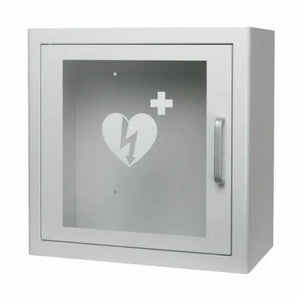
A carrying case, wall bracket or AED cabinet
-
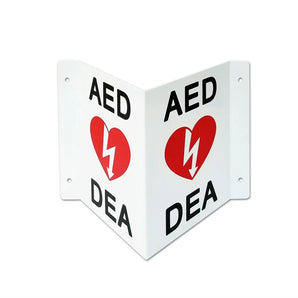
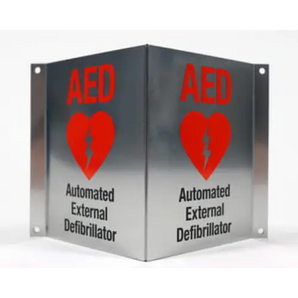
Visible AED signage
-
An AED response kit containing items such as scissors, gloves, a razor and a CPR barrier
-
Staff awareness or CPR/AED training
-
Registration with the applicable provincial or local AED registry
-
An inspection and maintenance process with documented responsibility
The device should be visible, easy to reach and placed where it can be retrieved quickly. It should not be locked away or hidden in an office that may be inaccessible during an emergency.
Which AED models are popular in Canada?
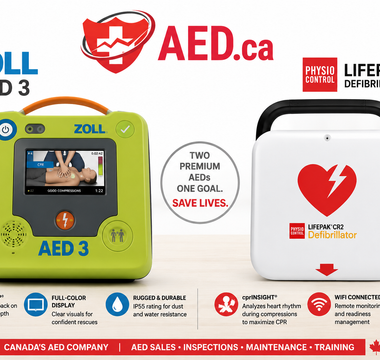
Popular models available from AED.ca include the LIFEPAK CR2, ZOLL AED 3 and ZOLL AED Plus. The right choice depends on the environment, the people likely to use the device, language needs, paediatric requirements, durability, connectivity and long-term operating costs.
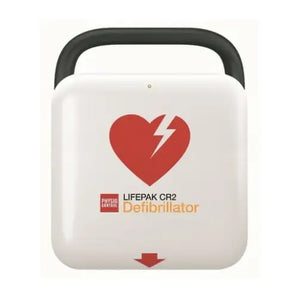
LIFEPAK CR2
The bilingual LIFEPAK CR2 is a strong choice for Canadian organizations that want English and French guidance. It is particularly well suited to schools, childcare settings, medical and dental offices, community facilities and other locations where children may be present because rescuers can change between adult and child mode without changing to a separate set of paediatric pads.
Its CPRinsight analysis technology is designed to analyze heart rhythm during chest compressions, helping reduce pauses in CPR. Available connected configurations can also support remote readiness monitoring.
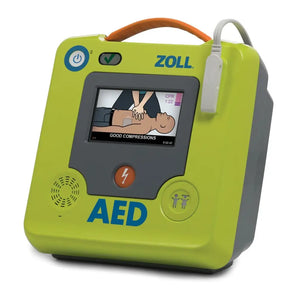
ZOLL AED 3
The ZOLL AED 3 provides a colour touchscreen, enhanced real-time CPR feedback and adult/child rescue capability using one set of universal pads. It is a good option for organizations seeking advanced visual and audible guidance, straightforward paediatric switching and connected program-management features.
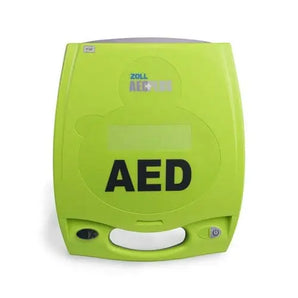
ZOLL AED Plus
The ZOLL AED Plus is known for real-time CPR feedback and a durable design. It remains a practical option for industrial operations, warehouses, workshops, construction environments and other locations where ruggedness and simple rescue guidance are priorities.
For a more detailed comparison, read Which AED Is Best for Our Facility?
Is it safe to buy a used AED or an AED from an online marketplace?
It can be risky unless the device's history and Canadian compliance are carefully verified. A low-priced AED may have expired pads, an aging battery, unresolved service alerts, physical damage, missing accessories or no valid Canadian warranty. Imported models may also have a different language configuration or device identifier from the Canadian-licensed version.
If considering a used device, verify its age, serial number, service history, recall and advisory status, self-test status, software configuration, pad expiry, battery condition and exact listing in Health Canada's licence database. The total cost of making an older AED rescue-ready can reduce or eliminate the apparent savings.
Does an AED require inspections and maintenance after purchase?
Yes. An AED cannot protect anyone if its pads are expired, its battery is depleted, accessories are missing or the device is displaying a fault.
An AED program should assign responsibility for scheduled visual checks, confirmation of the readiness indicator, correct installation of pads and battery, monitoring of expiry dates, replacement of used or expired supplies and documentation of each inspection. Always follow the manufacturer's instructions and any applicable provincial requirements.
AED.ca's Full-Service AED Maintenance Plan helps Canadian organizations manage on-site inspection, pad and battery replacement, service records and ongoing rescue readiness. This can be especially valuable for organizations with multiple locations or no internal employee assigned to manage their AEDs.
Frequently asked questions about buying an AED in Canada
Are AEDs required in all Canadian workplaces?
No. There is no blanket national occupational health and safety requirement for every workplace to install an AED. Requirements can apply to designated premises, industries or workplaces under provincial, territorial or sector-specific rules.
Can anyone buy an AED in Canada?
Yes. A business, public organization or individual can generally purchase and own an AED without a personal licence. The device itself must be legally authorized for sale in Canada, and registration or program requirements may apply depending on the jurisdiction and location.
What is the best AED to buy in Canada?
There is no single best AED for every setting. The bilingual LIFEPAK CR2 is often a strong fit where English/French operation or child rescue is important. The ZOLL AED 3 suits organizations wanting advanced CPR guidance, visual prompts and universal pads. The durable ZOLL AED Plus is often considered for industrial or rugged environments.
Should price be the main factor when choosing an AED?
No. Compare the device's Canadian licence, warranty, expected service life, pad and battery replacement costs, paediatric capability, language options, durability, support and maintenance requirements. The lowest initial price may not produce the lowest long-term cost or the most suitable emergency-response system.
Get help choosing a Health Canada-licensed AED
Buying the right AED involves more than choosing a familiar logo or comparing prices. AED.ca can help you select a Health Canada-licensed device, determine the accessories your site needs and establish a practical inspection and maintenance program.
Contact AED.ca or call 1-833-428-3233 for advice on choosing an AED for your Canadian workplace or organization.
Regulatory information can change and may vary by jurisdiction, sector and facility. This article provides general information and is not legal advice. Confirm current requirements with the appropriate government authority.
About AED.ca and Martin Andrews
AED.ca is a Canadian AED specialist helping businesses, schools, healthcare facilities, community organizations and public sites purchase, inspect and maintain automated external defibrillators across Canada. The company provides expert product guidance, AED supplies and full-service maintenance support designed to keep devices rescue-ready.
Martin Andrews is the President of AED.ca and works with Canadian organizations to build practical, dependable AED programs—from selecting the right device to managing inspections, pads, batteries and long-term compliance documentation.