
AEDs Do Require Maintenance
An automated external defibrillator (AED) is a purchase you hope you never have to use. If the moment comes, you need to know it’s ready. That means planning for maintenance when you buy the device, rather than years later when a pad expires or a warning appears.

Why does an AED need maintenance?
An AED may hang on a wall for years without being used. During that time, its electrode pads can expire, its battery can need replacement, and the device can develop a fault or display a service warning. A cabinet can also be blocked, damaged, or left without the supplies a responder needs.
Many AEDs perform automatic self-tests, but someone still needs to check the readiness indicator, notice warnings, track replacement dates, and act when something is wrong. The exact checks and schedule depend on the AED model and its manufacturer’s instructions. Learn more in our guide to AED maintenance and inspections.
What should an AED inspection include?
A routine readiness check should confirm that:
-
The AED is present, visible, and easy to access.
-
Its status indicator shows that it is ready, according to the manufacturer’s instructions.
-
The device has no visible damage or service warning.
-
The correct electrode pads are present, sealed, connected where required, and within their usable date.
-
The battery is installed and its status and replacement date have been checked.
-
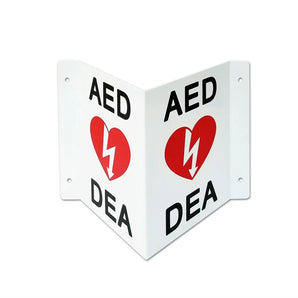
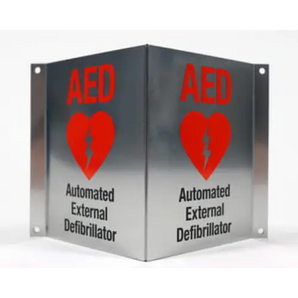
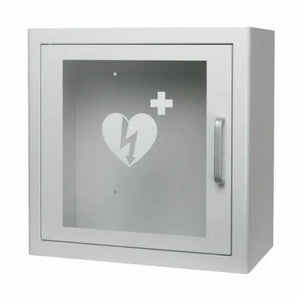
The rescue kit, cabinet, and signage are in place.
-
The check is recorded and any problem is assigned to someone to fix.
Many organizations use documented monthly checks, along with checks after the AED has been used or when a warning appears. Always follow the instructions for your specific device and any requirements that apply to your organization.
Think about maintenance before choosing an AED
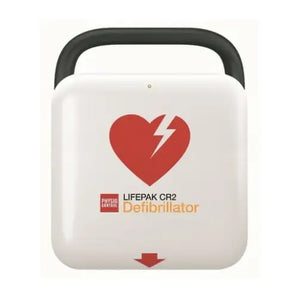
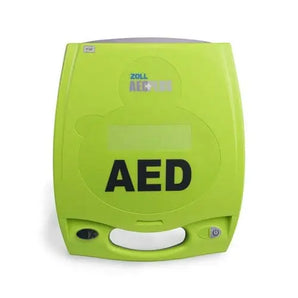
AED models differ in their pads, batteries, status indicators, replacement schedules, and support options. When comparing devices, consider more than the purchase price:
-
Replacement supplies: What pads and batteries does the model require, and when will they need replacing?
-
Readiness checks: How will your team know whether the device needs attention?
-
Responsibility: Who will check it, record inspections, and order parts?
-
Continuity: What happens when that person leaves or your organization moves?
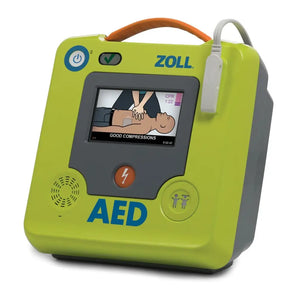
For example, the ZOLL AED 3 package includes its initial pads and battery. Those components still need to be monitored and replaced when required. Whichever model you choose, build its upkeep into your AED program from day one.

Who will look after your AED next year?
This is the question that is easiest to overlook. The person who bought the AED may not be the person responsible for it two years later. Staff change, reminders get missed, and an unused device can quietly become an unchecked device.
AED.ca’s Full Service AED Maintenance Plans are designed to give Canadian organizations ongoing support. The program includes an annual on-site inspection and readiness check, pad and battery expiry tracking, replacement components as required under the plan, and digital maintenance records. Your team should still carry out the routine checks specified for its AED and respond promptly to any warning.
Already own an AED? You can ask AED.ca about maintenance support even if you bought it elsewhere.
The purchase is the beginning
An AED is most valuable when people can find it quickly and it is ready to use. Choose a device that suits your location, make someone responsible for regular checks, and plan for the pads, battery, documentation, and support it will need throughout its life.
Explore AED.ca’s Full Service AED Maintenance Plan, or contact our team to discuss a new or existing AED.
About the author
Martin Andrews is President of AED.ca, a Canadian company focused on AED sales, inspections, and maintenance. Martin works with businesses and organizations across Canada to help them choose AEDs and keep their equipment ready for an emergency.