Why Fast Action Can Save a Life
Sudden cardiac arrest can turn an ordinary day into a life-threatening emergency within seconds. It can happen at work, at school, in a recreation centre, or at home.
Canadian statistics show how serious the problem is—and why immediate CPR and access to an automated external defibrillator (AED) matter.
At AED.ca, we help organizations prepare with AED equipment, maintenance, and ongoing support. Understanding the numbers is an important first step toward protecting the people around you.
Cardiac Arrest in Canada: The Key Statistics
Heart & Stroke’s 2024 report, drawing on a nationally representative analysis of 2021 Canadian Resuscitation Outcomes Consortium data, provides these estimates:
| Measure | Canadian statistic |
|---|---|
| Out-of-hospital cardiac arrests | Approximately 60,000 each year |
| How often they occur | Approximately one every nine minutes |
| Overall survival | Only one in 10 people survives |
| Age | Nearly half occur in people younger than 65 |
| Bystander AED use in public places | Reported at just 13% |
These figures describe out-of-hospital cardiac arrest broadly. They are not the survival rate specifically among people who receive an AED shock. Heart and Stroke Foundation
How Much Can CPR and an AED Improve Survival?
According to Heart & Stroke, performing CPR and using an AED immediately can double a person’s chance of survival.
CPR helps move blood and oxygen to the brain and other vital organs. An AED can deliver a shock to treat certain dangerous heart rhythms, helping the heart return to an effective rhythm. Together, these actions give the person a better chance while emergency responders are on their way. Heart and Stroke Foundation
However, no single percentage predicts every person’s outcome. The overall Canadian survival figure includes many different circumstances. It should not be treated as a fixed starting point for calculating someone’s individual chance of survival.
What About Claims of “75% Survival”?
AED statistics are sometimes presented in ways that sound interchangeable.
For example, Health Canada states that early CPR and defibrillation—within one to three minutes—may increase the chance of survival by 75% or more. That wording describes an increase in the chance of survival; it does not establish a 75% survival rate for everyone who receives AED treatment. Canada.ca
The practical message is clear: recognize cardiac arrest quickly, start CPR, and use an AED as soon as it becomes available.
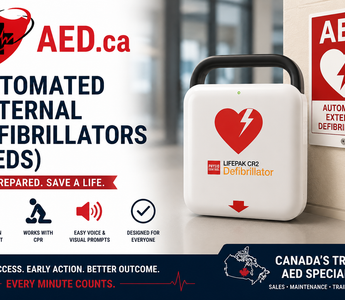
AEDs Are Designed to Guide You
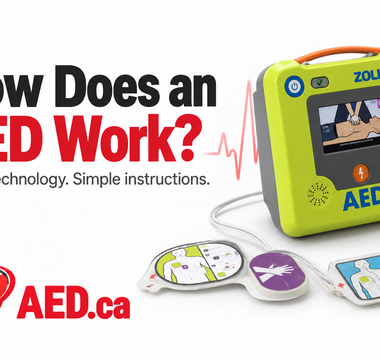
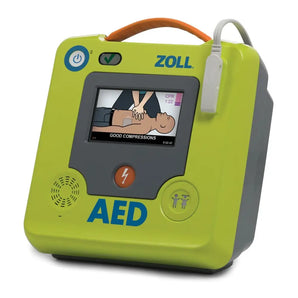
Public access AEDs analyze the person’s heart rhythm and determine whether a shock is needed. Voice instructions—and screen prompts on some models—guide the rescuer through the process.
The rescuer does not need to interpret the heart rhythm or decide independently whether to deliver a shock. The AED makes that assessment. Canada.ca
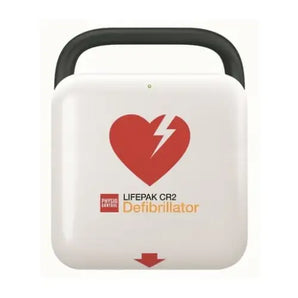
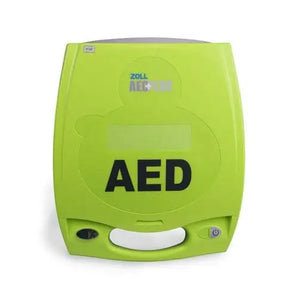
Explore AEDs available from AED.ca to find equipment suited to your organization and environment.
Access and Maintenance Must Be Part of the Plan
Purchasing an AED gives your organization an important emergency resource. The next step is making sure people can find it and that it remains ready for use.
An AED program should include:
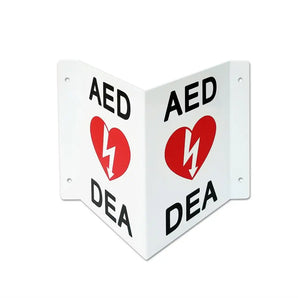
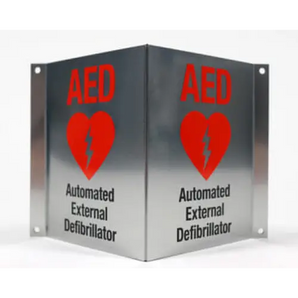
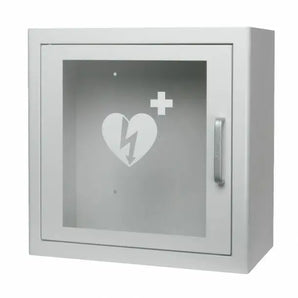
- A visible, accessible location with clear signage.
- Staff awareness and CPR/AED training.
- Routine readiness checks following the manufacturer’s instructions.
- Monitoring and replacement of electrode pads and batteries.
- Documented inspections and a clear person responsible for follow-up.
The Canadian Centre for Occupational Health and Safety emphasizes proper storage, accessibility, inspection, and maintenance according to manufacturer instructions. Automated External Defibrillator (AED)
AED.ca’s Full-Service AED Maintenance Plans support organizations with annual on-site inspections, pad and battery replacement, maintenance records, expiry tracking, and loaner AED coverage during servicing or downtime. AED.ca
Be Ready to Act
If someone is unresponsive and not breathing normally, including only gasping:
- Call 911 and send someone to get an AED.
- Start CPR immediately, following the dispatcher’s instructions.
- Use the AED as soon as it arrives and follow its prompts. Heart and Stroke Foundation
Canadian survival statistics show why preparation deserves attention before an emergency happens.
To purchase an AED or strengthen your existing program, contact AED.ca.
About the Author
Martin Andrews is President of AED.ca, a Canadian-owned company specializing in automated external defibrillators and AED program support. He helps businesses, schools, municipalities, churches, and community organizations across Canada improve emergency preparedness through AED sales, inspections, maintenance, and ongoing support.
Visit AED.ca or call 1-833-428-3233.