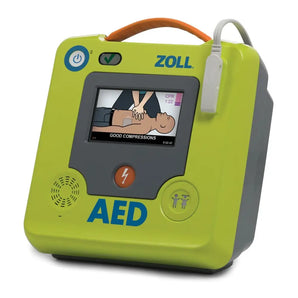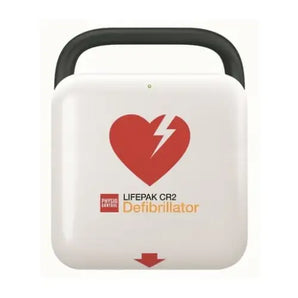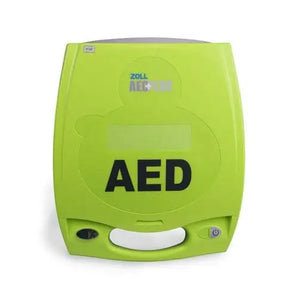
An automated external defibrillator, or AED, can seem surprisingly simple: turn it on, attach the pads and follow the instructions. Behind those clear prompts is technology that reads the heart’s electrical activity and determines whether a shock is appropriate.
You do not need to interpret a heart rhythm yourself. The AED handles that analysis while guiding you through the next steps.
The Heart Has Its Own Electrical System
Every normal heartbeat begins with an electrical signal. That signal travels through the heart, coordinating the muscle contractions that pump blood.
During some cardiac arrests, this electrical activity becomes disorganized or dangerously fast. The heart may still have electrical activity, but it cannot pump blood effectively.
An AED recognizes certain rhythms that can be treated with defibrillation—an electrical shock intended to interrupt the abnormal rhythm and allow an organized rhythm to return. zoll.com
How Can an AED Read a Heart Rhythm Through the Skin?
The adhesive electrode pads do two jobs: detect the heart’s electrical signals and deliver a shock when needed.
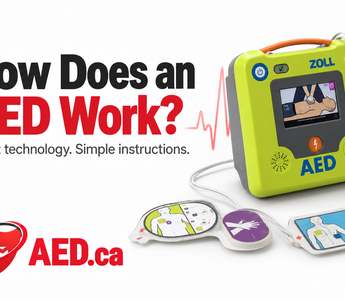
The heart’s electrical activity produces tiny voltage differences that can be measured at the skin. Once the pads are attached to the bare chest as illustrated, the AED detects those differences and records an electrocardiogram, commonly called an ECG. The same pads provide the pathway for a defibrillation shock.
The AED’s electronic circuits process that signal so its computer can examine the electrical pattern. It is reading electrical activity—not taking a picture of the heart or directly measuring blood flow.
How Does the AED Decide Whether a Shock Is Needed?
The AED uses a rhythm-analysis algorithm: programmed mathematical rules that evaluate the ECG.
Depending on the device, it examines characteristics such as:
- Frequency: how quickly electrical activity repeats.
- Amplitude: the size or strength of the recorded signal.
- Waveform shape and organization: whether the pattern resembles a rhythm that can benefit from a shock.
Manufacturers test these algorithms against recorded examples of heart rhythms. The rescuer does not need to understand the ECG or make the shock decision.
The main shockable rhythms are:
Ventricular fibrillation (VF): chaotic electrical activity that makes the heart’s lower chambers quiver instead of pumping effectively.
Pulseless ventricular tachycardia (VT): a dangerously fast rhythm originating in the lower chambers, without effective circulation.
An AED does not independently confirm whether someone has a pulse. It is intended for someone who is unresponsive and not breathing normally, including someone who is only gasping. Movement and chest compressions can interfere with rhythm analysis, so always follow the device’s instructions about when to stand clear. zoll.com
What Does the Shock Actually Do?
Defibrillation sends a brief, controlled electrical current through the chest and heart. Its purpose is to interrupt abnormal electrical activity, giving the heart’s natural electrical system an opportunity to restore an organized rhythm.
A shock does not guarantee that normal circulation will immediately return. CPR remains an essential part of the rescue, and you should continue following the AED’s instructions. zoll.com
There are two common types of AED:
- Semi-automatic: the AED analyzes the rhythm and tells you when to press the shock button.
- Fully automatic: the AED analyzes the rhythm, announces the shock and delivers it automatically.
With either type, everyone must be clear of the person during shock delivery.
What Does “No Shock Advised” Mean?
It means the AED has not detected a rhythm that meets its criteria for defibrillation. It does not necessarily mean the person has recovered.
Some cardiac arrest rhythms cannot be treated with a shock. If the person remains unresponsive and is not breathing normally, continue CPR and follow the AED and 911 dispatcher’s instructions.
Learn more in our guide to using an AED in an emergency. AED.ca
Simple to Use—and Important to Maintain
Public access AEDs combine sophisticated rhythm analysis with clear instructions so everyday people can help during cardiac arrest. If someone is unresponsive and not breathing normally, call 911, begin CPR and have someone bring an AED as quickly as possible.
Explore AEDs available in Canada to find options for your workplace, school, church or community facility.
Readiness also means keeping up with inspections and replacement schedules for AED pads and batteries. The AED.ca Full-Service AED Maintenance Plan helps organizations manage on-site inspections, replacement supplies, expiry tracking and maintenance records. AED.ca
About the Author
Martin Andrews is President of AED.ca, a Canadian-owned company helping businesses, schools, churches and community organizations prepare for sudden cardiac arrest. AED.ca provides AED sales, inspections, maintenance plans, replacement pads and batteries, and ongoing AED program support across Canada. Learn more at AED.ca.