Is Your AED Bilingual?
In an Emergency, Every Second Counts — And Every Word Matters
When someone suffers a sudden cardiac arrest (SCA), survival depends on immediate action. For every minute that passes without CPR and defibrillation, survival rates can decrease by 7-10%.
Automated External Defibrillators (AEDs) are designed to help ordinary people save lives. They provide step-by-step voice instructions that guide rescuers through the entire rescue process. But what happens when those instructions are delivered in a language the responder doesn't fully understand? AED Canada
In a country with two official languages, this is an important consideration.
For government buildings, public facilities, schools, community centres, airports, healthcare facilities, recreation centres, and other publicly accessible locations across Canada, having a bilingual AED is one of the simplest ways to improve accessibility, inclusiveness, and emergency preparedness.
Canada's Two Official Languages Matter During Emergencies
Canada is officially bilingual, with English and French recognized as the country's two official languages.
Federal government offices, many provincial agencies, schools, healthcare facilities, and public institutions regularly serve both English-speaking and French-speaking Canadians. In some regions, such as Quebec, New Brunswick, and parts of Ontario, French-speaking residents represent a significant portion of the population.
During a cardiac emergency, responders may be:
-
Employees
-
Visitors
-
Contractors
-
Volunteers
-
Members of the public
-
First aid attendants
Providing clear instructions in the responder's preferred language can reduce hesitation and increase confidence during a life-saving rescue.
A bilingual AED ensures that language is never a barrier to providing immediate care.
Are AEDs Required in Government and Public Buildings in Canada?
Canada currently does not have a single national law requiring AEDs in all workplaces or public buildings. However, legislation continues to expand across the country.
Several provinces have introduced legislation requiring AEDs in certain public spaces, while others strongly encourage AED placement through workplace safety and public access defibrillation initiatives.
Ontario
Ontario passed the Defibrillator Registration and Public Access Act, which establishes requirements regarding the installation, maintenance, testing, registration, and availability of AEDs in designated public premises. Government facilities are among the locations expected to be covered by the legislation and related regulations.
Manitoba
Manitoba's Defibrillator Public Access Act requires AEDs in many publicly accessible facilities, including government buildings, schools, community centres, airports, sports facilities, and other designated premises. AEDs must be registered and maintained according to provincial requirements.
Across Canada
Even where AEDs are not yet mandated, public health authorities, emergency response organizations, and workplace safety experts strongly encourage AED placement in locations where large numbers of people gather.
As AED legislation continues to evolve, many government agencies and public organizations are choosing to standardize their emergency response programs now rather than waiting for future requirements.
Why a Bilingual AED Should Be the Standard
For public-facing organizations, selecting a bilingual AED offers several advantages:
Improved Accessibility
A bilingual AED can provide instructions in either English or French, helping ensure that more Canadians can respond confidently during an emergency.
Better Public Service
Government facilities are expected to serve Canadians in both official languages. Emergency equipment should reflect that commitment.
National Standardization
Organizations operating across multiple provinces can simplify training, maintenance, and purchasing by standardizing on one bilingual platform.
Increased Rescuer Confidence
People are more likely to act when instructions are delivered clearly and in their preferred language.
The Best Bilingual AED Available Today: The LIFEPAK CR2
When Canadian organizations ask us which bilingual AED we recommend most often, the answer is simple:
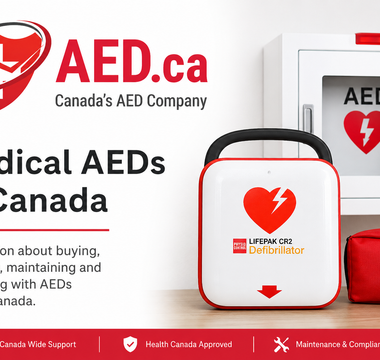
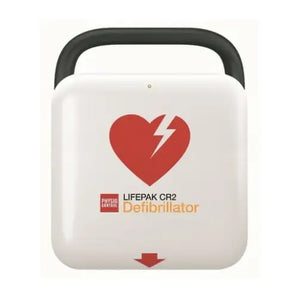
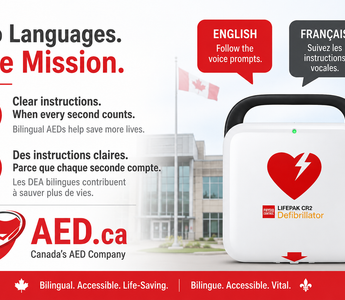
The Physio-Control LIFEPAK CR2
The LIFEPAK CR2 is one of the most advanced public-access AEDs available in Canada and is our recommended choice for government facilities, public buildings, schools, healthcare clinics, municipalities, and organizations operating nationally.
Key Benefits of the LIFEPAK CR2
True English/French Bilingual Operation
The LIFEPAK CR2 can easily switch between English and French voice prompts at the press of a button, allowing rescuers to receive guidance in the language they are most comfortable using.
Child Mode Built In
Unlike many AEDs that require separate pediatric pads, the CR2 includes a child mode button. This allows responders to quickly switch from adult to child treatment without changing electrodes.
ClearVoice™ Technology
The CR2 automatically adjusts voice prompt volume in noisy environments such as arenas, recreation centres, airports, and public buildings.
cprINSIGHT™ Analysis Technology
The LIFEPAK CR2 can analyze a patient's heart rhythm while CPR is being performed, reducing pauses and helping rescuers deliver care more efficiently.
Wi-Fi Connectivity
The LIFEPAK CR2 can connect to Wi-Fi for remote readiness monitoring, helping organizations ensure their AED remains rescue-ready.
Designed for Public Use
The device was specifically built for public access defibrillation and can be used by both trained and untrained rescuers.
Why Many Canadian Organizations Are Standardizing on the LIFEPAK CR2
Organizations with multiple locations often face challenges managing different AED brands, batteries, pads, training requirements, and maintenance schedules.
The LIFEPAK CR2 helps simplify AED program management while providing:
-
Bilingual operation
-
Long-life consumables
-
Easy maintenance
-
Advanced rescue technology
-
National support coverage
-
Public-access friendly design
For government agencies and public organizations seeking a long-term AED solution, the CR2 remains one of the strongest choices available.
Recommended Products
LIFEPAK CR2 Bilingual Wi-Fi AED
For more information go to:
https://aed.ca/products/stryker-physio-cr2-semi-auto-bilingual-wifi
AED Maintenance Program
For more information go to:
https://aed.ca/pages/aed-maintenance-plan
Final Thoughts
Government buildings and public facilities exist to serve all Canadians. In an emergency, accessibility should extend beyond ramps, signage, and customer service—it should include life-saving equipment.
A bilingual AED helps ensure that anyone responding to a sudden cardiac arrest can receive clear instructions in either of Canada's official languages.
As AED legislation continues to expand across Canada, organizations that invest in high-quality bilingual AEDs today will be better prepared to meet future requirements while creating safer environments for employees, visitors, and the public.
For organizations seeking the most capable bilingual AED available, the Physio-Control LIFEPAK CR2 continues to set the standard.
About AED.ca
AED.ca is Canada's AED Company.
We help organizations across Canada purchase, maintain, inspect, and manage Automated External Defibrillators (AEDs). Our team provides national AED sales, compliance support, inspections, maintenance programs, replacement pads and batteries, and expert guidance to help workplaces and public facilities stay rescue-ready.
Whether you operate a single location or hundreds of facilities nationwide, AED.ca can help you build a reliable and compliant AED program.
Visit AED.ca or call 1-833-428-3233 to learn more.