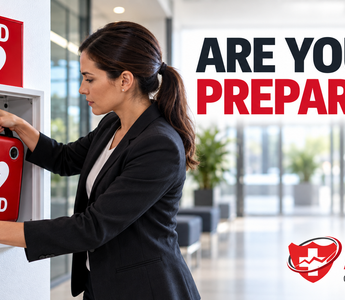
Don’t Just Wait and Hope
When someone experiences sudden cardiac arrest, calling 911 is essential—but calling 911 alone may not be enough.
Emergency medical services must receive the call, dispatch a crew, travel to the location and reach the patient. Even under ideal circumstances, several critical minutes can pass. During cardiac arrest, those minutes can determine whether a person survives.
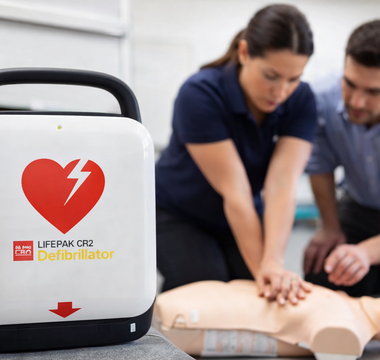
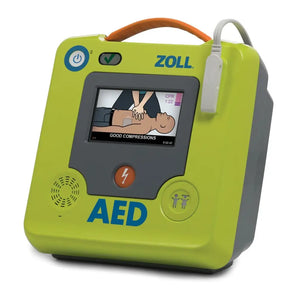
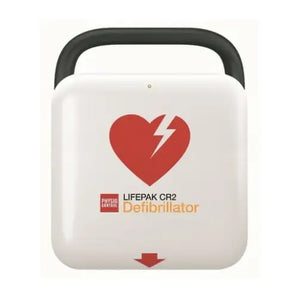
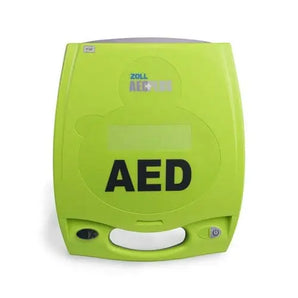
That is why workplaces, businesses, schools, churches, recreation facilities, residential buildings and public spaces should have an automated external defibrillator (AED) immediately available. You cannot simply wait and hope that paramedics arrive in time.
Cardiac Arrest Requires Immediate Intervention
Sudden cardiac arrest occurs when the heart unexpectedly stops beating effectively. The person will typically collapse, become unresponsive and stop breathing normally.
Without circulation, oxygen is no longer reaching the brain and other vital organs. Brain injury can begin within minutes.
According to the Heart and Stroke Foundation of Canada, approximately 60,000 out-of-hospital cardiac arrests occur in Canada every year, and only about one in ten people survives. The organization also reports that every minute without CPR or AED use reduces a person’s chance of survival by approximately 10%.
There is no time to wait and see what happens.
The correct response is to:
-
Call 911 and send someone to retrieve the AED.
-
Begin CPR immediately.
-
Apply and use the AED as soon as it arrives.
-
Continue following the AED and 911 dispatcher’s instructions until paramedics take over.
Calling 911 Is the Beginning—not the Entire Response
Some organizations assume that because they are located near a fire station, hospital or ambulance station, they do not need an AED.
Unfortunately, proximity does not guarantee an immediate response.
The nearest ambulance may already be responding to another emergency. Traffic, elevators, security access, large buildings, rural roads, weather and difficulty locating the patient can all add time. Heart & Stroke specifically advises people not to wait for emergency medical services because response times can be six minutes or longer in urban areas—and potentially much longer in northern or remote communities.
EMS is essential, but the people already at the scene are the true first responders during the opening minutes of a cardiac arrest.
Having an AED nearby gives employees, customers, family members and bystanders the ability to begin lifesaving intervention before paramedics arrive.
What Is Early Intervention?
Early intervention means recognizing cardiac arrest and starting the appropriate response immediately.
The cardiac arrest “chain of survival” includes:
-
Early recognition and calling 911
-
Early CPR
-
Early defibrillation with an AED
-
Advanced medical care
-
Recovery and ongoing care
Each link is important, but the earliest links depend heavily on the people at the scene.
CPR helps circulate oxygenated blood to the brain and vital organs. However, CPR generally cannot correct the dangerous electrical rhythm causing the cardiac arrest. An AED analyzes the heart rhythm and, when appropriate, delivers a controlled electrical shock to help restore an effective rhythm.
The Canadian Centre for Occupational Health and Safety explains that CPR keeps blood circulating, but an AED may be required to restart the heart. It also reports that immediate CPR combined with AED use can significantly increase the chance of survival.
Simply put: CPR buys time, while an AED may provide the shock needed to save the person’s life.
An AED Cannot Help If It Is Too Far Away
Owning an AED is only effective when the device is:
-
Close enough to retrieve quickly
-
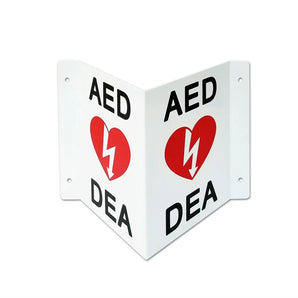
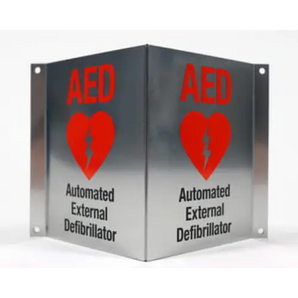
Clearly visible and easy to access
-
Known to employees and building occupants
-
Equipped with working batteries and unexpired electrode pads
-
Included in the organization’s emergency response plan
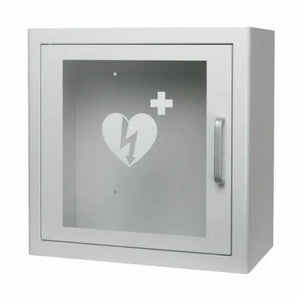
An AED locked in an office, stored in a vehicle, hidden in a supply room or located several floors away may not reach the patient quickly enough.
Organizations should place AEDs where they can be retrieved and applied within the first few minutes of an emergency. Larger buildings, multi-floor facilities and expansive properties may require more than one device.
AED placement should be based on response time—not simply on whether the organization technically owns an AED.
You Do Not Need to Be a Medical Professional
Modern AEDs are designed to guide rescuers through the process using clear visual and voice instructions.
Once activated, the AED tells the responder how to attach the electrode pads, when to perform CPR and when to stand clear. The device automatically analyzes the patient’s heart rhythm. It will only advise or deliver a shock when it detects a shockable rhythm.
The rescuer does not have to diagnose the patient or decide independently whether a shock is required.
Training is strongly recommended because it builds confidence and helps people respond more quickly. However, fear of using an AED should never be the reason an organization chooses not to have one available.
Watch AED.ca’s practical video: How to Use an AED.
Cardiac Arrest Can Happen Anywhere
Cardiac arrest is not limited to elderly people or those with a known heart condition. It can affect someone of almost any age, sometimes without warning.
An emergency could involve:
-
An employee at work
-
A customer shopping in a store
-
A student, teacher or visitor at a school
-
A congregation member at a church
-
An athlete or spectator at a recreation facility
-
A resident or guest in a condominium
-
A traveller at a hotel
-
A family member at a cottage or remote property
The question is not whether you expect a cardiac arrest to occur. The better question is whether your organization is prepared if one does.
An AED Must Be Ready for the Emergency
Purchasing an AED is an important first step, but the device must remain rescue-ready.
AED batteries and electrode pads expire even when the device has never been used. AEDs should be inspected regularly for damage, warning indicators, missing accessories and expired components. Inspection and maintenance records should also be documented.
AED.ca offers a comprehensive AED maintenance and inspection program to help Canadian organizations keep their devices properly inspected, documented and ready to respond. Our full-service plans are available for AEDs purchased from AED.ca or anywhere else in Canada.
Don’t Build Your Emergency Plan Around Hope
Calling 911 will always be necessary, but an emergency plan should not depend entirely on how quickly paramedics can arrive.
Early CPR and early access to an AED give a person experiencing cardiac arrest a fighting chance during the minutes when they are most vulnerable. Having an AED available empowers the people already on site to take meaningful action rather than standing by and hoping help arrives in time.
AED.ca helps Canadian businesses and organizations select, install and maintain reliable AEDs. Whether you need one device or a national AED program, our team can help you build an effective response plan.
Shop AEDs in Canada or contact AED.ca at 1-833-428-3233 or info@aed.ca to discuss the right AED solution for your organization.
Because when cardiac arrest happens, every minute matters—and being prepared can save a life.
Medical statistics and emergency-response guidance referenced in this article are supported by the Heart and Stroke Foundation of Canada and the Canadian Centre for Occupational Health and Safety.