Helpful Information
Having an AED (Automated External Defibrillator) available during a sudden cardiac arrest can save a life. But there is another important question Canadian businesses and organizations often overlook:
What should you do with an AED after it has been used?
An AED that has been deployed in an emergency shouldn't simply be placed back in its cabinet. The device needs to be checked, used components may need to be replaced, event data may need to be preserved, and the AED needs to be confirmed ready for the next emergency.
Here's what Canadian organizations should know about AED post-use procedures, AED maintenance, AED inspections and returning an AED to service after an emergency.

1. Follow the AED and Emergency Services Instructions
During a suspected sudden cardiac arrest, call 911, begin CPR and retrieve the AED as quickly as possible.
Follow the AED's voice and visual prompts until paramedics arrive and take over.
If your employees aren't familiar with the process, watch our How to Use an AED video and make sure employees know where your AED is located before an emergency occurs.
An AED is designed so that trained and untrained rescuers can follow its prompts during a cardiac emergency.
2. Don't Immediately Throw Away the Used AED Pads
After an AED has been used, avoid immediately discarding the electrode pads or disconnecting everything unless directed to do so by emergency personnel.
Depending on the circumstances, information surrounding the cardiac arrest and AED deployment may be useful to emergency responders or healthcare professionals.
Once the AED has been released back to your organization, it should undergo a post-use AED inspection before being returned to service.
3. Replace the AED Electrode Pads
AED pads are generally single-use components.
Once the package has been opened and the electrodes have been applied to a patient, a new set of replacement AED pads should normally be installed—even if the AED never delivered a shock.
AED.ca carries a wide selection of AED replacement pads for popular AED brands and models.
Organizations should always make sure they purchase the correct replacement pads for their particular AED.
Using the correct AED pads is essential because electrode pads are model-specific and have manufacturer-established expiration dates.
4. Check the AED Battery
Using an AED consumes battery capacity as the device analyzes the patient's heart rhythm, provides rescue prompts, records information and potentially charges and delivers defibrillation shocks.
After an AED has been used, its AED battery status should be checked according to the manufacturer's instructions.
A battery doesn't necessarily need to be replaced after every use, but you shouldn't assume it remains ready for another emergency.
If the AED indicates a low battery or the battery is approaching its replacement date, install the appropriate replacement battery.
AED.ca carries AED replacement batteries for many of the most common AEDs used throughout Canada.
5. Check the AED's Event Data
Modern AEDs can record important information about a cardiac arrest event.
Depending on the AED model, this may include:
-
the patient's analyzed heart rhythm;
-
shock decisions;
-
shocks delivered; and
-
timing information.
This is commonly referred to as AED event data.
Organizations should follow the AED manufacturer's procedures and any requests from medical or emergency personnel regarding retrieval of this information.
Avoid unnecessarily resetting, deleting or altering AED data following an emergency.
6. Perform a Complete Post-Use AED Inspection
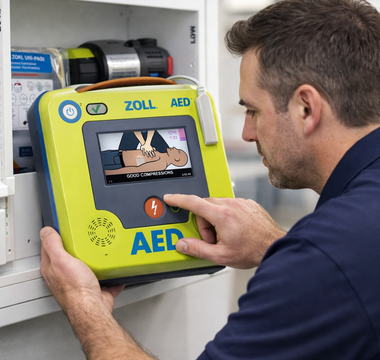
Before returning the AED to its cabinet, conduct a complete AED inspection.
The inspection should include checking the AED's:
-
readiness or status indicator;
-
replacement electrode pads;
-
battery condition;
-
physical condition;
-
cables and connectors, where applicable;
-
carrying case;
-
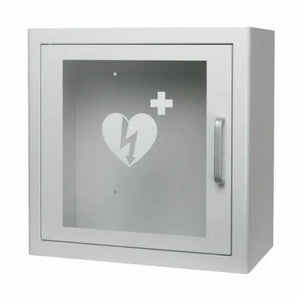
cabinet and signage; and
-
accompanying rescue supplies.
The AED should also be checked for damage, contamination or anything else that may have occurred during the emergency.
Simply putting an AED back into its cabinet after use can leave an organization unknowingly without a properly equipped, rescue-ready AED.
For organizations that don't want to manage this process internally, learn more about the AED.ca AED Maintenance Plan.
7. Clean the AED Properly
The AED itself may require cleaning following an emergency.
Follow the manufacturer's cleaning and disinfection instructions for your specific AED model.
Never immerse an AED in water or apply cleaning products without first confirming that they're appropriate for the device.
The goal is to make the AED safe and clean without damaging its electronics, pads, connectors or housing.
8. Replace Any Rescue Accessories That Were Used
Many AED cabinets or carrying cases include additional AED rescue supplies, such as CPR barrier masks, disposable gloves, trauma shears, razors and towels or wipes.
Any single-use supplies used during the rescue should be replaced.
This is an often-overlooked part of AED maintenance after use.
9. Document the AED Deployment and Maintenance
Organizations should maintain accurate records of their AED program.
Following an AED deployment, document relevant information such as:
-
when the AED was used;
-
which AED was deployed;
-
which replacement components were installed;
-
the date of the post-use inspection;
-
any service performed; and
-
when the AED was returned to service.
Good AED maintenance records can help organizations manage their AED program and demonstrate that the device is being properly maintained.
The AED.ca AED Maintenance Plan helps Canadian organizations maintain structured inspection and maintenance records while keeping their AED program organized.
10. Confirm the AED Is Rescue-Ready
The final step is one of the most important.
Before returning the AED to its normal location, confirm that the AED indicates it is ready for use in accordance with the manufacturer's instructions.
Check that:
-
new, compatible AED pads are installed or connected as required;
-
the battery has sufficient capacity;
-
the readiness indicator shows the appropriate status;
-
required rescue supplies have been replenished; and
-
the AED has been returned to its designated, accessible location.
Your AED should be ready for the next cardiac arrest emergency, not merely returned to the wall.
Who Is Responsible for an AED After It Has Been Used?
For workplaces and organizations, responsibility will depend on how the organization's AED program has been established.
The important thing is that someone is clearly responsible for ensuring the AED is inspected and returned to service.
This is one reason businesses with multiple locations or AEDs can benefit from professional AED inspection and maintenance services.
Without a defined process, it's easy for everyone to assume somebody else checked the AED.
How Quickly Should an AED Be Returned to Service?
As quickly as reasonably possible.
Once an AED has been used, the location may effectively be without a rescue-ready defibrillator until the device has been properly inspected, replenished and returned to service.
Organizations should therefore avoid waiting until the next scheduled AED inspection to replace used pads or address a depleted battery.
Replacement AED supplies and post-use service should be arranged promptly.
Make AED Maintenance Part of Your Emergency Response Plan
Buying an AED is only the beginning of an effective AED program.
AEDs contain components with expiration or replacement requirements, including AED electrode pads and batteries, and every AED should be routinely checked to ensure it remains rescue-ready.
An actual AED deployment makes that responsibility even more important.
That's why AED.ca created its AED.ca AED Maintenance Plan for Canadian businesses and organizations that want professional support managing their AEDs.
The AED.ca maintenance program can help organizations with:
-
professional AED inspections;
-
replacement pad and battery management;
-
digital AED inspection and maintenance records;
-
scan-enabled AED identification and reporting;
-
maintenance history and documentation;
-
support for managing AED readiness; and
-
ongoing AED program support.
Instead of hoping someone remembers to check the AED, organizations can establish a structured AED maintenance and inspection program.
Is It Time to Replace an Older AED?
An AED deployment is also a good opportunity to evaluate the age and condition of the device.
If your AED is older, outside its manufacturer warranty period or becoming increasingly expensive to maintain, it may make more sense to upgrade rather than continue investing in an aging device.
AED.ca recommends several current-generation AEDs for Canadian organizations:
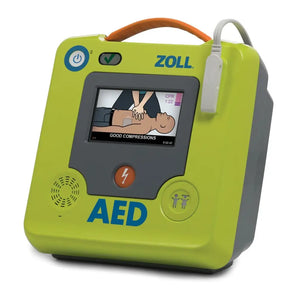
ZOLL AED 3
The ZOLL AED 3 offers advanced CPR feedback, an integrated touchscreen and modern AED technology designed to help rescuers respond effectively during sudden cardiac arrest.
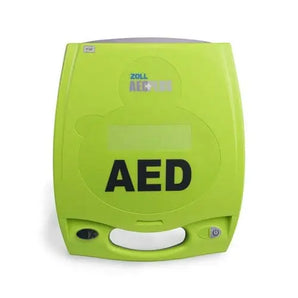
ZOLL AED Plus
The ZOLL AED Plus is a proven AED with real-time CPR feedback and straightforward rescue guidance.
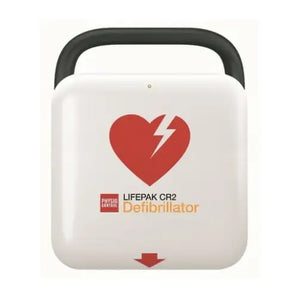
Stryker LIFEPAK CR2 AED
The LIFEPAK CR2 is an excellent option for Canadian workplaces and organizations, particularly those looking for bilingual functionality and modern connected AED capabilities.
You can also shop AEDs in Canada and compare available options through AED.ca.
Frequently Asked Questions About AEDs After Use
Do AED pads need to be replaced after an AED is used?
Generally, yes. AED electrode pads are typically single-use and should be replaced after they've been opened and applied to a patient, following the manufacturer's instructions.
Does an AED battery need to be replaced after every use?
Not necessarily. Battery requirements vary by AED model and the amount of use. The battery status should be checked after a deployment and replaced when required by the device or manufacturer.
Can you reuse AED pads if no shock was delivered?
AED pads that have been opened and applied to a patient generally should not be reused. Replace them with a new compatible set according to the AED manufacturer's instructions.
What happens to the information stored in an AED?
Many AEDs record event information during a rescue. Depending on the device, this information may be retrievable for review by authorized healthcare or emergency personnel.
Should an AED be inspected after it is used?
Yes. A post-use inspection helps ensure the AED is undamaged, properly equipped and ready for another emergency.
Where can I buy replacement AED pads and batteries in Canada?
AED.ca supplies replacement AED pads and batteries and other AED supplies for organizations across Canada.
Where can Canadian businesses get professional AED maintenance?
Canadian businesses can learn more about the AED.ca AED Maintenance Plan, designed to help organizations keep their AEDs inspected, maintained, documented and rescue-ready.

About AED.ca
AED.ca is a Canadian AED company specializing in automated external defibrillators, AED replacement pads and batteries, AED inspections, AED maintenance and comprehensive AED programs for businesses and organizations across Canada.
Led by Martin Andrews, President of AED.ca, the company focuses on helping Canadian organizations move beyond simply owning an AED toward maintaining a complete, documented and rescue-ready AED program.
AED.ca — Helping Canadians be prepared when every second counts.