Is Your AED Rescue-Ready?
Purchasing an automated external defibrillator is an important investment in workplace and public safety. However, simply installing an AED on the wall does not guarantee that it will be ready during a sudden cardiac arrest emergency.
AEDs are life-saving medical devices that require regularly scheduled inspections, ongoing maintenance and proper documentation. Electrode pads expire, batteries eventually require replacement, accessories can go missing and devices may develop warning indicators that are easily overlooked.
A regularly scheduled AED inspection and maintenance program helps identify these issues before an emergency occurs.
That is why AED.ca created its Full-Service AED Maintenance Plan: to take the responsibility and uncertainty of AED maintenance away from Canadian organizations and help ensure every device remains properly equipped, documented and rescue-ready.
Why Are AED Inspections Important?
During sudden cardiac arrest, every second matters. An AED must be accessible, operational and equipped with working components as soon as it is brought to the patient.
A device may appear fine from the outside while still having an issue that could affect its readiness. A professional AED inspection helps verify the condition of the device and its essential accessories.
An inspection may identify:
- Expired or approaching-expiry AED electrode pads
- Low, depleted or aging AED batteries
- Failed or warning device status indicators
- Missing rescue accessories
- Opened or damaged pad packages
- Physical damage to the AED or carrying case
- Missing pediatric pads or pediatric capability where required
- Improper AED storage conditions
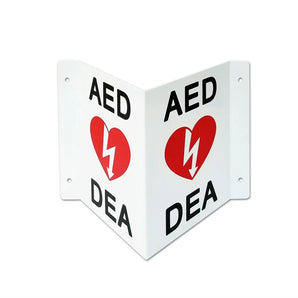
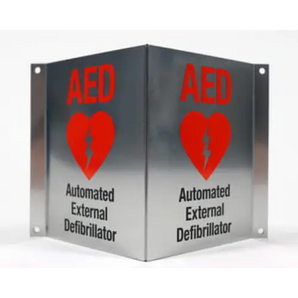
- Inaccessible or poorly marked AED locations
- Incomplete maintenance and inspection records
- AEDs that have been used but not fully restored
- Older devices that may require servicing, software updates or replacement
Regular AED inspections provide an opportunity to correct these problems before the AED is needed.
AED Self-Tests Do Not Replace a Complete Inspection
Most modern AEDs perform automatic internal self-tests. Depending on the model, these tests may evaluate the device’s electronics, internal circuitry, battery status and other technical functions.
These self-tests are important, but they cannot confirm every part of an AED program.
An AED cannot necessarily determine whether:
- Its rescue kit has been removed
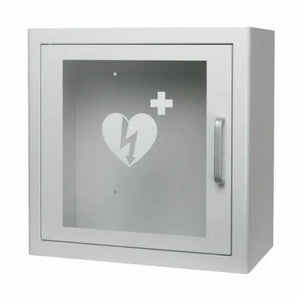
- The cabinet is blocked or difficult to access
- The electrode pad package has been damaged
- Accessories are missing
- The AED sign is no longer visible
- The device has been moved from its assigned location
- Inspection records are complete
- Staff know where the AED is located
- Replacement parts have been ordered
- The device is appropriate for the organization’s current needs
A professional inspection looks beyond the AED’s internal self-test. It considers the complete rescue-readiness of the device, its accessories, location and maintenance documentation.
AED Pads and Batteries Must Be Monitored
AED pads and batteries are consumable components with limited service lives.
AED electrode pads contain a conductive adhesive gel that helps the pads attach to the patient and allows the device to analyze the heart rhythm and deliver a shock when required. Over time, this gel can deteriorate, which is why electrode pads have expiry dates.
AED batteries must also be monitored. Even when an AED has never been used in a rescue, the battery supplies power for automatic self-tests and standby operation.
Expired or depleted components may create:
- Delays during a cardiac emergency
- Poor pad adhesion
- Inability to complete heart-rhythm analysis
- Insufficient power to operate the AED
- Warning indicators or fault conditions
- Unexpected replacement costs
- Gaps in an organization’s emergency preparedness
Organizations can purchase replacement AED pads and batteries directly from AED.ca. However, the challenge for many businesses is not simply purchasing the parts—it is knowing what each device needs and replacing each component before it becomes a problem.
AED Inspection Records Support Compliance and Accountability
AED maintenance is not only about checking the physical device. Proper documentation is also an essential part of an effective AED program.
Inspection and maintenance records can help demonstrate that an organization has taken reasonable steps to keep its life-saving equipment ready for use.
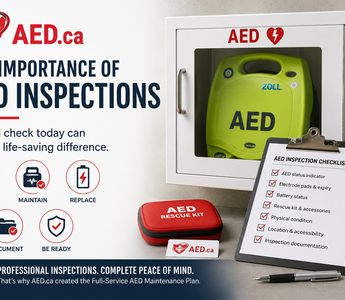
Digital AED inspection records may include:
- Device make and model
- AED serial number
- Assigned location
- Inspection date
- Device status
- Pad expiry information
- Battery status
- Maintenance history
- Identified deficiencies
- Corrective actions
- Replacement-part history
- Technician documentation
These records can be especially valuable for organizations with multiple AEDs, multiple facilities or locations across Canada.
A centralized AED management system makes it easier to determine which devices have been inspected, which components are approaching expiry and whether an identified issue has been corrected.
The Challenge of Managing AEDs Internally
Many businesses assign AED inspections to a staff member, safety representative or facility manager. Although this can work initially, responsibility may become unclear as employees change positions, locations expand or AED programs grow.
Common AED management problems include:
- No clearly assigned person responsible for the AED
- Inspection schedules being forgotten
- Pad and battery expiry dates being tracked manually
- Maintenance records stored in different locations
- Staff turnover disrupting the inspection process
- Replacement parts being ordered too late
- Used AEDs not being fully replenished
- Different AED models requiring different supplies
- No consistent process across multiple facilities
These gaps are rarely intentional. They happen because AED maintenance becomes one more responsibility for already busy employees.
The potential consequence, however, is serious: an organization may believe its AED is ready when it is not.
Why AED.ca Created the Full-Service AED Maintenance Plan
AED.ca created the Full-Service AED Maintenance Plan because Canadian organizations needed more than inspection reminders or a checklist.
They needed one trusted AED company to take responsibility for the complete maintenance process.
The plan is designed to reduce administrative work, eliminate unexpected replacement-part costs and provide confidence that AEDs are being professionally managed.
Instead of relying on staff to track multiple devices, expiry dates, replacement components and inspection records, organizations can place their AED maintenance program in the hands of Canada’s AED specialists.
What Is Included in the AED.ca Full-Service AED Maintenance Plan?
Professional On-Site AED Inspection
A trained AED specialist conducts a comprehensive device inspection and readiness check. The AED, pads, battery, status indicator, accessories and physical condition are reviewed to identify anything that could affect rescue readiness.
AED Pad Replacement
Replacement electrode pads are included when required under the plan. This helps prevent expired pads from remaining with the device and removes the need to budget separately for routine pad replacement.
AED Battery Replacement
Replacement batteries are included when needed, helping ensure the AED maintains sufficient power for standby operation, self-testing and emergency use.
AED Rescue Prep Kit
Essential rescue accessories are provided so the AED station is properly equipped. A rescue kit may contain items such as protective gloves, trauma scissors, a CPR barrier, a razor and other supplies that may be needed during a cardiac emergency.
Digital AED Identification
Each enrolled AED can be identified through scan-enabled digital technology. This helps connect the physical AED with its device information and maintenance history.
Digital Inspection and Maintenance Records
Inspection results, equipment information and maintenance activity are recorded digitally, creating a centralized history for each AED.
Pad and Battery Expiry Tracking
AED.ca tracks the expiry and replacement requirements for essential components, reducing the risk that pads or batteries will be overlooked.
Audit-Ready Documentation
Organized digital records help businesses demonstrate that their AED equipment is being professionally inspected and maintained.
Centralized AED Program Management
Organizations with multiple locations can manage their AED information through one coordinated program instead of relying on separate spreadsheets, reminders and local processes.
Loaner AED Coverage
When an AED requires servicing or must be temporarily removed, a loaner device can be provided under the plan to help maintain AED coverage.
Priority Technical Support
Plan customers receive access to support from AED specialists who understand the equipment, accessories, maintenance requirements and Canadian AED environment.
Support Following AED Use
After an AED is used, the device must be evaluated and restored to service. Pads, rescue supplies and potentially the battery may require replacement. AED.ca helps ensure the device is properly prepared before being returned to its location.
One Predictable Maintenance Cost
The Full-Service AED Maintenance Plan helps organizations avoid unexpected expenses for inspections, pads, batteries and routine maintenance support. This makes AED program budgeting easier and more predictable.
AED Inspections for Workplaces and Organizations Across Canada
AED.ca provides AED inspection, service and maintenance support for organizations throughout Canada, including:
- Corporate offices
- Construction sites
- Manufacturing facilities
- Warehouses
- Medical and dental clinics
- Schools and educational facilities
- Churches and places of worship
- Condominium and residential properties
- Recreation centres
- Fitness facilities and gyms
- Retail stores
- Hotels and hospitality businesses
- Municipal and government facilities
- Industrial and remote worksites
- Community organizations
- Multi-location Canadian businesses
Whether your organization has one AED or hundreds of devices across the country, a standardized maintenance program helps provide consistent inspections, documentation and equipment readiness.
What Does Rescue-Ready Mean?
A rescue-ready AED is more than a device showing a positive status indicator.
A complete rescue-ready AED program means:
- The AED is operational
- The electrode pads are suitable and in date
- The battery has sufficient capacity
- Rescue accessories are present
- The device is clearly identified
- The AED is accessible
- Its location is known
- Maintenance records are available
- Identified problems have been corrected
- The device can be restored promptly following use
Regularly scheduled AED inspections help verify that all of these elements remain in place.
Do Not Wait Until the AED Starts Beeping
A warning sound or fault indicator means the AED may already require attention. A proactive AED maintenance program is designed to identify concerns before they become urgent.
The safest approach is not to wait for a problem. It is to have a professional system that continuously manages inspections, component expiry, documentation and replacement requirements.
For businesses looking for complete long-term coverage, the Full-Service AED Maintenance Plan provides a more comprehensive solution.
Protect Your Organization and the People Who Depend on Your AED
Buying an AED is the first step. Keeping it properly maintained, documented, equipped and ready for use is the ongoing responsibility.
AED.ca’s Full-Service AED Maintenance Plan was created to make that responsibility easier.
Our team handles the inspection process, tracks pads and batteries, maintains digital records, supplies eligible replacement components and provides the professional support your organization needs—all through one trusted Canadian AED company.
Request an AED Maintenance Quote Today
Do not leave the readiness of your life-saving equipment to chance.
Whether you have one AED at a single workplace or a national network of devices, AED.ca can build a maintenance solution for your organization.
Request a quote for the AED.ca Full-Service AED Maintenance Plan today and gain peace of mind knowing your AEDs are being professionally managed by Canada’s AED specialists.
About the Author
Martin Andrews is the President of AED.ca, Canada’s AED Company. He helps Canadian businesses, workplaces and organizations purchase, inspect, maintain and manage automated external defibrillators. Through AED.ca, Martin supports organizations with AED sales, replacement pads and batteries, professional inspections, digital maintenance records and complete AED management programs across Canada.
Visit AED.ca to learn more about AEDs, inspections and full-service AED maintenance in Canada.