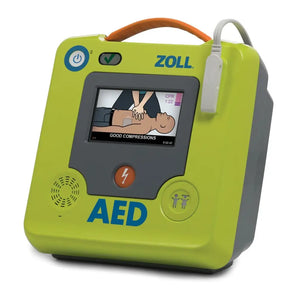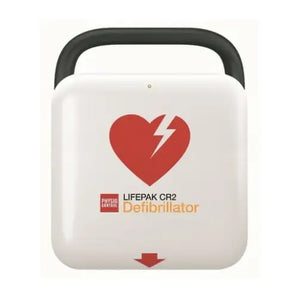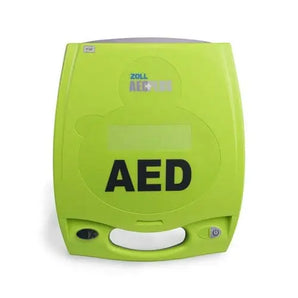
Why Maintenance Matters Just as Much as the Device Itself
Automated External Defibrillators (AEDs) save lives. Across Canada, more businesses, schools, churches, sports facilities, and community organizations are receiving donated AEDs from generous individuals, foundations, corporations, and fundraising campaigns. These donations come from a genuine desire to protect people and improve survival rates from sudden cardiac arrest.
But there is an important issue that is often overlooked after the donation takes place:
Who is responsible for maintaining the AED long-term?
An AED that is not properly maintained can create a dangerous false sense of security. While having an AED available is far better than having no AED at all, a neglected device may fail when it is needed most.
Donating an AED Is a Great Thing
There is no question that donated AEDs have helped save lives throughout Canada. Many organizations simply would not have access to an AED without community support or donor funding.
Donations help:
- Increase public access to defibrillation
- Improve emergency preparedness
- Protect staff, customers, students, athletes, and visitors
- Raise awareness about cardiac arrest survival
The intention behind AED donations is incredibly positive. The problem usually does not begin on day one.
The problem often begins years later.
The Real Risk Starts After Installation
Once an AED is installed on the wall, many organizations assume the device will simply continue working indefinitely.
Unfortunately, AEDs require ongoing maintenance and inspections to remain rescue-ready.
Over time:
- Electrode pads expire
- Batteries expire
- Software updates may be required
- Cabinets or alarms can malfunction
- Damage or theft may go unnoticed
- Monthly inspections may stop being completed
- Staff turnover causes responsibility gaps
In many organizations, the person originally responsible for the AED leaves the company or changes roles. Over time, maintenance tasks can easily fall through the cracks.
This is especially common in:
- Volunteer-run organizations
- Small businesses
- Churches
- Sports leagues
- Seasonal facilities
- Non-profits
- Community centres
The Greater Liability: Having an AED That Does Not Work
One of the biggest misconceptions is that simply owning an AED eliminates risk.
In reality, there can be significant liability and emotional consequences associated with having an AED present that fails during an emergency due to poor maintenance.
Imagine this scenario:
A cardiac arrest occurs. Staff rush to retrieve the AED. But when they open the device:
- The battery is dead
- The pads expired years ago
- The device fails its self-test
- The rescue kit is missing
- The AED was damaged and nobody noticed
That situation can be devastating for everyone involved.
A non-functioning AED may create:
- Delays in treatment
- Reduced survival chances
- Increased legal exposure
- Emotional trauma for responders
- Reputational damage for organizations
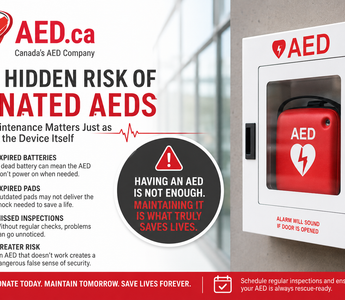
Having an AED is not enough. Maintaining it is what truly protects lives.
Why AED Maintenance Is Often Missed
Most organizations do not intentionally neglect their AED.
The reality is that people are busy.
Even organizations with the best intentions can lose track of maintenance because:
- Staff responsibilities change
- Monthly checks are forgotten
- Expiration dates sneak up unexpectedly
- Multiple locations become difficult to manage
- Inspection logs are inconsistent
- Nobody is clearly accountable
This is why many organizations across Canada are moving toward professional AED management programs instead of relying solely on manual internal checks.
What Proper AED Maintenance Should Include
A proper AED maintenance program should include:
- Regular AED inspections
- Battery monitoring
- Electrode pad expiration tracking
- Replacement reminders
- Rescue-ready verification
- Inspection documentation
- Compliance support
- Ongoing monitoring of device status indicators
Organizations should also ensure:
- The AED is easily accessible
- Staff know where it is located
- Emergency response plans are in place
- The device is registered and documented
The Benefits of a Professional AED Maintenance Program
Professional AED management services help reduce the risk of devices being overlooked over time.
A formal maintenance program ensures that AEDs remain rescue-ready year after year.
Benefits of a managed program can include:
- Scheduled AED checks / inspections
- Detailed reporting
- Expiration tracking
- Automatic Pads and Battery changes
- Device status verification
- National support
- Reduced administrative burden
Most importantly, it helps provide peace of mind that the AED will be ready if a life depends on it.
Donating an AED Is Only the First Step
AED donations save lives. Communities should absolutely continue supporting public access defibrillation initiatives.
But every organization receiving a donated AED should also ask an important question:
Who will maintain this AED over the next 5 to 10 years?
Because the goal is not simply to have an AED on the wall.
The goal is to have a fully functional AED ready to respond during a cardiac emergency.
Links
About AED.ca
AED.ca is a Canadian supplier of Automated External Defibrillators (AEDs), AED accessories, and nationwide AED maintenance services. AED.ca helps businesses, schools, sports organizations, churches, and public facilities improve cardiac emergency preparedness through AED sales, inspection programs, training support, and long-term device management solutions across Canada.