
AEDs are Literal Life Savers
Every year, approximately 50,000 Canadians experience sudden cardiac arrest outside of hospital settings. The statistics are sobering: without immediate intervention, survival rates plummet by 7-10% with each passing minute. For building owners and property managers across Canada, the question isn't whether to install an automated external defibrillator—it's how quickly you can get one in place.
The Reality of Sudden Cardiac Arrest in Canada
Sudden cardiac arrest doesn't discriminate. It strikes office workers during afternoon meetings, gym members mid-workout, shoppers in retail spaces, and students in school hallways. The condition can affect anyone, regardless of age or apparent health status. When someone collapses from cardiac arrest, their heart has stopped pumping blood effectively. Brain damage begins within minutes, and death can follow shortly after.
The difference between life and death often comes down to one factor: immediate access to an AED and someone willing to use it.
Your Decision Carries Life-or-Death Weight
As a building owner or facility manager, you make countless decisions that affect the people who enter your space. Most of these decisions involve convenience, efficiency, or cost savings. The decision about AED placement is different—it's a decision that will determine whether someone lives or dies.
Consider this scenario: A 42-year-old employee collapses in your office building from sudden cardiac arrest. Co-workers immediately call 911 and begin CPR. The average emergency response time in Canadian urban areas ranges from 8 to 12 minutes. In rural areas, it can exceed 20 minutes. Even with perfect CPR, this person's chance of survival decreases dramatically with each passing minute.
Now imagine the same scenario, but this time there's a public access AED mounted on the wall nearby. Within two minutes, the device is retrieved, applied, and delivers a shock that restores the person's heart rhythm. By the time paramedics arrive, the individual is breathing and has a pulse. This person will likely survive, return to their family, and continue their life.
The only difference between these two outcomes is your decision today.
AEDs as Essential Safety Equipment: The Insurance Analogy
Think of an automated external defibrillator the same way you think about fire extinguishers or building insurance. You install fire suppression systems hoping you'll never need them. You pay insurance premiums knowing you may never file a claim. Yet no responsible property owner would operate without these safeguards.
An AED follows the same principle. You acquire it with the sincere hope it will never be needed. You mount it on the wall and conduct regular maintenance checks, perhaps for years, without a single emergency. Then one day, it saves a life—and suddenly, every dollar spent and every moment invested in preparation proves its worth beyond measure.
The cost of an AED workplace solution typically ranges from $2,000 to $3,000, depending on the model and features. Compare this to the immeasurable value of a human life, or consider the potential liability and moral weight of not having one available when needed.

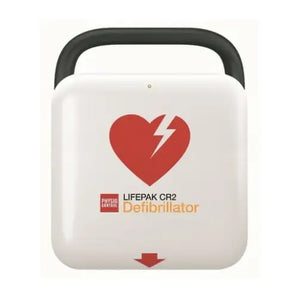
https://aed.ca/collections/bundles/products/physio-control-lifepak-cr2-bundle
Understanding AED Technology and Public Access Programs
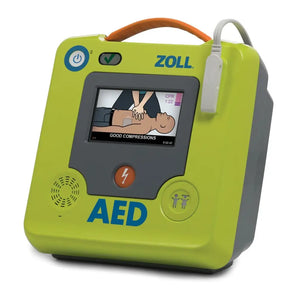
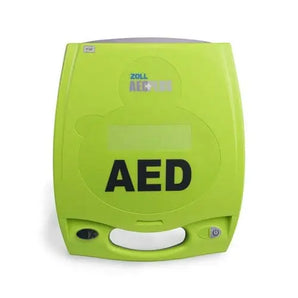
Modern defibrillators are remarkable devices designed for use by anyone, regardless of medical training. These portable AED units provide clear voice instructions, analyze the heart rhythm automatically, and only deliver a shock when medically necessary. It's virtually impossible to harm someone by using an AED—the device won't allow a shock to be delivered unless it detects a life-threatening arrhythmia.
Public access defibrillation programs have transformed survival rates in communities worldwide. Cities and provinces across Canada are increasingly recognizing the importance of AED accessibility. Many jurisdictions now require AEDs in public buildings, schools, recreation facilities, and large commercial spaces.
The concept is straightforward: the more AEDs available in public spaces, the more lives saved. Studies consistently show that survival rates from sudden cardiac arrest increase dramatically in communities with robust public access AED programs.
Compliance, Liability, and Legal Considerations
Canadian building codes and workplace safety regulations increasingly address cardiac emergency preparedness. While requirements vary by province and municipality, the trend is clear: AEDs are becoming standard safety equipment.
From a liability perspective, the landscape has shifted. While Good Samaritan laws protect individuals who use AEDs in emergencies, building owners may face questions about due diligence if they fail to provide basic life-saving equipment. As AEDs become more commonplace, the expectation that buildings will have them available grows stronger.
Several provinces have enacted or are considering AED legislation for specific types of facilities. British Columbia, Ontario, and other provinces have requirements for recreation facilities, community centers, and certain public buildings. Forward-thinking property managers recognize that meeting—or exceeding—these requirements isn't just about compliance; it's about moral responsibility.
Choosing the Right AED Solution for Your Facility
Selecting an appropriate cardiac emergency response system involves several considerations:
Location and accessibility: AEDs should be positioned for maximum visibility and access, typically within a two-minute walk from any location in your facility. High-traffic areas, near elevators, at reception desks, and in fitness facilities are optimal placement points.
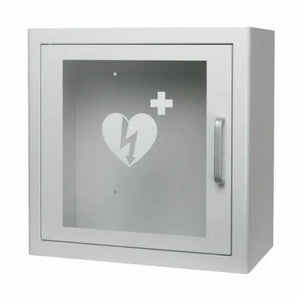
Environmental factors: Different AED models are designed for various environments. Consider temperature ranges, humidity, and potential exposure to dust or debris. Outdoor AED cabinet solutions are available for devices installed in semi-protected exterior locations.
Training and support: While AEDs are designed for untrained users, providing basic training increases confidence and response speed. Many AED providers offer training programs, or you can arrange certification courses through organizations like the Heart and Stroke Foundation.
Maintenance and monitoring: AEDs require periodic maintenance, including battery replacement and electrode pad updates. Some modern AED units feature connectivity options that provide automated readiness alerts.
Pediatric capability: If your facility serves children, ensure your AED includes pediatric pad options or can accommodate them.
Why AED.ca Stands Out as Canada's Premier AED Provider
When selecting an AED supplier, you need more than just a device—you need a partner committed to your emergency preparedness program. AED.ca has established itself as Canada's leading AED company by offering comprehensive solutions tailored to Canadian facilities.
What sets AED.ca apart:
Complete product selection: From basic models suitable for small offices to advanced systems for large facilities, AED.ca offers the full spectrum of automated external defibrillator options from trusted manufacturers.
Canadian expertise: Understanding the unique requirements of Canadian building codes, climate considerations, and regional regulations, AED.ca provides guidance specific to your province and municipality.
Ongoing support: Beyond the initial purchase, AED.ca offers maintenance programs, replacement supplies, training resources, and technical support to ensure your AED remains ready when needed.
Fast shipping: With Canadian distribution, AED.ca delivers quickly across all provinces and territories, ensuring your facility doesn't wait weeks for critical safety equipment.
Compliance assistance: Navigating AED regulations and workplace safety requirements can be complex. AED.ca helps ensure your program meets or exceeds all applicable standards.
Implementing a Cardiac Emergency Response Plan
Installing an AED is the first step. A comprehensive cardiac emergency response plan ensures your team knows how to respond effectively:
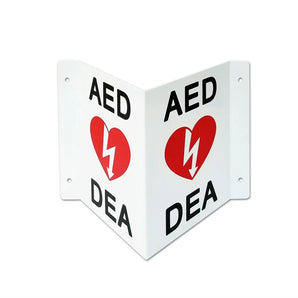
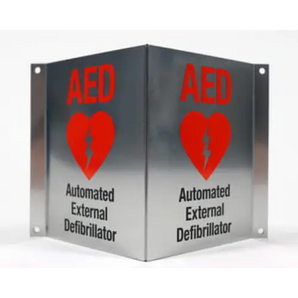
- Identify AED locations and ensure clear signage: Visible AED signs guide responders to devices quickly.
- Conduct regular staff awareness sessions: Even brief orientations familiarize staff with AED locations and basic operation.
- Integrate AEDs into emergency procedures: Include cardiac events in your emergency response protocols alongside fire, medical, and security procedures.
- Perform routine checks: Assign someone to verify AED readiness monthly, checking indicator lights, expiration dates, and accessibility.
- Review and update: After any cardiac event or near-miss, review your response and identify improvements.
The Ripple Effect of Your Decision
When you install an AED, you're not just protecting the people in your building today. You're making a statement about values and priorities. Employees feel safer knowing their workplace takes their wellbeing seriously. Customers and visitors recognize organizations that invest in comprehensive safety measures. Insurance providers may offer favorable terms for facilities with robust emergency preparedness programs.
The decision creates ripples that extend far beyond your property lines. Survivors of sudden cardiac arrest return to their families, their communities, and their careers. They coach their children's sports teams, volunteer at local charities, and continue contributing to Canadian society. The grandchildren they'll someday meet, the innovations they'll create, the lives they'll touch—all of these possibilities exist because someone decided to install an AED.
Moving Forward: Taking Action Today
The question facing every building owner and facility manager in Canada is simple: When someone experiences sudden cardiac arrest in your space, will they have a fighting chance?
The average cost of an AED represents a fraction of your annual operating budget. The installation takes hours. The maintenance requires minimal effort. Yet the potential impact is infinite.
Don't wait for a tragedy to reveal the gap in your safety program. Every day without an AED is a day you're accepting unnecessary risk—not just legal or financial risk, but the risk that someone's mother, father, colleague, or friend will die because life-saving equipment wasn't available.
Contact AED.ca today to discuss your facility's needs. They will help you select the right AED solution, navigate compliance requirements, and implement a cardiac emergency response program that could save lives.
Your decision today could determine someone's tomorrow. Choose to be prepared. Choose to protect lives. Choose AED.ca—Canada's trusted partner in cardiac emergency preparedness.
About AED.ca: As Canada's premier AED company, AED.ca provides comprehensive automated external defibrillator solutions to facilities across all provinces and territories. With extensive product selection, Canadian expertise, and commitment to customer support, AED.ca helps organizations implement life-saving cardiac emergency response programs. Visit AED.ca or contact them to learn how you can enhance safety and preparedness in your facility.