Is Your AED Over 10 Years Old? Why It May Be Time to Upgrade
When was your automated external defibrillator purchased?
For many Canadian businesses, schools, churches and community organizations, the answer is “years ago.” Once an AED is installed, it can become easy to overlook—especially if it has never been used.
However, an AED is an electronic medical device that requires ongoing attention. If yours is over 10 years old, it is a good time to review its condition, manufacturer support and suitability for your location.
Ten years is a useful review point, rather than a universal expiry date. Replacement decisions should follow the manufacturer’s guidance for your specific model and consider its maintenance history, condition and available support.
1. New Pads and Batteries Do Not Make the Entire AED New
Replacing expired pads and batteries is essential, but it does not renew the AED’s internal electronics, connectors, speaker or housing.
An older unit may have experienced years of temperature changes, humidity, dust or handling. Even an AED that has never been used in an emergency has still spent those years in service.
Before investing in another set of replacement supplies, review the age and condition of the complete device. An inspection can help determine whether continued maintenance or replacement is the better next step.
2. Manufacturer Support and Parts Availability Matter
Is the manufacturer still supporting your AED model? Are compatible pads and batteries readily available? Can the device be serviced if a fault develops?
These questions become especially important as equipment ages or a model is discontinued.
Discontinuation does not automatically mean an AED must be removed from service. However, reduced access to supplies, repairs or technical support can make replacement planning more urgent.
Checking these details early gives your organization time to arrange an upgrade before a supply shortage or device fault leaves you without an available AED.
3. An Upgrade Can Improve Support for Rescuers
AED features vary by model. Reviewing newer options gives your organization an opportunity to choose equipment that better supports the people likely to use it.
Features to consider include:
-
Clear voice prompts and visual instructions.
-
CPR feedback or coaching.
-
Adult and child treatment options.
-
Bilingual instructions.
-
Connected readiness monitoring.
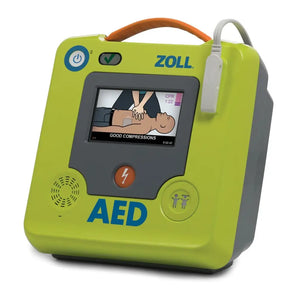
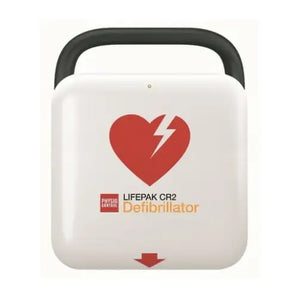
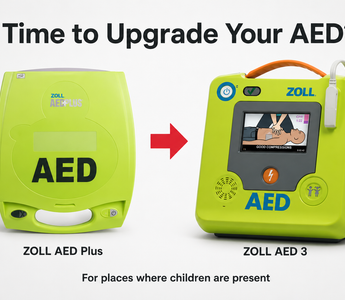
For example, the ZOLL AED 3 provides real-time feedback on CPR compression depth and rate. The LIFEPAK CR2 offers a child mode button that adjusts energy delivery and CPR guidance for children. Compare these features against your organization’s needs when choosing a replacement.
4. Your Location’s Needs May Have Changed
The AED you selected a decade ago may have been purchased for a different workplace, population or emergency response plan.
Perhaps your building now welcomes more children. Your organization may have expanded to multiple locations, added staff or introduced bilingual service requirements.
An upgrade review should consider who uses the building, where the AED is located and how staff will respond during an emergency. The right choice depends on your current environment.
For help comparing options, read What Is the Best AED for a Business or Workplace in Canada?.
5. Connected Features Can Help You Manage Readiness
Managing several AEDs can be challenging when inspection records, expiry dates and device information are kept in different places.
Some newer AEDs offer connectivity that can help organizations monitor device status. For example, appropriately configured LIFEPAK CR2 systems can provide notifications related to self-test failures and approaching battery or electrode expiry dates.
These features can support your maintenance program, but staff still need to check physical accessibility, cabinet condition, supplies and other items specified by the manufacturer.
6. Compare the Cost of Continued Ownership With Replacement
If an older AED needs new pads and batteries, it is worth comparing that expense with the cost of a replacement.
Consider more than the immediate purchase price:
-
The condition and service history of the existing AED.
-
Manufacturer support and supply availability.
-
Warranty coverage on a replacement.
-
Replacement supply costs.
-
Features that suit your staff and visitors.
-
How the device will be inspected and maintained.
An older, supported AED in good condition may remain suitable for service. A unit with faults, damage or limited support may warrant replacement sooner.
7. An Upgrade Is an Opportunity to Review Your Entire AED Program
Replacing the device is only one part of emergency preparedness.
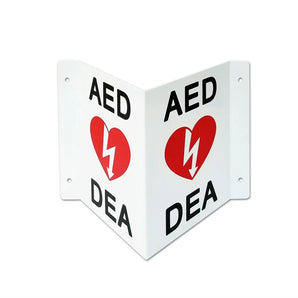
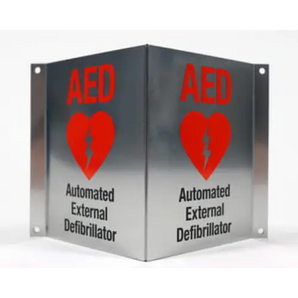
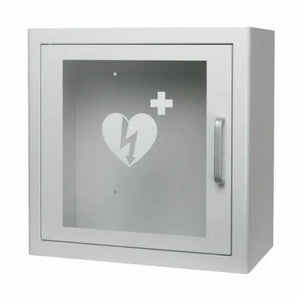
Use the opportunity to confirm that your AED is easy to find, accessible during operating hours and supported by clear procedures. Review signage, staff training, inspection records and responsibility for replacing supplies.
A new AED still needs ongoing maintenance. Someone must remain responsible for checking its readiness and following the manufacturer’s instructions.
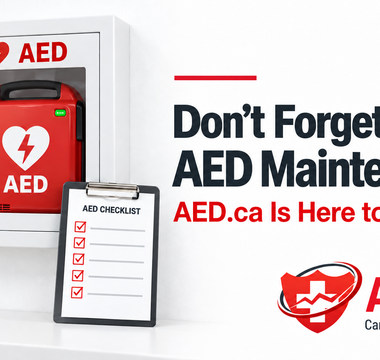
Explore AED.ca’s Full-Service AED Maintenance Plans to learn about support for managing inspections, replacement supplies and maintenance records.
How to Check the Age of Your AED
Start with the manufacturer’s label, usually located on the back or underside of the device. Depending on the model, it may display a manufacture date or information that allows the manufacturer to confirm its age.
Your purchase invoice and equipment records can also help. Remember that the purchase date may differ from the manufacture date.
If you are unsure, record the make, model and serial number and ask for assistance identifying the device’s age and support status.
Review Your Older AED With AED.ca
If your AED is over 10 years old—or you do not know how old it is—now is a sensible time to review it.
AED.ca can help you assess your current equipment, compare replacement options and plan ongoing inspections and maintenance.
Whether you continue using a supported older device or upgrade to a newer model, the goal is the same: an AED that is maintained, accessible and ready for an emergency.
Contact AED.ca to discuss your existing AED and your replacement options.
Visit AED.ca, email info@aed.ca, or call 1-833-428-3233.
About the Author
Martin Andrews is President of AED.ca, a Canadian company focused on AED sales, inspections and maintenance. He helps businesses, schools, churches and community organizations make informed decisions about AED equipment and ongoing readiness. Through his work at AED.ca, Martin promotes greater access to defibrillators and practical approaches to maintaining them across Canada.