Simple How to Reference Steps
Every year, thousands of Canadians experience sudden cardiac arrest (SCA) outside of a hospital. When this happens, immediate CPR and rapid use of an Automated External Defibrillator (AED) can mean the difference between life and death.
The good news is that modern AEDs are designed for use by everyday people—not just healthcare professionals. Whether you're at work, at the gym, in a school, church, arena, construction site, or community centre, an AED can guide you through a rescue with clear voice instructions and visual prompts.
At AED.ca, a common questions we hear is:
"How do I use an AED?"
The answer is simple: turn it on and follow the prompts.
This guide explains exactly what an AED does, when it should be used, and the seven basic steps for operating one during a cardiac emergency.
What Is an AED?
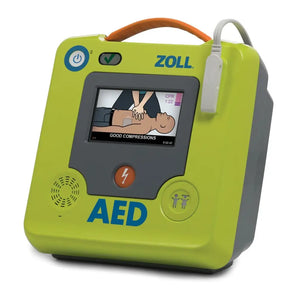
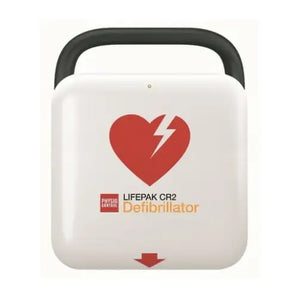
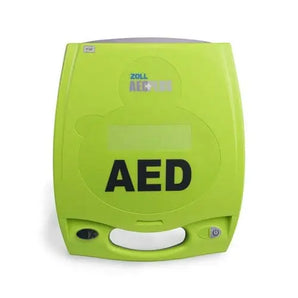
An Automated External Defibrillator (AED) is a portable medical device designed to analyze a person's heart rhythm and determine whether a life-saving shock is required.
AEDs are used during sudden cardiac arrest—a condition where the heart suddenly stops pumping blood effectively due to an electrical malfunction.
Modern AEDs automatically analyze the heart rhythm and will only recommend a shock if one is medically required. This built-in safety feature allows both trained and untrained rescuers to use them confidently.
Can Anyone Use an AED?
Yes.
Public-access AEDs are specifically designed for use by bystanders with little or no medical training.
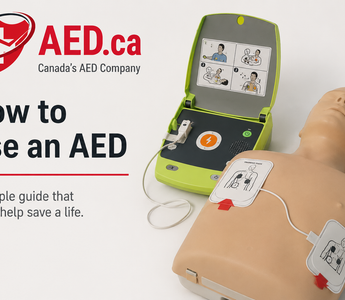
Once turned on, the device provides step-by-step voice instructions that guide the rescuer through the entire process. Most models also include visual diagrams showing exactly where to place the pads.
When Should You Use an AED?
An AED should be used immediately if a person:
-
Suddenly collapses
-
Is unresponsive
-
Is not breathing normally
-
Is only gasping for air
If these signs are present:
-
Call 911.
-
Begin CPR.
-
Retrieve and use an AED as soon as possible.
Early defibrillation is one of the most important factors in improving survival from sudden cardiac arrest.
How to Use an AED: 7 Simple Steps
Step 1: Call 911 and Begin CPR
Before using an AED, ensure emergency services have been contacted.
If another person is available, have them call 911 and retrieve the AED while you begin chest compressions.
Continue CPR until the AED arrives.
Step 2: Turn On the AED
Open the lid or press the power button.
The AED will immediately begin providing voice instructions. Simply listen and follow the prompts.
Modern AEDs are designed to walk rescuers through every stage of the rescue.
Step 3: Expose the Person's Chest
Remove or cut away clothing so the chest is completely exposed.
If the chest is wet, dry it quickly before applying the pads.
Most AED rescue kits include scissors, gloves, a towel, and a razor to help prepare the patient if necessary.
Step 4: Apply the AED Pads
Remove the backing from the adhesive pads and place them exactly as shown on the diagrams.
For adults:
-
One pad goes on the upper right side of the chest.
-
One pad goes on the lower left side of the chest below the armpit.
Proper pad placement allows the AED to accurately analyze the heart rhythm and deliver treatment if required.
Step 5: Allow the AED to Analyze
Once the pads are attached, stop CPR and ensure no one is touching the person.
Loudly announce:
"EVERYONE CLEAR!"
The AED will automatically analyze the heart rhythm and determine whether a shock is needed.
Step 6: Deliver the Shock if Advised
If the AED recommends a shock:
-
Ensure nobody is touching the patient.
-
Press the shock button if using a semi-automatic AED.
With fully automatic AEDs, the device will deliver the shock automatically after warning rescuers to stand clear.
Remember: an AED cannot deliver a shock unless it detects a shockable rhythm.
Step 7: Resume CPR Immediately
As soon as the shock is delivered—or if no shock is advised—resume CPR immediately.
Continue following the AED's prompts until:
-
Emergency responders arrive.
-
Another trained rescuer takes over.
-
The person begins breathing normally.
Many AEDs include a CPR metronome to help maintain the correct compression rate.
Common Questions About AEDs
Can an AED Hurt Someone?
No.
AEDs are designed to analyze the heart rhythm automatically and only recommend a shock when one is needed. They cannot shock someone who does not require defibrillation.
What if the Person Has a Pacemaker?
You can still use an AED.
Simply place the pads slightly away from any visible implanted device under the skin.
What if the Person Has a Hairy Chest?
If excessive chest hair prevents the pads from sticking properly, quickly shave the area where the pads will be applied.
Many AED rescue kits include a disposable razor for this purpose.
Can an AED Be Used on Children?
Yes.
Many modern AEDs include a pediatric mode or pediatric pads.
Always follow the manufacturer's instructions for children and infants. Pediatric-capable AEDs are commonly used in schools, recreation centres, churches, and community facilities.
Why Every Workplace Should Have an AED
Sudden cardiac arrest can happen to anyone, regardless of age or fitness level.
It can occur in:
-
Offices
-
Construction sites
-
Factories
-
Warehouses
-
Schools
-
Churches
-
Gyms
-
Sports facilities
-
Medical clinics
-
Community centres
- Homes
Because emergency responders may take several minutes to arrive, having an AED immediately available can dramatically improve survival outcomes. Immediate CPR combined with early defibrillation can double or even triple a person's chance of survival.
Final Thoughts
Using an AED is far simpler than most people realize.
If someone suddenly collapses and is not breathing normally:
-
Call 911.
-
Start CPR.
-
Turn on the AED.
-
Follow the voice prompts.
The AED will guide you through every step and will only deliver a shock if it is needed.
You don't need to be a healthcare professional to save a life.
At AED.ca, our mission is to help Canadian workplaces, organizations, schools, churches, sports facilities, and community groups prepare for cardiac emergencies with reliable AEDs, training, inspections, and ongoing maintenance support.
Because when sudden cardiac arrest happens, every second counts.