A Step-by-Step Guide to Proper AED Pad Placement
When someone experiences sudden cardiac arrest, every second matters. An Automated External Defibrillator (AED) can help save a life by analyzing the heart's rhythm and delivering an electrical shock when necessary.
However, for an AED to work effectively, its electrode pads must be applied correctly.
Whether you are a workplace safety coordinator, business owner, teacher, coach, or simply someone who wants to be prepared, understanding how to apply AED pads is an important life-saving skill.
The good news? AEDs are designed to guide users through the process with simple voice instructions and visual prompts.
In this guide, we'll explain where to place AED pads, how to prepare the chest, what to do when using an AED on a child, and common mistakes to avoid.
1. When Should You Use an AED?
An AED should be used when someone is unresponsive and is not breathing normally, including when they are only gasping.
If you suspect someone is experiencing sudden cardiac arrest:
- Check that the scene is safe.
- Check for responsiveness and normal breathing.
- Call 911 immediately or direct someone else to call.
- Ask someone to retrieve the nearest AED.
- Begin CPR immediately, following the 911 dispatcher's instructions.
- Turn on the AED as soon as it arrives and follow its instructions.
Do not delay CPR while waiting for an AED.
If you want to learn more about responding to a cardiac emergency, read our guide: How to Use an AED: A Step-by-Step Guide for Canadians.
2. Prepare the Chest Before Applying AED Pads
AED pads must make direct contact with bare skin to work properly.
Before applying the pads:
- Expose the chest: Remove or cut away clothing covering the chest.
- Dry the skin: If the chest is wet or sweaty, quickly wipe it dry.
- Remove medication patches: Remove any medication patches from the areas where pads will be placed, using appropriate precautions.
- Check for implanted devices: If the person has a pacemaker or implanted defibrillator, avoid placing an AED pad directly over the device. Leave approximately 2.5 cm (1 inch) of space when possible.
- Address excessive chest hair if necessary: If the pads cannot adhere properly, use the AED's supplied razor if available. Do not delay defibrillation unnecessarily.
Once the chest is prepared, you can apply the AED pads.
3. Where Do AED Pads Go on an Adult?
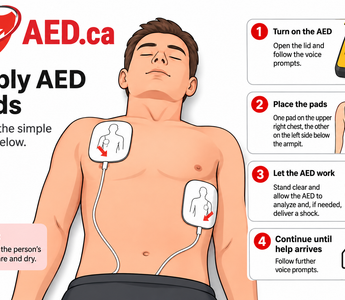
For most adults, AED pads are placed in an anterior-lateral position. This means one pad goes on the upper right side of the chest and the other goes on the lower left side.
Always follow the placement diagrams printed directly on the AED pads.
Pad 1: Upper right chest
Place the first pad on the upper right side of the person's chest, just below the collarbone and to the right of the breastbone.
Pad 2: Lower left chest
Place the second pad on the lower left side of the chest, below the armpit and along the side of the rib cage.
The pads should be positioned so that the electrical current travels through the heart.
Remember:
- Apply the pads directly to bare, dry skin.
- Press firmly around the entire surface of each pad.
- Make sure the pads do not overlap or touch.
- Avoid placing pads directly over implanted medical devices.
4. How to Apply AED Pads to a Child or Infant
AEDs can also be used on children and infants experiencing sudden cardiac arrest.
Whenever possible, use pediatric AED pads or the appropriate pediatric setting for the device.
Pediatric pads are designed to deliver a reduced energy level appropriate for smaller patients.
For children:
Follow the AED manufacturer's age and weight recommendations for selecting adult or pediatric pads.
For infants and smaller children:
If the chest is too small to position both pads on the front without touching, use an anterior-posterior placement:
- Place one pad in the centre of the chest.
- Place the second pad on the centre of the back, between the shoulder blades.
What if pediatric pads are unavailable?
If pediatric pads are not available, adult AED pads can generally be used on children and infants. Make sure the pads do not touch or overlap. Use front-and-back placement if necessary.
Always follow the AED manufacturer's instructions and device prompts. Do not delay using an available AED while searching for pediatric pads.
To ensure your organization has the right supplies available, explore our AED replacement pads and accessories.
5. What Happens After the AED Pads Are Applied?
Once both pads are attached, the AED will analyze the person's heart rhythm.
Depending on the AED model, you may need to connect the pad cable to the device.
The AED will provide voice instructions telling you what to do next.
You may hear:
"Analyzing heart rhythm. Do not touch the patient."
At this point, make sure nobody is touching the person.
If the AED detects a rhythm that requires defibrillation, it will instruct you to deliver a shock.
For a semi-automatic AED:
- Make sure everyone is clear of the person.
- Confirm nobody is touching the patient.
- Press the flashing shock button when instructed.
For a fully automatic AED:
- Make sure everyone is clear.
- The device will deliver the shock automatically when instructed.
After the shock, or if the AED advises that no shock is needed, immediately resume CPR as directed by the AED.
Continue following the device's instructions until emergency medical services arrive or the person shows signs of recovery.
Important: Never remove the AED pads simply because the AED advises that no shock is needed. Continue CPR and follow the device's instructions.
6. Common Mistakes to Avoid When Applying AED Pads
Even though AEDs are designed to be easy to use, a few common mistakes can interfere with proper operation.
Applying pads over clothing
AED pads must be applied directly to bare skin. Never place them over clothing.
Applying pads to wet skin
Excess moisture can interfere with pad adhesion and electrical contact. Quickly dry the chest before applying the pads.
Allowing pads to overlap
Pads must not touch or overlap. If the person's chest is too small, use front-and-back placement.
Placing pads over a pacemaker
Avoid positioning a pad directly over an implanted pacemaker or defibrillator.
Stopping CPR unnecessarily
CPR should continue until the AED instructs you to pause for analysis or a shock, or until emergency responders take over.
Removing the pads too early
Once attached, leave the pads in place and follow the AED's instructions until emergency medical personnel arrive.
7. Why Regular AED Inspections and Maintenance Matter
Knowing how to apply AED pads is only one part of being prepared for a cardiac emergency.
An AED is only useful if it is ready when someone needs it.
Over time, AED pads can expire, adhesive gel can deteriorate, and batteries can lose their ability to power the device.
Organizations should establish a regular AED inspection and maintenance schedule.
Important maintenance tasks include:
- Checking the AED's status indicator to confirm it is ready for use.
- Verifying that electrode pads are within their expiration dates.
- Checking battery status and replacement dates.
- Confirming that accessories are present and accessible.
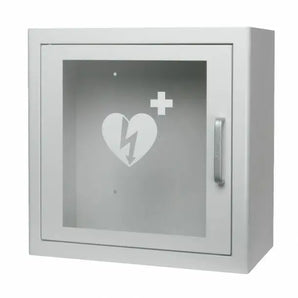
- Inspecting the AED cabinet and device for damage.
- Maintaining inspection records.
- Replacing pads and other single-use supplies immediately after an emergency.
Most AED manufacturers also recommend following the device's specific inspection and maintenance instructions.
At AED.ca, we help Canadian organizations keep their AED programs organized and their equipment ready for an emergency.
Learn more about our Full Service AED Maintenance Plans
8. Make Sure Your Team Knows How to Use an AED
Having an AED in your workplace is an important step toward improving emergency preparedness. However, employees should also understand how to respond when someone experiences sudden cardiac arrest.
We recommend that organizations:
- Provide CPR and AED training to employees.
- Make sure staff know where AEDs are located.
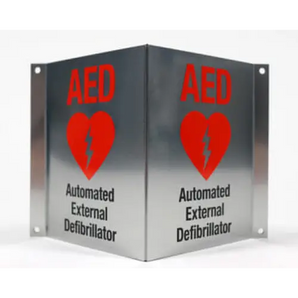
- Post clear AED location signs.
- Conduct regular equipment inspections.
- Assign someone responsibility for AED maintenance.
- Keep replacement pads and batteries available.
An AED is designed to be used by members of the public, even without formal training. However, CPR and AED training can help people respond more confidently and effectively during an emergency.
Explore our FAQ Page for answers to more AED questions: AED FAQ's
Final Thoughts: Proper AED Pad Placement Can Help Save a Life
Knowing where and how to apply AED pads can make a significant difference during a cardiac emergency.
Remember the basics:
- Expose and dry the chest.
- Place one pad on the upper right chest.
- Place the other pad on the lower left side of the chest.
- Use appropriate pediatric pads when available.
- Follow the AED's voice instructions.
- Make sure everyone is clear during analysis and shock delivery.
- Resume CPR immediately when instructed.
Most importantly, don't be afraid to use an AED. These devices are designed to guide you through the process, even if you have never used one before.
Is your organization's AED ready for an emergency?
Don't wait until a cardiac emergency to discover that your AED pads have expired or your battery needs replacing.
Visit AED.ca to explore AED products, replacement supplies, educational resources, and maintenance solutions for your organization.
About AED.ca
AED.ca is dedicated to helping Canadian workplaces, schools, businesses, community organizations, and public facilities improve cardiac emergency preparedness.
We understand that having an Automated External Defibrillator is only part of the equation. Ensuring that equipment is properly maintained, replacement supplies are readily available, and employees know how to respond during an emergency is equally important.
From helping organizations select the right AED to providing replacement pads, batteries, accessories, and ongoing maintenance support, AED.ca is committed to making cardiac emergency preparedness easier.
Our mission is simple: help Canadian organizations stay prepared, keep their life-saving equipment ready, and give more people the opportunity to survive sudden cardiac arrest.
AED.ca — Helping Canadians be prepared to save lives.