A Guide for Canadian Workplaces
One of the first questions businesses ask when purchasing an Automated External Defibrillator (AED) is:
"How many AEDs does our workplace actually need?"
The answer depends on much more than your building's square footage. Your facility layout, number of employees, response time, public access, and the activities taking place all play an important role in determining the right number of AEDs.
At AED.ca, we help organizations across Canada design effective workplace AED programs that maximize emergency preparedness while supporting workplace safety and compliance.
Whether you operate a small office, manufacturing facility, school, church, warehouse, healthcare clinic, or multiple locations across Canada, this guide will help you determine how many AEDs your organization should have.
Why Having Enough AEDs Matters
Sudden cardiac arrest can happen to anyone, anywhere, and without warning.
For every minute that passes without defibrillation, the chance of survival decreases significantly. Having an AED available—and having it close enough to reach the victim quickly—can make all the difference.
Purchasing one AED for a large building may seem sufficient, but if it takes several minutes to retrieve, it may not provide the rapid response needed during an emergency.
Simply put:
The best AED is the one that can reach the victim the fastest.
The 3-Minute Response Goal
Most emergency response experts recommend placing AEDs so they can be retrieved and brought to a victim within approximately three minutes.
When planning AED placement, consider:
-
Walking distance
-
Multiple floors
-
Elevators
-
Stairwells
-
Locked doors
-
Security checkpoints
-
Outdoor work areas
-
Parking lots
-
Seasonal access restrictions
If any of these increase retrieval time, additional AEDs should be considered.
Free Workplace AED Coverage Assessment
Not sure how many AEDs your workplace needs?
The team at AED.ca offers complimentary guidance to help determine:
-
How many AEDs are recommended
-
Where they should be installed
-
Which AED models best suit your workplace
-
Accessories you'll need
-
Long-term inspection and maintenance requirements
Whether you operate one location or hundreds across Canada, we'll help you build an effective AED deployment plan.
Contact AED.ca for a complimentary AED Coverage Assessment
Factors That Determine How Many AEDs You Need
Every workplace is unique.
The following factors should be considered when planning an AED program.
Building Size
Larger buildings typically require more than one AED.
Rather than focusing only on square footage, consider how long it takes someone to retrieve an AED from every part of the building.
Large office complexes, campuses, schools, hospitals, warehouses, and manufacturing facilities often require multiple strategically placed AEDs.
Number of Floors
Buildings with multiple occupied floors should strongly consider placing an AED on each floor.
Waiting for elevators or climbing stairs wastes valuable time during a cardiac emergency.
Number of Employees
Organizations with more employees generally benefit from additional AED coverage.
Businesses with hundreds of employees spread throughout multiple departments or buildings should evaluate whether multiple AEDs are necessary to meet recommended response times.
Public Access
Organizations serving the public often require additional AED coverage.
Examples include:
-
Hotels
-
Churches
-
Schools
-
Shopping centres
-
Recreation facilities
-
Community centres
-
Medical clinics
-
Fitness centres
-
Restaurants
Visitors are unfamiliar with your building, making clearly visible AED locations especially important.
Physical Layout
A building with multiple wings, detached buildings, long hallways, or separate work areas often requires more than one AED.
Every area where people spend significant amounts of time should be evaluated.
Higher-Risk Environments
Some workplaces should consider additional AED coverage because of increased physical demands or elevated health risks.
Examples include:
-
Manufacturing facilities
-
Construction sites
-
Warehouses
-
Airports
-
Retirement residences
-
Sports facilities
-
Industrial operations
Recommended AED Coverage by Workplace
Small Offices
Many offices with fewer than 50 employees can often be adequately served with one centrally located AED.
Medium Offices
Businesses with 50–250 employees may require two or more AEDs depending on their building layout and response times.
Large Office Buildings
Consider installing AEDs:
-
On every occupied floor
-
Near reception
-
Close to meeting rooms
-
Near cafeterias
-
Fitness centres
-
High-traffic common areas
Manufacturing Plants
Factories often require several AEDs due to their large floor plans and separated work areas.
Install AEDs near:
-
Production lines
-
Shipping
-
Receiving
-
Maintenance
-
Lunchrooms
-
Administrative offices
Warehouses
Large warehouses frequently benefit from multiple AEDs because walking distances can be significant.
Consider coverage near:
-
Warehouse floor
-
Shipping
-
Receiving
-
Offices
-
Employee break areas
Schools
Schools often install AEDs near:
-
Main office
-
Gymnasium
-
Cafeteria
-
Athletic fields
-
Portable classrooms
-
Performing arts areas
Churches
Churches commonly benefit from AEDs in:
-
Sanctuary
-
Children's ministry
-
Fellowship hall
-
Gymnasium
-
Administrative offices
Construction Sites
Portable AEDs should remain close to active work areas and be relocated as projects progress.
Standardize Across Multiple Locations
Organizations operating multiple facilities often benefit from standardizing on the same AED model.
Advantages include:
-
Consistent staff training
-
Easier maintenance
-
Standardized replacement pads and batteries
-
Simplified inspections
-
Streamlined emergency response procedures
-
Reduced administrative workload
To compare today's leading workplace AEDs, read:
ZOLL AED 3 vs. LIFEPAK CR2: Which AED Is Right for You?
Where Should AEDs Be Installed?
AEDs should be:
-
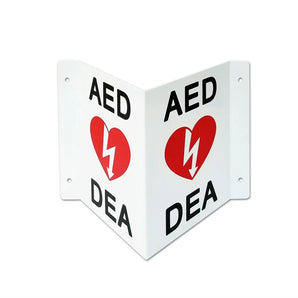
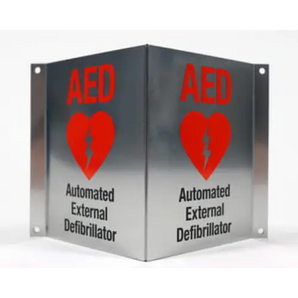
Highly visible
-
Easy to access
-
Clearly marked
-
Available whenever the building is occupied
-
Located near high-traffic areas
-
Protected from extreme temperatures
-
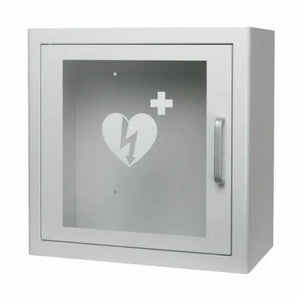
Installed inside quality AED cabinets where appropriate
Learn more about choosing the right cabinet and accessories.
Common AED Placement Mistakes
Avoid these common mistakes:
-
Purchasing only one AED for a large building
-
Installing an AED behind locked doors
-
Forgetting outdoor work areas
-
Ignoring additional floors
-
Not training staff where AEDs are located
-
Allowing batteries or pads to expire
-
Skipping routine inspections
Don't Forget AED Maintenance
Purchasing an AED is only the beginning.
Routine inspections help ensure your AED remains rescue-ready.
Regular maintenance includes:
-
Checking battery status
-
Monitoring pad expiry dates
-
Confirming readiness indicators
-
Verifying rescue kits are complete
-
Recording inspection history
-
Replacing expired components
Learn more about our:
-
AED Maintenance Plans
-
AED Inspection Services
-
Replacement AED Batteries
-
Replacement AED Pads
AED.ca Full Service Maintenance Plan
Choosing the Right AED
Selecting the right number of AEDs is only part of the decision.
Choosing the right model is equally important.
At AED.ca, we commonly recommend:
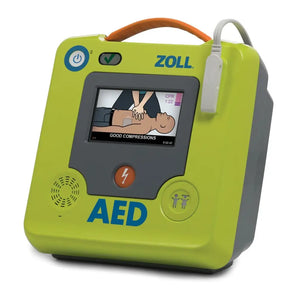
ZOLL AED 3
Ideal for workplaces wanting advanced CPR feedback, a full-colour display, and exceptional guidance for both trained and untrained responders.
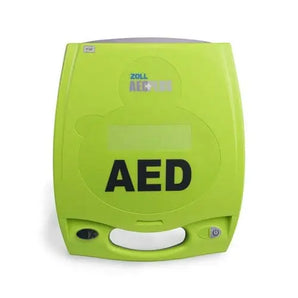
ZOLL AED Plus
Excellent for rugged industrial environments thanks to its durability and industry-leading Real CPR Help® technology.
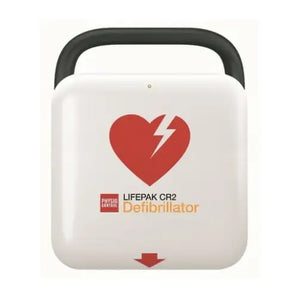
Physio-Control LIFEPAK CR2
A popular choice for schools, healthcare facilities, government organizations, bilingual workplaces, and businesses seeking connected AED program management.
Learn more:
Frequently Asked Questions
Is one AED enough?
For some smaller workplaces, yes. Larger buildings, campuses, and multi-floor facilities often require multiple AEDs.
Should every floor have an AED?
If retrieving an AED from another floor would delay treatment, installing one on each occupied floor is recommended.
Should outdoor areas have AED coverage?
Absolutely. Construction sites, athletic fields, parking lots, and outdoor workspaces should all be evaluated.
How often should AEDs be inspected?
AEDs should be visually checked regularly and professionally inspected according to manufacturer recommendations and your organization's policies.
Can AED.ca help determine how many AEDs we need?
Yes. We regularly help organizations across Canada develop practical AED placement strategies based on building layout, occupancy, and operational needs.
Build a Rescue-Ready Workplace
An effective workplace AED program is about far more than purchasing a defibrillator. It involves thoughtful placement, selecting the right equipment, ongoing inspections, staff awareness, and regular maintenance.
By ensuring an AED can reach a victim quickly, organizations improve their ability to respond to sudden cardiac arrest and help create safer workplaces for employees, visitors, customers, and the communities they serve.
Request Your Complimentary AED Coverage Assessment
If you're unsure how many AEDs your organization needs—or where they should be installed—the team at AED.ca is here to help.
We'll assess your workplace, recommend appropriate AED placement, help you choose the right devices, and support you with inspections, maintenance, replacement pads and batteries, accessories, and long-term compliance.
Contact AED.ca today for your complimentary Workplace AED Coverage Assessment and build a rescue-ready AED program with confidence.
Author
Martin Andrews
President, AED.ca
Martin Andrews is President of AED.ca and has helped organizations across Canada build effective AED programs through equipment selection, deployment planning, inspections, maintenance, and long-term compliance support. He works with businesses, schools, municipalities, healthcare organizations, industrial facilities, and community organizations to ensure lifesaving AEDs remain rescue-ready when every second counts.