A Life-Saving Imperative
Every year, thousands of Canadians experience sudden cardiac arrest (SCA) in public spaces, workplaces, and communities across the country. Yet despite the proven effectiveness of automated external defibrillators (AEDs) in saving lives, these critical devices remain optional in most Canadian facilities—a stark contrast to the mandatory fire extinguisher requirements that have been standard for decades.
The Sobering Reality of Cardiac Arrest in Canada
Sudden cardiac arrest is one of the leading causes of death in Canada, claiming over 40,000 lives annually. Unlike a heart attack, which is a circulation problem, cardiac arrest is an electrical malfunction that causes the heart to stop beating effectively. Without immediate intervention, death can occur within minutes.
The statistics are particularly alarming in Ontario, where an estimated 13,000 out-of-hospital cardiac arrests occur each year. In Toronto alone, emergency medical services respond to thousands of cardiac emergencies annually, with survival rates heavily dependent on how quickly defibrillation occurs.
Why Every Minute Matters: The Critical Time Factor
When someone experiences sudden cardiac arrest, their chance of survival decreases by 7-10% for every minute that passes without defibrillation. After just 10 minutes without treatment, survival becomes highly unlikely. This creates a critical window where immediate access to an AED can mean the difference between life and death.
Emergency medical services (EMS) in Toronto and across Ontario typically have response times of 8-12 minutes in urban areas, and significantly longer in rural communities. By the time paramedics arrive, the window for successful resuscification may have already closed. This is precisely why public access defibrillators are so crucial—they allow bystanders to provide life-saving intervention within the critical first few minutes.
The Fire Extinguisher Parallel: A Proven Model for AED Legislation
Consider this: when was the last time you saw a fire extinguisher used in a workplace or public building? For most people, the answer is never—or at least very rarely. Yet fire extinguishers are mandatory in virtually every commercial building, workplace, and public facility across Canada.
According to Statistics Canada, there are fewer than 200 fire-related deaths annually in the country. Compare this to over 40,000 sudden cardiac arrest deaths each year—nearly 200 times more fatalities. Despite this staggering difference, we require fire extinguishers everywhere but make AEDs optional in most locations.
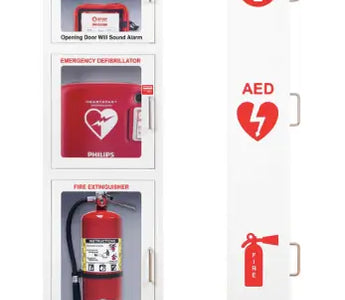
The logic behind fire extinguisher legislation is sound: have life-saving equipment readily available before an emergency occurs. The same principle should apply to automated external defibrillators. We don't wait for a fire to happen before installing extinguishers; we shouldn't wait for cardiac arrests to happen before installing AEDs.
Real Stories: Lives Saved by AEDs in Ontario
The impact of AED accessibility is not theoretical—it's measured in lives saved and families kept whole.
In 2019, a Toronto recreation center became the scene of a life-saving intervention when a 52-year-old man collapsed during a basketball game. Within seconds, staff retrieved the facility's AED and delivered a shock before paramedics arrived. The man survived with full neurological function—a outcome that would have been unlikely without immediate defibrillation.
Similar stories have emerged from workplaces across Ontario. A manufacturing facility in Mississauga credits their workplace AED program with saving an employee's life during a shift. A shopping mall in Ottawa saw a shopper revived by security staff using the mall's public access defibrillator. A high school in Hamilton had a student survive cardiac arrest during gym class thanks to the school's AED and trained staff.
These aren't isolated incidents—they represent what's possible when AED devices are available and people are prepared to use them. Research shows that when bystanders use an AED before EMS arrival, survival rates for out-of-hospital cardiac arrest can increase to 70% or higher, compared to less than 10% when no early defibrillation occurs.
Current AED Legislation in Canada: A Patchwork Approach
While some progress has been made, Canada's approach to AED requirements remains inconsistent. Ontario has been a leader in certain sectors, with legislation requiring AEDs in:
- Public facilities (Bill 141, 2020)
- Some schools and daycares
- Certain government buildings
However, massive gaps remain. Most workplaces, retail establishments, restaurants, apartment buildings, and places of worship have no requirement to maintain an AED on-site. This patchwork approach leaves millions of Canadians without access to life-saving defibrillation in the critical first minutes of cardiac arrest.
Toronto and other Ontario municipalities have encouraged AED placement through public awareness campaigns and grant programs, but voluntary adoption has been slow. Many business owners cite cost concerns or simply aren't aware of the life-saving potential of these devices.
The Technology Behind AEDs: Safe, Simple, and Effective
One common misconception about automated external defibrillators is that they require extensive medical training to operate. In reality, modern AED units are specifically designed for use by laypersons with minimal training.
Here's how AED technology works:
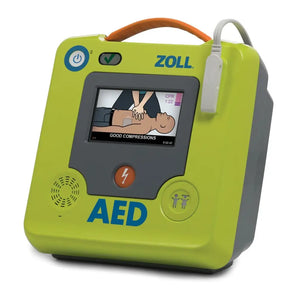
User-Friendly Design: Contemporary AEDs provide clear voice prompts and visual instructions that guide users through every step of the process. Many models feature pictorial instructions for quick reference during high-stress situations.
Intelligent Analysis: The device automatically analyzes the heart's electrical rhythm and determines whether a shock is needed. If the person's heart is beating normally or has stopped completely, the AED will not deliver a shock—making it virtually impossible to harm someone by using it incorrectly.
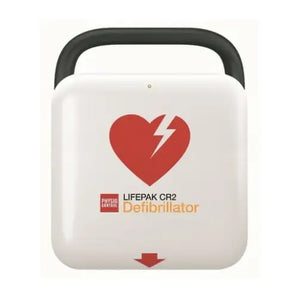
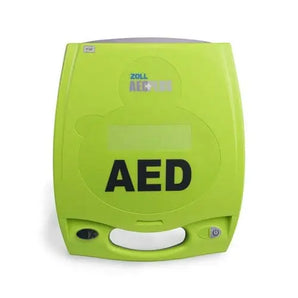
Public Access Models: Public access defibrillators are specifically designed for use in community settings. They're rugged, require minimal maintenance, and include features like pediatric capabilities for children and infants.
AED Maintenance: Modern units perform automatic self-checks and alert users when batteries or electrode pads need replacement, ensuring the device is always rescue-ready.
Economic Argument: The Cost of Not Having AEDs
While purchasing and maintaining AEDs represents an investment, the cost of not having them is far greater—both in human and economic terms.
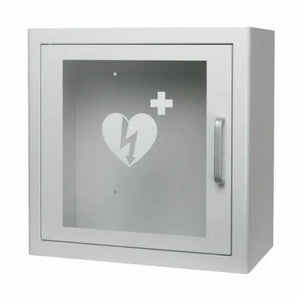
Device Costs: A quality AED unit typically costs between $2,00 and $2,500, with minimal ongoing maintenance costs for electrode pad and battery replacement every few years. Many suppliers, including AED.ca, offer comprehensive AED packages that include training, wall cabinets, and signage.
Economic Impact: The Institute for Clinical Evaluative Sciences estimates that sudden cardiac arrest costs the Canadian healthcare system hundreds of millions annually in emergency response, hospital care, and long-term treatment for survivors with brain damage due to delayed treatment.
Workplace Considerations: For employers, having an AED program demonstrates due diligence in workplace safety. In the event of an on-site cardiac emergency, the availability of an AED can be a significant factor in legal liability considerations.
Insurance Benefits: Some insurance providers offer premium reductions for facilities that maintain AED programs and trained responders.
When compared to the cost of fire safety equipment—which addresses a far less common cause of death—the investment in AEDs is both proportionate and justified.
What Comprehensive AED Legislation Should Include
A robust national or provincial AED requirement, similar to fire extinguisher regulations, should include:
1. Mandatory Placement: AEDs required in all public buildings, workplaces with more than 25 employees, schools, recreation facilities, shopping centers, transit stations, airports, and large residential buildings.
2. Strategic Positioning: Requirements for AED location based on building size and occupancy, ensuring devices are accessible within a 3-minute retrieval time from any point in the facility.
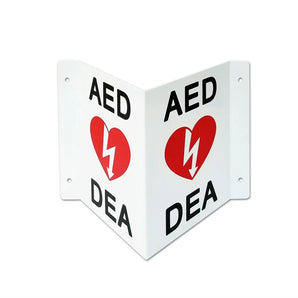
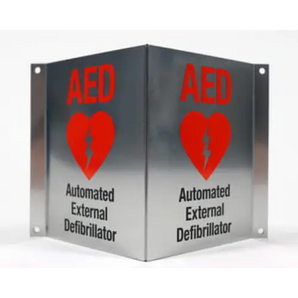
3. Signage Requirements: Clear, visible AED signage using standardized symbols, similar to fire extinguisher signage requirements.
4. Registration Programs: All AED devices registered with local emergency services so 911 dispatchers can direct callers to the nearest available unit during cardiac emergencies.
5. Basic Training: Encouraged CPR and AED training for employees, building staff, and community members, though AED use should not be restricted only to trained individuals.
6. Maintenance Standards: Regular inspection requirements to ensure AEDs remain in working condition, with clear accountability for device maintenance.
7. Good Samaritan Protection: Strong legal protections for anyone who uses an AED in good faith during an emergency.
The Role of Public Education and AED Training
While AEDs are designed to be user-friendly, public education significantly improves outcomes. Communities with high rates of CPR and AED training see better survival rates from cardiac arrest.
Hands-Only CPR: The Canadian Heart & Stroke Foundation promotes hands-only CPR (continuous chest compressions without mouth-to-mouth breathing) as an effective intervention anyone can perform. When combined with early AED use, this approach maximizes survival chances.
AED Familiarization: Even brief exposure to AED operation through workplace safety programs, community training, or public awareness campaigns increases the likelihood that bystanders will act in an emergency rather than freeze due to unfamiliarity.
School Programs: Teaching CPR and AED use to high school students creates a generation of potential lifesavers and normalizes these interventions as basic civic skills.
Building a Heart-Safe Community: Beyond Legislation
While legislation is crucial, creating truly heart-safe communities requires a broader cultural shift in how we approach cardiac emergency preparedness.
Public Access AED Programs: Cities like Toronto have begun mapping public AED locations, making this information available through apps and emergency services. Expanding these programs ensures that even in areas without mandatory requirements, AEDs are strategically placed where cardiac events are most likely to occur.
Business Leadership: Forward-thinking businesses are adopting AED programs voluntarily, recognizing their responsibility to employees, customers, and visitors. These early adopters set a standard that others will follow.
Community Advocacy: Organizations like the Canadian Heart & Stroke Foundation, local health units, and concerned citizens play a vital role in advocating for improved AED access and education.
The Path Forward: Making AEDs as Common as Fire Extinguishers
The evidence is overwhelming: sudden cardiac arrest kills far more Canadians than fires, yet we treat these emergencies very differently in terms of required preparedness. It's time for Canada to adopt comprehensive AED legislation that reflects the actual risk Canadians face.
Every workplace, public building, and community facility should have an AED that's properly maintained, clearly marked, and integrated into emergency response procedures—just as we require for fire safety equipment. This isn't about creating burdensome regulations; it's about acknowledging reality and taking reasonable steps to protect Canadian lives.
Ontario has taken important first steps with requirements coming for public facilities, but comprehensive legislation is needed across all sectors and provinces. Toronto and other Canadian cities have the opportunity to lead by example, implementing municipal requirements that demonstrate the feasibility and life-saving impact of universal AED access.
Take Action: How You Can Make a Difference
Whether you're a business owner, facility manager, community leader, or concerned citizen, you have the power to improve cardiac emergency preparedness:
For Business Owners: Don't wait for legislation—invest in an AED program today. Contact AED.ca to learn about device options, training programs, and ongoing support. Your decision could save an employee's life, a customer's life, or even your own.
For Facility Managers: Assess your current AED coverage. Are devices strategically located? Is maintenance up to date? Are staff aware of AED locations and operation?
For Community Advocates: Contact your municipal, provincial, and federal representatives to voice support for comprehensive AED legislation. Share stories of lives saved and lives lost due to lack of access.
For Everyone: Learn CPR and AED operation. Know where AEDs are located in your workplace, your gym, your child's school, and the public spaces you frequent. In an emergency, this knowledge could make you someone's hero.
Conclusion: A Life-Saving Standard Whose Time Has Come
Canada requires fire extinguishers everywhere because we recognize that fires, though rare, can be deadly and that immediate access to suppression equipment saves lives and property. The same logic—applied to a far more common cause of death—demands that we require AEDs with the same universality.
The question isn't whether AED requirements make sense; the statistics make that abundantly clear. The question is how many preventable deaths we're willing to accept while debating the details of implementation.
Every sudden cardiac arrest is a medical emergency, but it doesn't have to be a death sentence. With proper AED coverage across Canada's workplaces, public buildings, and community spaces, thousands of lives could be saved each year. It's time to make AEDs as commonplace as fire extinguishers and create communities where everyone has a fighting chance when cardiac arrest strikes.
About AED.ca: As Canada's trusted source for automated external defibrillators, AED.ca provides comprehensive solutions including device sales, AED training, maintenance programs, and expert consultation to help businesses and communities implement life-saving AED programs. Contact us today to learn how you can make your facility heart-safe and be prepared to save a life.
For more information about AED requirements in Ontario, workplace AED programs, or to purchase an AED in Toronto and across Canada, visit AED.ca today.