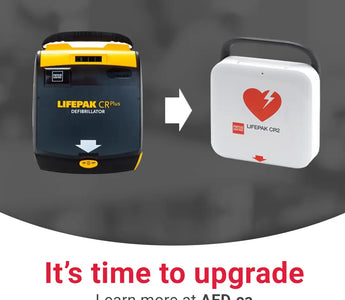
AEDs Should Be Upgraded Like all Other Technology
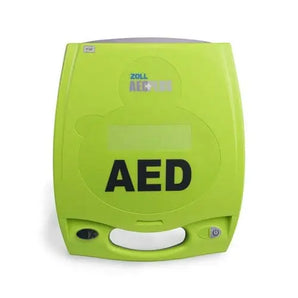
If your organization owns an Automated External Defibrillator (AED), you may be wondering how long it will remain effective and when it should be replaced. While AEDs are designed to provide years of reliable service, they are not intended to last forever.
As technology advances and manufacturers discontinue support for older models, upgrading your AED can improve emergency preparedness, simplify compliance, and reduce long-term maintenance costs.
This guide explains when to upgrade your AED, the warning signs that your current device may be outdated, and the benefits of modern AED technology.
How Long Does an AED Last?
Most AEDs have an expected service life of approximately 8 to 10 years. While some devices may continue functioning beyond that period, organizations often face increasing challenges as AEDs age.
These challenges can include:
- Discontinued manufacturer support
- Difficulty obtaining replacement parts
- Higher battery and pad costs
- Outdated rescue technology
- Increased compliance concerns
Signs It's Time to Upgrade Your AED
1. Your AED Is More Than 8–10 Years Old
Age alone doesn't automatically mean an AED must be replaced, but it should trigger a review.
AED technology has improved dramatically over the last decade. Modern devices provide enhanced guidance, improved CPR support, and easier maintenance management than many older models.
If your AED is approaching 10 years old, it may be time to upgrade to a new AED.
2. Manufacturer Support Has Been Discontinued
Manufacturers occasionally discontinue older AED models and stop producing replacement parts, software updates, or technical support.
Even if the AED appears functional, unsupported devices can create significant risk for organizations.
Common concerns include:
- Limited availability of replacement batteries
- Limited availability of replacement pads
- No software updates
- Difficulty obtaining repairs
3. Replacement Pads and Batteries Are Becoming Expensive
One of the most overlooked costs of owning an older AED is the price of consumables.
As AEDs age, replacement batteries and electrode pads often become more expensive and harder to obtain.
Before investing in new consumables, compare those costs against the price of a newer device with longer-lasting components.
4. Your Organization Needs Better Compliance Tracking
Many businesses, schools, and public facilities are expected to maintain inspection records demonstrating that their AEDs remain rescue-ready.
Paper inspection logs can be difficult to manage, especially across multiple locations.
Modern AED programs often include:
- Digital inspection records
- Automated reminders
- Compliance reporting
- Maintenance tracking
- Asset management tools
Organizations with multiple AEDs frequently benefit from a professional AED Compliance Solution that simplifies inspections and reporting. https://aed.ca/pages/aed-maintenance-plans
5. Your AED Does Not Provide CPR Feedback
Research consistently shows that high-quality CPR improves survival outcomes during sudden cardiac arrest.
Many newer AEDs provide real-time CPR coaching that helps rescuers maintain the proper compression depth and rate.
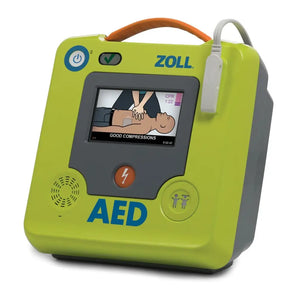
For example, the ZOLL AED includes Real CPR Help® technology that provides live feedback during a rescue. https://aed.ca/products/zoll-aed-3
Benefits of Upgrading to a New AED
Improved Rescue Performance
Modern AEDs provide:
- Enhanced voice prompts
- Visual rescue instructions
- CPR feedback technology
- Faster analysis and shock delivery
These features help improve confidence and effectiveness during an emergency.
Reduced Maintenance Requirements
Newer AEDs often feature:
- Longer battery life
- Longer-lasting electrode pads
- Enhanced self-testing
- Improved readiness monitoring
This can reduce the overall cost of ownership.
Better Technology
Advanced AEDs may include:
- Wi-Fi connectivity
- Remote status monitoring
- Cloud-based compliance reporting
- Simplified maintenance tracking
These features are particularly valuable for organizations managing multiple devices.
Recommended AED Upgrade Options
ZOLL AED 3

The Zoll AED 3 is one of Canada's most popular workplace AEDs. https://aed.ca/products/zoll-aed-3
Features include:
- Real CPR Help® technology
- Universal adult and pediatric electrodes
- Long battery life
- Enhanced rescue guidance
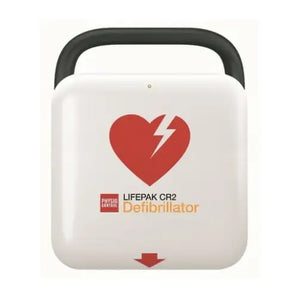
LIFEPAK CR2

The LIFEPAK CR2 AED offers:
- Wi-Fi connectivity
- Bilingual operation
- cprINSIGHT™ analysis technology
- Fast shock delivery
It is commonly used in workplaces, schools, healthcare facilities, and public-access environments throughout Canada.
https://aed.ca/products/stryker-physio-cr2-semi-auto-bilingual-wifi
Frequently Asked Questions
How often should an AED be replaced?
Most organizations should evaluate their AED for replacement after approximately 8–10 years.
What is the lifespan of an AED?
Most AEDs have an expected service life of 8–10 years, depending on manufacturer support and maintenance history.
Can an expired AED still be used?
The AED itself may continue functioning, but expired batteries or electrode pads can affect performance and should be replaced immediately.
Is it better to replace an AED or replace the battery and pads?
If the AED is older, unsupported, or requires costly replacement components, upgrading is often the better long-term investment.
How do I know if my AED is obsolete?
An AED may be obsolete if:
- It is over 10 years old
- Replacement parts are difficult to obtain
- Manufacturer support has ended
- It lacks modern rescue features
What is the best AED to upgrade to?
Many organizations choose either the ZOLL AED 3 or the LIFEPAK CR2 AED because of their advanced features and strong manufacturer support.
Final Thoughts
An AED is one of the most important investments an organization can make in emergency preparedness. While older devices may still function, advances in technology, improved compliance tools, and ongoing manufacturer support make upgrading worth considering.
If your AED is approaching 10 years old or replacement parts are becoming difficult to obtain, now may be the right time to evaluate your options.
Explore our selection AEDs for Sale in Canada. https://aed.ca/collections/aeds
About the Author
Martin Andrews, President, AED.ca
Martin Andrews is the President of AED.ca and has helped organizations across Canada implement AED programs that improve preparedness for sudden cardiac arrest emergencies.
He works with businesses, schools, healthcare providers, municipalities, churches, sports organizations, and non-profit groups to simplify AED ownership through education, compliance management, maintenance programs, and technology-driven solutions.
Martin is passionate about helping Canadian organizations keep their AEDs rescue-ready while reducing the administrative burden associated with inspections, maintenance tracking, and compliance reporting.
Connect with Martin on LinkedIn:
https://www.linkedin.com/in/martin-andrews-27aa6116b/