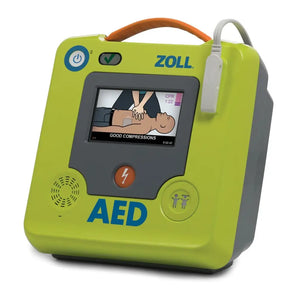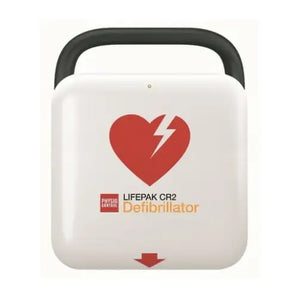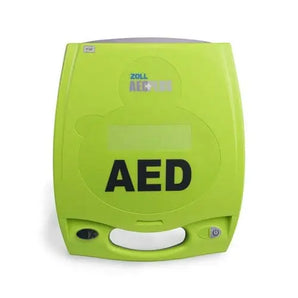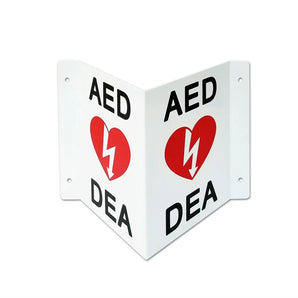
AEDs are Literal Life Savers!
Across Ontario, many building owners ask a reasonable question:
“If AEDs aren’t legally required… why should we install one?”
The answer is increasingly clear:
Because of duty of care and liability exposure.
In today’s environment — where AEDs are affordable, expected, and recognized as standard life-saving equipment — the legal and moral landscape has shifted.
Installing an AED is no longer just a safety decision.
It’s a risk management decision.
Understanding Duty of Care in Ontario
In simple terms:
Duty of care means you must take reasonable steps to protect people on your premises from foreseeable harm.
For:
-
Schools
-
Workplaces
-
Recreation facilities
-
Offices
-
Industrial sites
-
Places of worship
-
Public buildings
Sudden cardiac arrest (SCA) is:
✔️ Predictable
✔️ Common
✔️ Time-sensitive
✔️ Survivable — if treated quickly
And here’s the key legal reality:
➡️ The tools to respond now exist.
AEDs are:
-
Widely available
-
Easy to use
-
Recommended in first aid training
-
Expected in many public environments
Which changes what courts may consider “reasonable”.
The Legal Shift: From “Nice to Have” to “Reasonably Expected”
Historically, AEDs were rare.
Today:
-
First aid training includes AED use
-
Students learn AED awareness in Ontario schools
-
Many public venues already install them voluntarily
This creates a new standard.
If:
✔️ Cardiac arrest is foreseeable
✔️ AEDs are accessible and affordable
✔️ Staff are trained to use them
Then the question becomes:
Was it reasonable not to have one?
This is where liability risk emerges.
The Foreseeability Factor
Ontario courts often assess negligence using foreseeability.
And sudden cardiac arrest is highly foreseeable because:
-
It affects all ages
-
It often occurs without warning
-
It happens in workplaces, schools, gyms, and public spaces
More importantly:
➡️ It requires immediate treatment.
Survival drops by 7–10% per minute without defibrillation.
Emergency response times often exceed 6–10 minutes.
Which means:
Without an on-site AED, survival chances are dramatically reduced.
The Training Gap Problem
Here is where duty-of-care exposure becomes particularly strong.
Many organizations already have:
✔️ First aid trained staff
And modern first aid training includes AED use.
So imagine this scenario:
A trained employee responds to a cardiac arrest…
But cannot act effectively because:
❌ There is no AED available
This creates a serious liability question:
You trained your staff to respond… but did not equip them to do so.
This mismatch between:
Training
AND
Available tools
can weaken a defense that “reasonable precautions” were taken.
The Optics of Prevention
From a legal standpoint, juries and courts often examine:
-
What was preventable?
-
What was available?
-
What was reasonable?
In today’s environment:
AED Defibs are viewed similarly to:
-
Fire extinguishers
-
First aid kits
-
Emergency lighting
Not as specialty medical equipment.
But as:
👉 Basic emergency preparedness.
Failing to install one may increasingly be viewed as:
A failure to implement a known, accessible life-saving measure.
Ontario Is Moving Toward Mandates
Recent regulatory trends show direction.
Ontario has already begun requiring AEDs in certain workplaces such as:
✔️ Large construction projects (as of 2026)
This reflects growing recognition that AEDs are part of modern safety infrastructure.
Historically, mandates often follow:
Voluntary adoption → Industry expectation → Legal requirement
Buildings that act early are:
Not just safer.
But better positioned legally.
The Moral Reality
Beyond legal duty lies moral duty.
Building owners and employers are entrusted with:
The safety of occupants, employees, students, and visitors.
When a life-saving intervention exists…
And can be implemented easily…
Choosing not to act becomes harder to justify.
The Risk Management View
Installing an AED helps demonstrate:
✔️ Proactive safety leadership
✔️ Alignment with modern standards
✔️ Support for trained responders
✔️ Commitment to occupant wellbeing
And importantly:
✔️ Evidence of reasonable care
Which can matter greatly if an incident occurs.
The Bottom Line
You may not be legally required to install an AED machines in your Ontario building.
But:
Duty of care is not defined only by legislation.
It is shaped by:
What is foreseeable
What is preventable
What is reasonable
And today, the presence of an AED increasingly meets all three.
About AED.ca
AED.ca is Canada’s trusted AED provider, helping organizations across Ontario implement effective and compliant defibrillator programs.
We support workplaces, schools, and public facilities with:
-
AED selection
-
Program implementation
-
Maintenance planning
-
Ongoing compliance support
Because having trained responders without an AED isn’t preparedness.
It’s exposure.
Learn more at AED.ca
Canada's Trusted AED Company
Website: AED.ca
Email: info@aed.ca
Telephone: 647-699-7702
Address: 99 Crompton Drive, Barrie, Ontario, L4M 6P1