
You Don't Need to be a Professional to Use an AED
You don’t have to be a doctor, nurse or paramedic to use a public-access AED. These devices are designed for everyday people—staff members, customers, teachers, parents and anyone nearby when someone experiences sudden cardiac arrest.
They are simple to use, and they tell you what to do.
Turn It On and Follow the Instructions
An automated external defibrillator, or AED, guides you through the rescue with clear voice instructions. Depending on the model, it also provides pictures, text or video to help you follow along.
The AED explains how to apply the electrode pads, when to stand clear and when to perform CPR. Pictures on the pads show where to place them on the person’s bare chest.
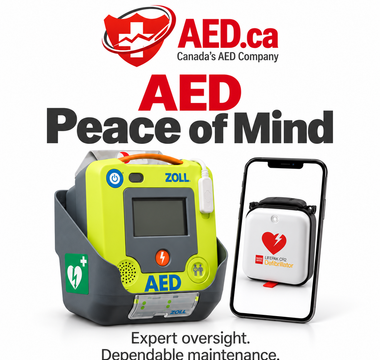
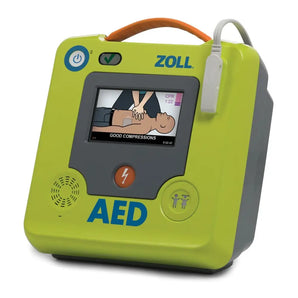
Models such as the ZOLL AED 3 also provide feedback on your chest compressions, helping you deliver effective CPR.
You don’t have to remember every step. The AED guides you throughout the emergency.
The AED Decides Whether a Shock Is Needed
One common concern is accidentally shocking someone who doesn’t need it.
Public-access AEDs analyze the person’s heart rhythm and only allow a shock when they detect a rhythm that requires one. You do not interpret the rhythm or choose the shock energy.
A semi-automatic AED tells you when to press the shock button. A fully automatic AED warns everyone to stand clear and then delivers the shock automatically. Always follow the instructions and make sure nobody touches the person during analysis or shock delivery.
Different From the Defibrillators You See Professionals Using
The equipment you see paramedics or hospital teams using may have screens, controls and advanced treatment options that require medical training.
Public-access AEDs simplify the process for everyday rescuers. They handle rhythm analysis and guide the user through the necessary actions.
Professionals sometimes use these same AEDs, too. The important distinction is between a guided public-access AED and a professional manual defibrillator—not simply who uses it.
Act Quickly and Let the AED Guide You
If someone is unresponsive and is not breathing normally—or is only gasping:
-
Call 911, or ask someone nearby to call and bring an AED.
-
Start CPR and follow the emergency dispatcher’s instructions.
-
Use the AED as soon as it arrives.
-
Follow its prompts and continue helping until emergency responders take over.
CPR and AED training can build confidence, but a lack of training should not stop you from using an available AED in an emergency.
Choose an AED Your Team Can Use With Confidence
At AED.ca, we help Canadian organizations choose easy-to-use AEDs and keep them ready with inspections, replacement supplies and maintenance support.
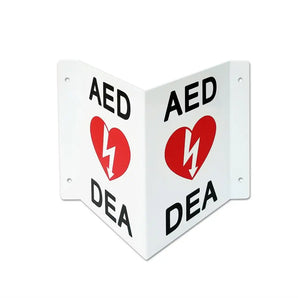
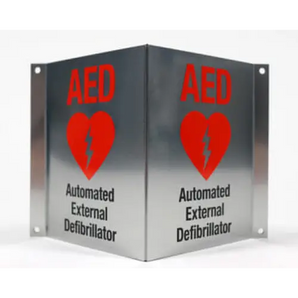
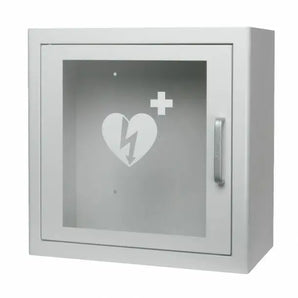
An AED should be accessible, clearly marked and ready when someone needs it. Just as importantly, people should know they are allowed to use it—and it will help them every step of the way.
Explore AED options and speak with AED.ca.
About the Author
Martin Andrews is President of AED.ca, Canada’s AED Company. Martin helps businesses, schools, churches and community organizations select AEDs and develop practical maintenance programs so their equipment stays rescue-ready.