
Ensure You are Compliant
Starting January 1, 2026 the province of Ontario will implement a landmark regulation under the Occupational Health and Safety Act (OHSA) that requires certain construction sites to have on-site an Automated External Defibrillator (AED). This represents a major step forward in workplace safety in the construction industry and has direct implications for contractors, site managers and health & safety professionals—including those engaged in supplying, installing or maintaining AEDs like AED.ca.
In this article we’ll explain what the new law is, who it applies to, what you must do to comply, and what this means from a health & safety / operational standpoint.
What the Regulation Says
Scope & Trigger Conditions
-
The regulation is titled O. Reg. 157/25: Construction Projects under the OHSA, filed July 17, 2025, made under the Construction Projects regulation.
-
The regulation comes into force on January 1, 2026.
-
It applies to construction projects where both of the following conditions are met:
-
The project is expected to last at least three (3) months.
-
The project employs twenty (20) or more workers at the site.
-
-
Importantly, even if a project begins before January 1, 2026, the regulation applies once the project continues past that date if it meets the criteria.
Key Requirements for Compliance
If the regulation applies, then the constructor (i.e., the party responsible under the OHSA for the project) must ensure:
-
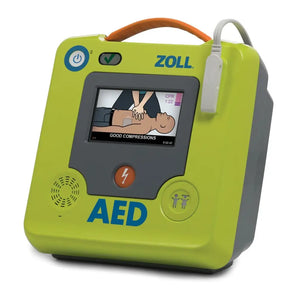
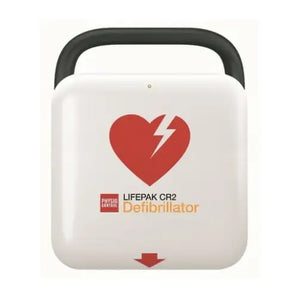
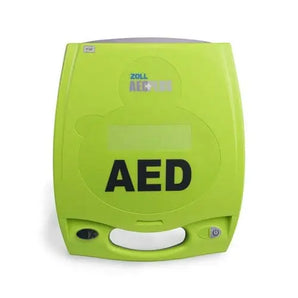
A Health Canada-licensed defibrillator (AED) is installed and maintained on-site.
-
The AED must be stored together with certain specified accessories. For example: one CPR mask, one pair of scissors, two pairs of disposable medical-grade gloves, one disposable razor, one garbage bag and four absorbent towels.
-
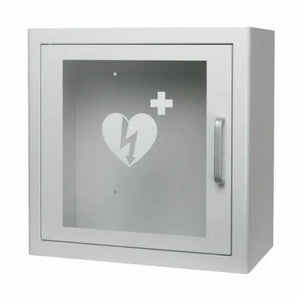
The storage location must be suitable: allows the AED and accessories to be kept together; protects from dust, moisture, extreme temperatures, direct sunlight, or substances that could damage it; and is unobstructed and allows easy access.
-
Maintenance and inspection: The AED must be maintained and tested in accordance with the manufacturer’s instructions, inspected at least quarterly, and a record of inspection kept on-site.
-
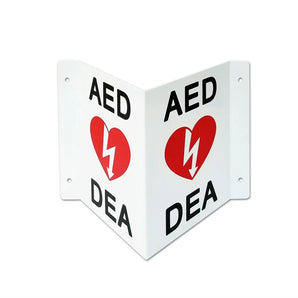
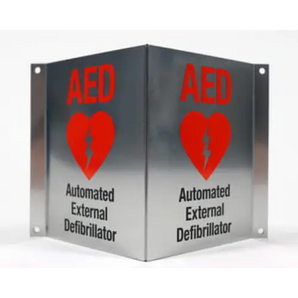
Signage: The location must be indicated by signage showing a graphic symbol (heart with lightning bolt) and the words “Automated External Defibrillator” or “AED” (or French equivalent).
-
A worker trained in CPR and AED operation must be present at the site at all times when work is in progress.
Additional Incentives and Programs
-
The law is accompanied by proposed cost-offset support via the Workplace Safety and Insurance Board (WSIB) for eligible sites, helping cover the purchase cost of the AED for qualifying projects.
-
The regulatory announcement by the Ontario government emphasizes that cardiac events are a significant risk in construction and this regulation targets that risk.
What This Means for Contractors, Site Managers & Suppliers (such as AED.ca)
Compliance & Risk Management
-
Contractors need to determine immediately whether their current or upcoming projects meet the trigger conditions (≥ 3 months, ≥ 20 workers) and therefore require an AED on‐site as of Jan 1, 2026. Delays in planning could leave you non-compliant.
-
For sites that qualify, the AED must be procured, installed and - importantly - maintained and inspected per the regulation. Suppliers (like AED.ca) will need to support clients not just with device sales but maintenance programs, documentation, signage, accessory kits and training support.
-
From a liability standpoint: Having the AED in place and maintained will support compliance under the OHSA and may mitigate risk in the event of a cardiac emergency. Conversely, failure to comply could lead to enforcement action by the Ministry of Labour, stop-work orders, fines, reputation harm.
Health & Safety Integration
-
Safety policy-manuals and contractor-safety-programs must now incorporate AED readiness: location planning, access time (aim for retrieval/return within ≈ 3 minutes if possible), regular inspection records, signage, training of workers.
-
Suppliers of AEDs (like AED.ca) have an opportunity to guide clients in selection of rugged devices suited to construction-site conditions (outdoor, dust, moisture, delays) as well as to bundle accessories and inspection/maintenance services.
-
Training is strongly recommended: While the regulation mandates a trained worker, broader worker awareness and refresher training strengthens the emergency response chain. Suppliers can partner by offering training modules or recommending certified training partners.
Operational/Logistical Considerations
-
Project planning must factor in AED placement: Accessibility, signage, protection from environmental hazards, clear route of travel from active work areas. Large or multi-level sites may need more than one device to ensure quick access.
-
Documentation control: Maintain records of inspection, maintenance, training, signage, location maps. These will be critical in audits or after an incident.
Action Steps – What You Should Do Now
-
Review your active and upcoming projects
-
For each project, check if anticipated duration is ≥ 3 months and if 20+ workers will be employed concurrently.
-
Mark which projects will be subject to the regulation on Jan 1 2026 (even if they began earlier).
-
-
Select and procure appropriate AED(s) and accessory kits
-
Choose devices licensed by Health Canada, suited for construction-site wear and conditions.
-
Ensure accessory kits include required items per regulation (gloves, razor, bag, towels, etc).
-
-
Plan placement and signage
-
Identify a dedicated location that is protected (from dust, moisture, extreme temps) and unobstructed.
-
Install signage compliant with the symbol and wording requirements.
-
-
Update health & safety manuals and emergency-response plans
-
Add a dedicated AED policy section: inspection schedule, documented maintenance, responsible staff, training schedule.
-
Ensure a worker trained in CPR & AED operation is designated at all times.
-
-
Implement inspection & maintenance processes
-
Schedule quarterly inspections; keep records on-site.
-
Maintain logs of pad/battery expiry, device self-tests.
-
-
Offer or arrange training
-
While general worker training may not be legally required for all staff, ensure at least one trained person is always on-site and that broader awareness training is conducted.
-
-
Communicate with your supply-chain and workforce
-
Inform subcontractors, site leads and workers about the AED requirement, device location, how to use it and the importance of prompt retrieval.
-
-
Prepare documentation for audits/inspections
-
Keep records of device procurement, placement, inspection logs, training attendance.
-
Factor this into your health & safety policy in advance of enforcement.
-
Why This Matters – Life and Legal Impacts
-
Construction work is physically demanding and carries risk of cardiac events. The Ontario government highlighted that a significant portion of workplace cardiac-event inspection reports involve the construction sector.
-
Early access to defibrillation + CPR dramatically increases survival chances in sudden cardiac arrest—making an AED on-site not only a compliance issue, but a life-saving measure.
-
For health & safety professionals and policy managers, this regulation reinforces that equipment readiness (like AEDs) must be integrated into the broader safety system—not treated as an after-thought. It bridges the gap between health-emergency response planning and construction-site risk mitigation.
Final Thoughts
The upcoming Jan 1 2026 effective date for Ontario’s AED mandate in the construction sector is a clear call to action. For construction companies and health & safety professionals, the time to prepare is now.
By proactively reviewing your projects, updating your safety policies, procuring and installing compliant AEDs, training staff and keeping up‐to‐date records, you’ll position yourself ahead of the deadline—and more importantly, you’ll be doing your part to ensure workers have rapid access to life-saving equipment in emergencies.
If you’d like further assistance—such as a AED placement checklist, inspection-log template, specific to Ontario construction sites—AED.ca is ready to support you. For a product recommendation from AED.ca to go:
https://aed.ca/pages/aeds-for-the-construction-industry
For the formal details from the Ontario government please see the below link:
https://www.ontario.ca/laws/regulation/r25157
About AED.ca
AED.ca is Canada’s leading provider of automated external defibrillators (AEDs), accessories, signage and maintenance services. We help Ontario workplaces meet legal requirements, embed AED readiness in their safety policies and ensure teams are equipped and prepared for cardiac emergencies.