Many Lives Will Be Saved
Sudden cardiac arrest (SCA) remains one of the leading causes of death in Canada, striking without warning and often outside of a hospital setting. In Ontario alone, approximately 7,000 people experience cardiac arrest each year, and survival depends heavily on how quickly life-saving intervention occurs.
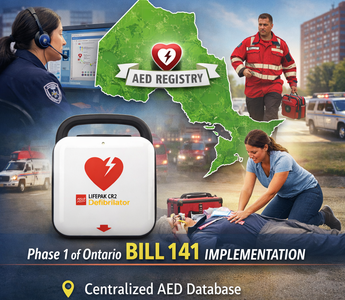
The upcoming Ontario AED Registry represents a major step forward in improving survival outcomes—and it marks the first phase of implementation of Ontario’s Bill 141, formally known as the Defibrillator Registration and Public Access Act, 2020.
https://aed.ca/blogs/news/ontario-bill-141-the-defibrillator-registration-and-public-access-act-2020
At AED.ca, we believe this initiative will transform emergency response across the province and ultimately help save many lives.
What Is the Ontario AED Registry?
The Ontario AED Registry is a centralized database of Automated External Defibrillators (AEDs) located throughout the province. Once fully implemented, it will be integrated directly with 9-1-1 emergency dispatch systems, allowing operators to guide callers to the nearest AED during a cardiac emergency.
This means that in the critical moments following a cardiac arrest, bystanders will no longer need to search blindly—they will be directed immediately to the closest public access life-saving device.
Why This Matters: Every Minute Counts
Time is the most critical factor in a cardiac emergency.
-
Survival chances decrease by approximately 10% for every minute without defibrillation
-
Immediate CPR combined with AED use can increase survival rates dramatically—by 50% or more
Despite this, one of the biggest barriers to AED use today is simple: people don’t know where the nearest AED is located.
The Ontario AED Registry directly solves this problem.
Research shows that public AED registries significantly increase bystander defibrillation rates because they connect people to nearby devices faster and more accurately.
The First Phase of Bill 141 Implementation
The launch of the AED registry represents Phase One of Ontario Bill 141—a landmark piece of legislation designed to strengthen public access defibrillation across the province.
Bill 141 introduces several key requirements:
-
Mandatory registration of AEDs with a provincial registrar
-
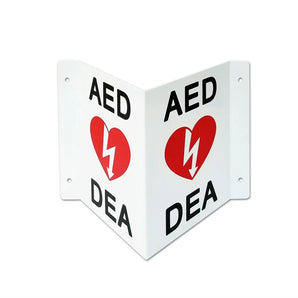
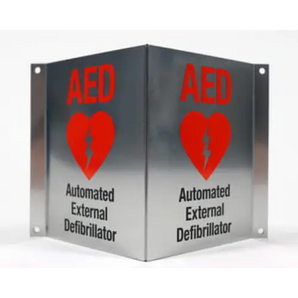
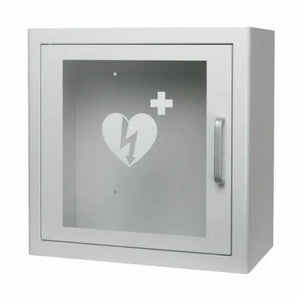
Ensuring AEDs are accessible, visible, and properly signed
-
Ongoing maintenance and testing requirements
-
Clear standards for installation and placement in public spaces
The registry is the foundational step that enables all of these requirements to work together. Without a centralized system, even well-placed AEDs can remain unused simply because no one knows they are there.
A Phased Rollout Across Ontario
The implementation of the AED registry is being rolled out in phases, beginning with higher-density urban areas and expanding across the province.
This phased approach ensures:
-
Accurate and verified AED data
-
Seamless integration with emergency services
-
Scalable expansion into rural and remote communities
Over time, this will create a comprehensive, province-wide network of accessible AEDs.
The Real Impact: Saving Lives Across Ontario
The Ontario AED Registry is more than a database—it is a life-saving tool that strengthens every link in the “chain of survival”:
-
Faster recognition of cardiac arrest
-
Immediate guidance from 9-1-1 operators
-
Rapid access to the nearest AED
-
Earlier defibrillation before paramedics arrive
This coordinated response has the potential to dramatically improve survival rates, especially in public settings where cardiac arrests are often witnessed.
Health organizations have called this initiative “historic”, emphasizing that it will ensure more lives are saved across Ontario.
What This Means for Businesses, Schools, and Organizations
For organizations across Ontario, the AED registry—and Bill 141 as a whole—signals an important shift:
-
AED ownership is no longer just a best practice—it is becoming part of a regulated safety standard
-
Registration ensures your AED can actually be used in an emergency
-
Compliance helps protect both people and organizations
Simply put: an AED that is not registered is an AED that may not be found when it matters most.
How AED.ca Supports You Through This Transition
At AED.ca, we understand that navigating new legislation can feel overwhelming. That’s why we focus on more than just selling AEDs—we help you:
-
Choose the right AED for your environment
-
Ensure your unit is properly registered and compliant
-
Set up a maintenance and readiness plan
-
Prepare your team with training and support
As Ontario moves forward with Bill 141, our goal is to make the process simple, clear, and fully aligned with the new requirements.
A Safer Future for Ontario
The Ontario AED Registry represents a turning point in public health and emergency preparedness.
By connecting people to life-saving devices faster than ever before, this initiative will:
-
Increase AED usage in emergencies
-
Reduce response times
-
Improve survival outcomes across the province
Most importantly, it will give more families the chance to see their loved ones come home.
We encourage all AED owners in Ontario to begin to register their public use AEDs now during the pre mandatory phase. To register your AED(s) go to:
https://www.aedfoundationontario.ca/
Final Thoughts
Ontario’s implementation of the AED registry as the first phase of Bill 141 is a powerful step toward a safer, more prepared province.
Lives will be saved—not someday, but every day—because of faster access to AEDs.
And at AED.ca, we are proud to support organizations across Ontario in being part of that life-saving network.