A Simple Step-by-Step Guide
When someone experiences sudden cardiac arrest (SCA), every second counts. An Automated External Defibrillator (AED) can dramatically increase the chance of survival when used quickly. The good news is that modern AEDs are designed for everyday people to use—even with little or no training.
If you've ever wondered how to use an AED, this guide will walk you through the process step-by-step.
Watch: How to Use an AED
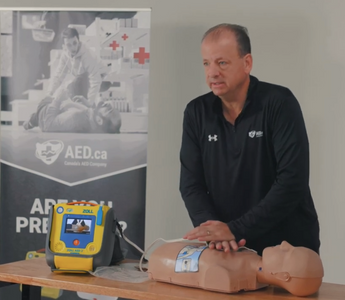
Before we begin, watch our quick demonstration video:
▶ How to Use an AED
https://www.youtube.com/watch?v=tqYfHkci2_o
This short video shows just how simple modern AEDs are to use during a cardiac emergency.
What Is an AED?
An AED (Automated External Defibrillator) is a portable medical device that analyzes a person's heart rhythm and, if necessary, delivers an electrical shock to help restore a normal heartbeat.
AEDs are commonly found in:
-
Workplaces
-
Construction sites
-
Schools
-
Churches
-
Community centres
-
Sports facilities
-
Medical clinics
-
Retail stores
-
Condominiums
Step 1: Call 911 Immediately
If someone suddenly collapses and is unresponsive:
-
Call 911 immediately.
-
Send someone to retrieve the AED.
-
Begin CPR if you are able.
Early CPR and early defibrillation provide the best chance of survival.
Step 2: Turn On the AED
Once the AED arrives:
-
Open the lid or press the power button.
-
The AED will immediately begin providing voice instructions.
-
Follow the prompts exactly as they are given.
Modern AEDs are designed to guide rescuers through the entire process.
Step 3: Expose the Chest
Remove or cut away clothing from the person's chest.
If the chest is wet:
-
Dry it quickly.
If the chest is excessively hairy:
-
Use the included razor if necessary to ensure proper pad contact.
Step 4: Apply the AED Pads
AED pads include diagrams showing exactly where they should be placed.
Typically:
-
One pad goes on the upper right side of the chest.
-
One pad goes on the lower left side of the chest.
Once connected, the AED will automatically begin analyzing the heart rhythm.
Step 5: Stand Clear During Analysis
The AED will announce:
"Analyzing heart rhythm. Do not touch the patient."
Ensure everyone stands clear.
The AED will determine whether a shock is needed.
Importantly, an AED cannot deliver a shock unless it detects a shockable heart rhythm.
Step 6: Deliver the Shock (If Advised)
If a shock is required:
-
Ensure nobody is touching the patient.
-
Loudly announce "Clear!"
-
Press the shock button if instructed.
Some AEDs will automatically deliver the shock without requiring a button press.
The shock lasts only a fraction of a second.
Step 7: Resume CPR Immediately
After the shock:
-
Begin CPR immediately.
-
Follow the AED's prompts.
-
Continue until emergency medical services arrive or the person shows signs of recovery.
The AED will continue monitoring the patient and provide additional instructions if necessary.
Can You Hurt Someone With an AED?
One of the most common concerns is accidentally hurting someone.
The answer is no.
AEDs are designed with sophisticated technology that analyzes the heart rhythm before delivering a shock. If a shock is not needed, the AED will not allow one to be delivered.
This makes AEDs extremely safe for use by the general public.
Do You Need Training to Use an AED?
While AED and CPR training is highly recommended, most people can successfully use an AED without prior training.
Modern AEDs provide:
-
Voice prompts
-
Visual instructions
-
CPR coaching
-
Step-by-step guidance
Many real-life cardiac arrest survivors are alive today because a bystander used an AED before paramedics arrived.
Why Every Workplace Should Have an AED
Sudden cardiac arrest can happen to anyone, anywhere, at any time.
Having an AED on-site can:
-
Improve survival rates
-
Reduce response times
-
Support workplace safety programs
-
Increase employee confidence
-
Help organizations prepare for medical emergencies
An AED is one of the most important pieces of emergency equipment a workplace can have.
Choosing the Right AED
Not all AEDs are the same.
At AED.ca, we help Canadian organizations choose the right AED based on their environment, workforce, and budget.
Popular options include:
-
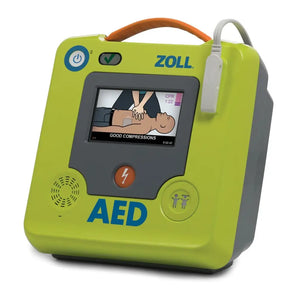
ZOLL AED 3
-
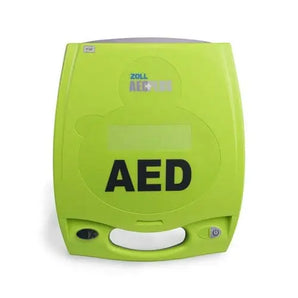
ZOLL AED Plus
-
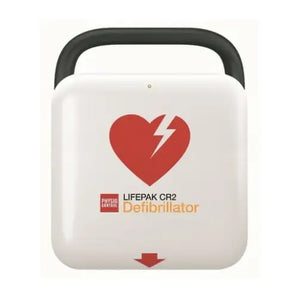
Stryker LIFEPAK CR2
Learn more:
https://aed.ca/collections/aeds
Final Thoughts
Knowing how to use an AED could help save a life.
The process is simple:
-
Call 911
-
Turn on the AED
-
Apply the pads
-
Follow the prompts
-
Deliver a shock if advised
-
Continue CPR
Modern AEDs are designed to guide rescuers every step of the way, making them accessible to virtually anyone during an emergency.
The most important thing is to act. When sudden cardiac arrest occurs, early CPR and early defibrillation can mean the difference between life and death.
About AED.ca
AED.ca is Canada's trusted AED company, helping businesses, schools, churches, sports facilities, construction sites, and organizations prepare for cardiac emergencies. We provide AED sales, inspections, maintenance programs, training support, and compliance services across Canada.
For more information, visit www.aed.ca or call 1-833-428-3233.
https://www.youtube.com/watch?v=tqYfHkci2_o