A Complete Guide for Canadian Workplaces
One of the most common questions we receive at AED.ca is:
"How many AEDs does my business need?"
The answer depends on several factors, including the size of your facility, the number of employees, the layout of your building, and how quickly someone can access an Automated External Defibrillator (AED) during a cardiac emergency.
When it comes to sudden cardiac arrest, every minute matters. Having an AED somewhere in your building is a great start—but having enough AEDs strategically placed throughout your workplace can make the difference between life and death.
If you're still considering purchasing your first AED, check out our guide on Where to Buy an AED in Canada. AED Toronto, AED Ontario, AED Canada
Why AED Placement Matters
Sudden cardiac arrest (SCA) occurs when the heart unexpectedly stops beating. Without immediate CPR and defibrillation, survival rates decrease significantly with every passing minute.
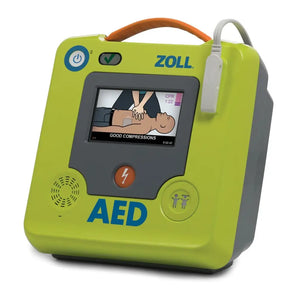
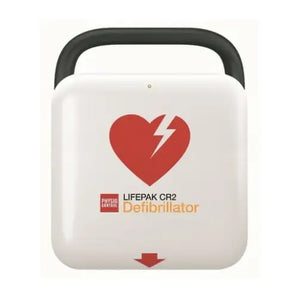
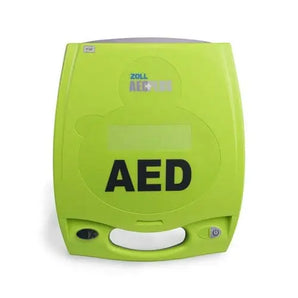
Modern AEDs such as the ZOLL AED 3, ZOLL AED Plus, and LIFEPAK CR2 are designed to guide rescuers through every step of the rescue process.
In fact, many lives have been saved by people with little or no formal training.
The goal of every AED program should be simple:
An AED should be accessible and delivered to a victim within approximately three minutes whenever possible.
This means the number of AEDs your organization needs is often determined by response time rather than employee count alone.
General AED Coverage Guidelines
While there is no universal formula that applies to every workplace, many safety professionals recommend ensuring that all employees, customers, visitors, and contractors can quickly access an AED when needed.
Small Offices (1–25 Employees)
Most small offices can often be adequately covered with:
-
1 AED
Provided that:
-
The entire facility can be reached within approximately three minutes
-
The AED is centrally located
-
Staff know where the AED is located
Medium Workplaces (25–100 Employees)
Organizations may require:
-
1–2 AEDs
Examples include:
-
Warehouses
-
Manufacturing facilities
-
Churches
-
Community centres
-
Medical clinics
-
Dental offices
Additional AEDs should be considered when employees are spread across large areas or multiple floors.
Large Facilities (100+ Employees)
Large facilities often require:
-
Multiple AEDs
Examples include:
-
Factories
-
Distribution centres
-
Schools
-
Recreation facilities
-
Corporate campuses
-
Shopping centres
The primary objective is ensuring rapid access to an AED regardless of where the emergency occurs.
Questions to Ask When Determining How Many AEDs You Need
1. How Long Would It Take To Retrieve The AED?
If someone collapses at the furthest point in your building:
-
How long would it take to reach the AED?
-
How long would it take to return with it?
If the answer exceeds a few minutes, additional AEDs should be considered.
2. Do You Have Multiple Floors?
Multi-level buildings often benefit from:
-
One AED per floor
-
Additional units in high-traffic areas
Waiting for an AED to travel several floors can waste valuable time during a cardiac emergency.
3. Do You Have Multiple Buildings?
If your organization operates:
-
Multiple buildings
-
Separate wings
-
Large campuses
Each area should have quick access to an AED without relying on someone running long distances.
4. Do Employees Work Outdoors?
Organizations with:
-
Construction sites
-
Farms
-
Utility crews
-
Landscaping operations
-
Large industrial yards
Often require multiple AEDs due to the distance between work areas.
Construction companies should also review our article on AED Requirements for Ontario Construction Sites.
5. Is Your Workforce Higher Risk?
Additional AED coverage may be appropriate if your organization has:
-
Older employees
-
Large numbers of visitors
-
Physically demanding work
-
High-stress environments
-
Members of the public regularly entering the facility
Common AED Recommendations by Industry
Construction Sites
Most construction projects should have:
-
At least one AED on-site
-
Additional AEDs for large or multi-building projects
Schools
Many schools place AEDs:
-
Near gymnasiums
-
Near main offices
-
In athletic facilities
Larger schools often require multiple units.
Warehouses
Large warehouses frequently benefit from multiple AEDs strategically located throughout the facility to reduce response times.
Churches
Many churches install AEDs:
-
Near main entrances
-
Fellowship halls
-
Gymnasiums
-
Children's ministry areas
Medical and Dental Clinics
Most clinics should have immediate access to an AED due to the nature of patient care and emergency preparedness requirements.
One AED Is Not Always Enough
Many organizations purchase a single AED because they believe it satisfies their safety obligations.
However, consider this:
A single AED located at the front reception desk may not be helpful if a cardiac arrest occurs at the opposite end of a large warehouse, school, church, or manufacturing facility.
The best AED programs are designed around response time—not simply the number of devices purchased.
Creating an Effective Workplace AED Program
Purchasing an AED is only the first step.
An effective AED program also includes:
-
Proper AED placement
-
Employee awareness
-
Routine AED inspections
-
Battery monitoring
-
Pad expiration tracking
-
Documentation and maintenance records
-
Ongoing compliance support
An AED that cannot be located quickly or has expired components may not be ready when needed most.
Organizations looking for a hands-off solution should also explore the AED.ca Full-Service AED Maintenance Program, which includes inspections, compliance documentation, battery replacement, pad replacement, ongoing support, and rescue-ready assurance.
Frequently Asked Questions
How many AEDs should a workplace have?
A workplace should have enough AEDs to ensure an AED can be delivered to a victim within approximately three minutes from anywhere in the facility.
Is one AED enough for a business?
For small offices, one AED may be sufficient. Larger facilities, multiple floors, outdoor work areas, or multiple buildings often require additional AEDs.
How many AEDs does a warehouse need?
Large warehouses frequently require multiple AEDs positioned throughout the facility to minimize response times and improve emergency preparedness.
How many AEDs does a school need?
Most schools benefit from multiple AEDs, especially when athletic facilities, multiple floors, or large student populations are involved.
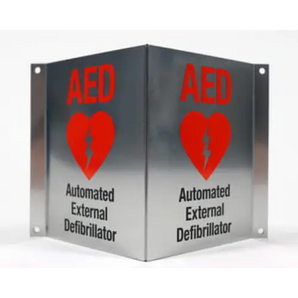
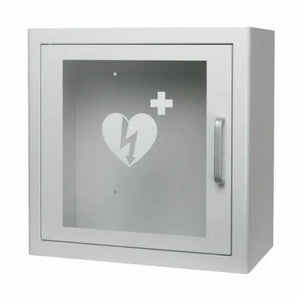
Where should AEDs be installed?
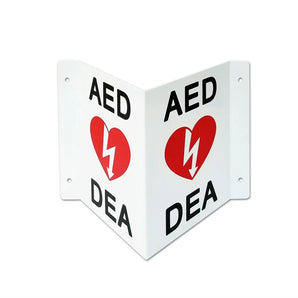
AEDs should be placed in visible, accessible locations where they can be retrieved quickly during an emergency. High-traffic areas and locations with the greatest response-time challenges are often ideal placement locations.
Need Help Determining How Many AEDs You Need?
Every workplace is different.
At AED.ca, we help organizations across Canada determine:
-
The appropriate number of AEDs
-
Optimal AED placement locations
-
Workplace AED compliance requirements
-
Inspection and maintenance needs
-
AED replacement and upgrade planning
Whether you operate a small office, construction site, church, school, warehouse, manufacturing facility, healthcare facility, or national organization, our team can help design an AED program that provides the coverage your people deserve.
Browse our most popular AEDs:
Or contact AED.ca for a complimentary AED placement assessment.
About Martin Andrews
Martin Andrews is the President of AED.ca, one of Canada's leading providers of Automated External Defibrillators (AEDs), AED inspections, workplace compliance programs, and AED maintenance services.
Martin has helped organizations across Canada implement effective AED programs designed to improve emergency preparedness and improve survival outcomes during sudden cardiac arrest emergencies. Through AED.ca, he works with businesses, schools, construction companies, churches, healthcare facilities, and community organizations to ensure their AEDs remain rescue-ready when every second counts.
For more information, visit AED.ca.