Is One AED in a Building Not Enough?
A Practical Guide Based on the 3-Minute Rule
When planning an effective workplace safety program, one of the most common questions is: “How many AEDs do we actually need in our building?”
The answer isn’t based on square footage alone—it’s based on response time. Specifically, the 3-minute rule, which is the gold standard in cardiac emergency planning.
⏱️ The 3-Minute Rule: Why It Matters
When someone experiences sudden cardiac arrest (SCA):
- Survival decreases by 7–10% for every minute without defibrillation
- Brain damage can begin within 4–6 minutes
- Emergency services often take 6–10+ minutes to arrive
👉 This means your AED program must ensure that a defibrillator / automated external defibrillator can reach the victim within 3 minutes or less.
This includes:
- Time to recognize the emergency
- Time to retrieve the AED
- Time to return and apply it
🧠 What This Means for AED Placement
To meet the 3-minute rule, AEDs must be:
✅ Strategically placed (not just “one per building”)
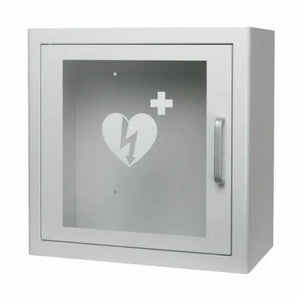
✅ Easily accessible (not locked away)
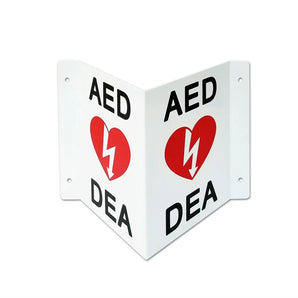
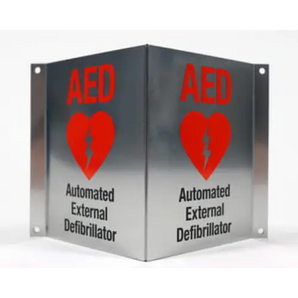
✅ Clearly visible and well-marked
✅ Located based on travel time—not distance alone
📏 General Rule of Thumb
In most buildings:
👉 You need enough AEDs so that any location can be reached and returned from within 3 minutes
Typical guideline:
- 1 AED per 1–2 minutes of walking distance
- Usually 1 AED per floor (minimum)
- Larger or complex layouts require multiple units per floor
🏢 Building-Specific Examples
Office Building (2 floors, ~20,000 sq ft)
- Minimum: 1 AED per floor
- Better: 2 per floor if layout is spread out
Warehouse / Industrial Facility
- Multiple AEDs required due to:
- Large distances
- Obstructions
- Noise / communication delays
👉 Often 1 AED per 100–150 meters of travel distance
Schools / Gyms / Public Spaces
- Place AEDs near:
- Entrances
- Gymnasiums
- High-traffic areas
👉 These environments often require more units due to risk level
🔥 AEDs vs Fire Extinguishers (Important Comparison)
Many organizations are familiar with fire extinguisher requirements—this is actually a great comparison.
Fire Extinguishers:
- Typically required every 75 feet (23 meters)
- Designed for immediate access anywhere in a building
AEDs:
- Should follow a similar philosophy:
- Rapid access
- Strategic distribution
- No delays
👉 The key difference:
| Fire Extinguishers | AEDs |
|---|---|
| Protect property | Save lives |
| Slower progression of emergency | Immediate life-or-death situation |
| More forgiving response time | Every minute counts |
⚠️ Common Mistakes to Avoid
❌ Only installing one AED Defib per building
→ This often fails the 3-minute rule
❌ Placing AEDs in locked offices or hidden locations
→ Delays access when seconds matter
❌ Ignoring building layout
→ Elevators, long hallways, and restricted areas increase response time
❌ Treating AEDs as compliance-only
→ They are a life-saving system, not just a requirement
🧩 Key Factors That Affect How Many AEDs Machines You Need
Every building is different. Consider:
- Size and layout
- Number of floors
- Population and occupancy
- Risk level (age, activity, environment)
- Distance between key areas
- Availability of trained responders
📈 Why More AEDs Often Make Sense
Adding additional AEDs:
- Improves response time
- Increases survival rates
- Reduces liability risk
- Strengthens workplace safety programs
👉 In most cases, the cost of one additional AED is small compared to the impact it can have.
🧠 Final Answer: How Many AEDs Do You Need?
👉 You need enough AEDs so that any person in your building can be reached and defibrillated within 3 minutes or less.
That usually means:
- More than one AED per building
- At least one per floor
- Additional units for larger or complex spaces
👉 If you're evaluating options, explore our full range of AEDs for sale in Canada
❤️ About AED.ca
AED.ca is a leading Canadian provider of automated external defibrillators, helping organizations across the country implement effective, compliant, and life-saving AED programs.
We specialize in:
- AED sales and placement strategy
- Workplace and public access defibrillation programs
- Ongoing maintenance and compliance support
Our goal is simple: make AED ownership easy, affordable, and effective—so more lives can be saved.
👤 About Martin Andrews
Martin Andrews is the founder of AED.ca and a recognized specialist in AED deployment and workplace cardiac safety. He has helped thousands of organizations across Canada determine the right AED solutions for their environments, with a focus on practical implementation and real-world outcomes.
Martin is passionate about increasing access to AEDs and ensuring that businesses are properly equipped to respond when sudden cardiac arrest occurs.
If you’re unsure how many AEDs your facility needs, AED.ca can provide a customized recommendation based on your building layout and risk profile.